On my snowboard instructor exam, the oral question was how to teach a beginner to get up from the snow with the board strapped to their feet. It was the winter of 2020, during COVID, so that part of the exam ran over a video call. Getting up is about the most physical thing you teach on someone’s first day. The way I teach it is to show it and let them copy me. Through a screen I had my voice and a little bit of mimicking with my hands. It went okay, I wasn’t the happiest with it, and everything else in the course went smoothly, so I passed.
That’s how I got a first-level instructor license from a course that moved between Mavrovo and Popova Šapka, two ski resorts in Macedonia. I’ve never worked a day as an instructor. Everything I know about teaching someone to snowboard comes from friends and friends of friends, and I’ve never taken money for it. I knew before I signed up that I didn’t want the job. I wanted to see if I could pass the test at all, and once I’d started, I wanted to pass it as well as I could.
What the course and the years before it taught me is that seeing what a beginner is doing wrong takes me a few minutes, often before they’ve ridden a metre, and explaining the fix doesn’t take much longer. What wears me out is everything after that: the same correction, run after run, while their body catches up. With as few snow days as I get each winter, I’d rather spend them riding.
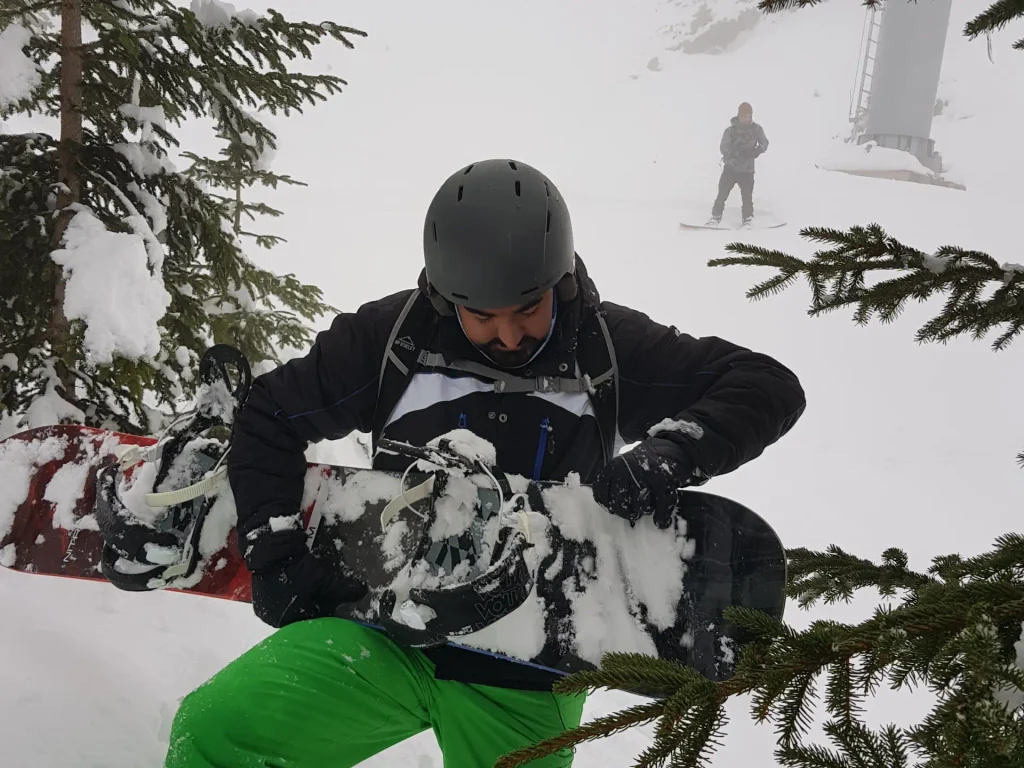
Table of Contents
At a glance
I have a first-level snowboard instructor license from a course at Mavrovo and Popova Šapka in Macedonia, and I’ve never taught for money. Everyone I’ve taught was a friend or a friend of a friend, and most of them ride with me now. I can usually read a beginner before their first run, from how they carry the board, sit down and get back up. Explaining the fix is quick, and the repetition after it is the instructor’s actual job. The course also gave me one unwritten rule I’ve since proved on the slopes, don’t teach your own partner or kids if you have.
The Waterfall
I was teaching people to snowboard years before I had any license. In my friend group I’m usually the one who hooks everybody else. One of us gets into something, the next one wants to try it, and it’s a waterfall from there. It happened with snowboarding and later with dirt bikes, and it’s probably part of why I’ve never stayed in one sport for long. It suits me, too, because it means I always have company when I want to go.
Some of my friends rented their gear and some had their own. Some had the coordination to figure most of it out alone once I’d shown them the basics, and some needed a lot more of me standing next to them on the slope. Nobody paid me, and I didn’t want anyone to, because the whole point was having more people to ride with.
What I See When I’m Teaching Someone to Snowboard
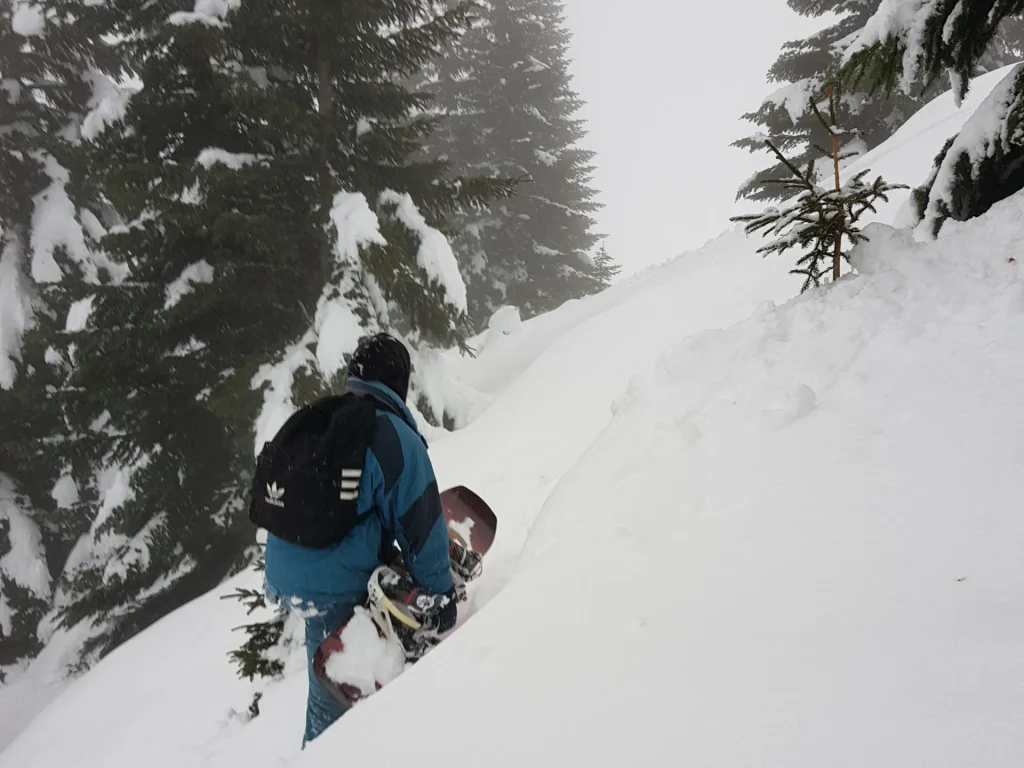
The lesson starts before anyone straps in. I watch how they walk with the board in their hands. I watch how they get down onto the snow, whether they can sort out their own bindings or wait for someone else to do it, how they sit, and where they put the board. Then I watch how they get up. It’s common sense stuff, and most beginners don’t think any of it counts as part of the lesson.
You can see so much from people just by watching how they do things. Whether someone is strong, whether they’re flexible, whether they have the fitness to fall and get up over and over, whether their body is used to doing what they ask of it. By the time we start, I know more or less what to expect for the rest of the day. Getting up matters more than people think, because a beginner does it more than anything else on day one, and it’s exactly what my exam asked about.
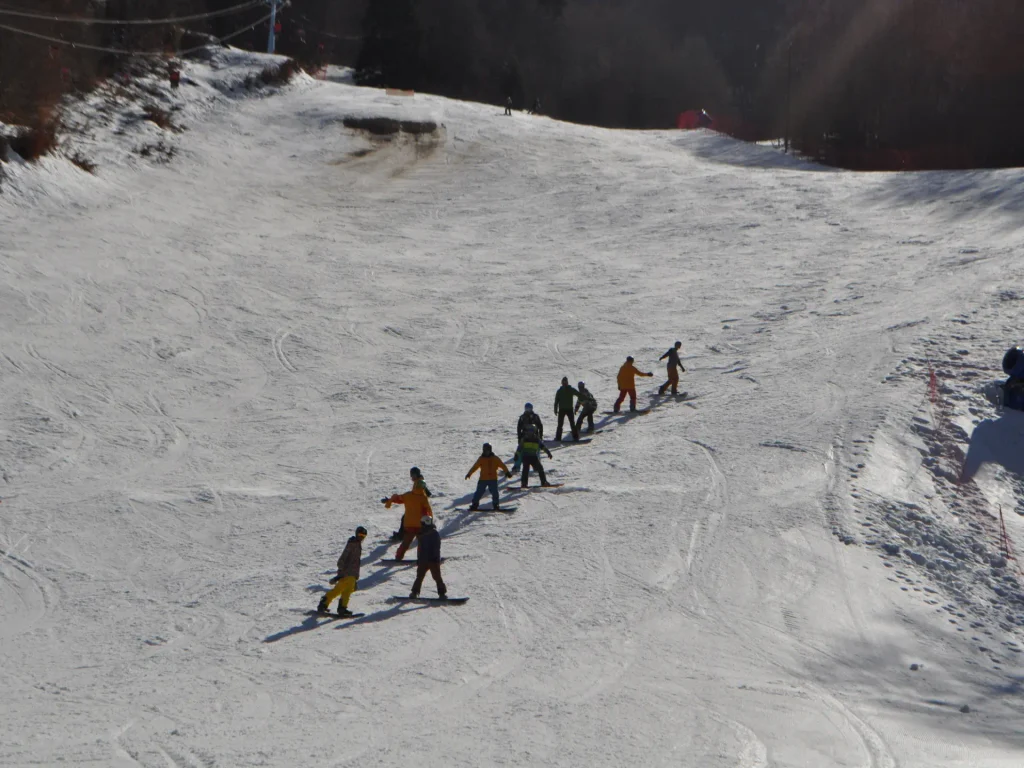
It’s the same way I watch anyone move, whatever the sport: skateboarding, tennis, a dirt bike race. After enough years you recognise when someone moves right in their sport. With a beginner there’s no riding to watch yet, so all I have is how they handle the board on the ground, and it’s usually enough.
The Part After the Explanation
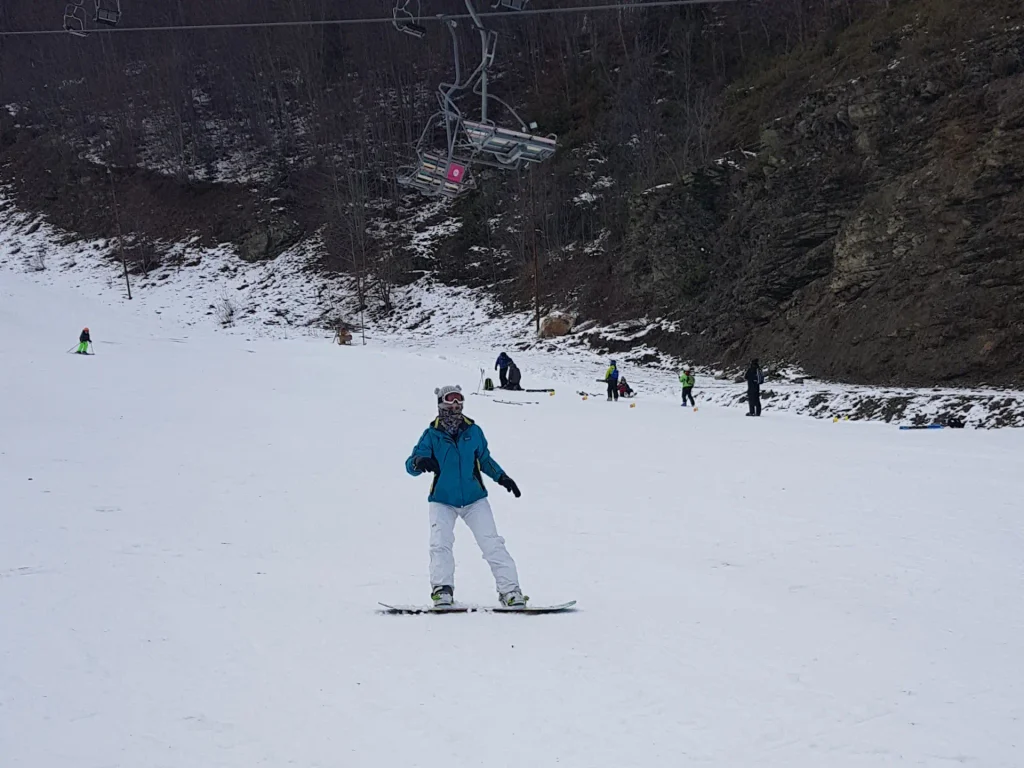
The thing I correct most is the same with almost everyone. A beginner picks up a bit of speed, gets scared and leans back, away from the hill, when the weight needs to go onto the front leg, the one pointing down the slope. Burton’s own learn-to-ride guide has you shift your weight onto your front foot so the board starts to angle downhill. Leaning back is kind of normal. It’s a reflex. When you’re new you’re not in control yet and you don’t know what to do, so your body pulls you back toward what feels safe.
So I explain it as simply as I can, I show it, and they nod. Then on the next run they lean back again, and on the one after that. That’s the moment I mean when I say I don’t enjoy teaching. I can see exactly what their body is doing, I’ve already told them how to fix it, and I’m repeating it what feels like a million times while they’re still not getting it.
Some people get it in a few runs and some need a lot longer. The learning curve is just slow. Showing and copying is how I progressed myself, so I know the method works, but it runs on repetition, and that repetition is most of teaching someone to snowboard.
None of that is the beginner’s fault, it’s just their body, and I’m not expecting everyone to be an athlete. Some people don’t have the coordination yet, which is okay, and the impatience is mine. On a board I’m full power, getting up, getting down, getting up again, all day, and I know not everyone can take that, so I’m the one lacking patience here.
The Rule I Broke First
One of the first things the course taught us was not to teach your own family, friends, kids or partner. You hand them to another instructor. I’d already broken part of that rule before I knew it existed. Cardrona, a ski resort in New Zealand, puts it even more bluntly than my course did. Step one of its guide to teaching your mates is “Don’t teach your mates to ski or snowboard. Just don’t do it.”
I tried with my wife anyway, after the course. She fell the way every beginner falls, and falling and getting up again and again drains a body that isn’t used to it, so she got tired fast and things moved slower. That’s completely normal, and what went wrong was my patience, which is on me, honestly. I’d stand there for three to five minutes, then help her to get up and try again, more and more and more, until she got angry with me, and she had every right to.
I handed her to David, a friend I ride dirt bikes with and someone I’d taught to snowboard myself. My wife told me afterwards that he was way gentler than me. She had a blast, and she was riding, which was the most important thing to me.
The Day I Called It Off
The other rule from the course is that the instructor is the one who decides whether a lesson carries on or gets rescheduled. I used it once on a day of heavy snowfall. A friend of a friend had asked me to teach her, and it was her first or maybe second day on a board. It was pouring snow, and fresh layers kept building up on the slope, not deep, but bad for a beginner. She was spending everything she had just getting up off the ground.
I called it and we rescheduled. It wasn’t easy. She was I guess a little bit angry and exhausted at the same time, and I still have mixed feelings about that day. We never talked about it afterwards, even though we’re still in touch. She later took lessons with an instructor at another resort, which I guess is good, even if it didn’t leave the best picture of me. On the other hand, it was pouring, and on that snow she had no control of the board at all.
Why I’d Rather Ride
I don’t get to the mountains as often as I’d like, and once I’m up there I want to snowboard, for myself and with my friends. Giving lessons would take a piece out of every one of those days, which is exactly what my uncle had in mind for me.
He’s my father’s first cousin, they grew up together, and he’s ex-military and a ski instructor at one of the resorts where I did my course. He’s also in the ski and snowboard club that runs the course and gives out the licenses, so he was happy to see me there, him on skis and me on a board, always joking around. When he found out I didn’t want to teach, he was a little annoyed. Come teach a lesson or two a day, he said, and that’s your ski pass covered. When I said no, he told me, “Man, you have too much money.”
I don’t. I just don’t want to spend my few days up there giving lessons. He’s looking out for me, I understand that and I appreciate it, and there’s a lot of respect between us both ways, but my answer didn’t change.
I got the license because I wanted to know if I could do it, and it was worth it just for the knowledge. It also gave me two rules I’ve since proved on my own friends and family, and I don’t regret it.
Who I Ride With Now
Most of the people I ride with now, on the board I bought in France in 2019, are people I taught. Some of them needed more help from me than others and some figured most of it out alone, and in general we all ride together.
Teaching Someone to Snowboard FAQ
Should you teach your partner to snowboard?
I wouldn’t. My instructor course said not to, and I proved it with my wife. A beginner gets tired fast, which is normal, and I didn’t have the patience for her pace. Hand your partner to a calm friend or book a lesson with an instructor. My wife learned from a friend of mine and had a blast.
Can a friend teach you to snowboard?
Yes. Most of my friends learned from me and ride with me now. What matters is whether your friend is patient with repetition, because you’ll make the same mistake many times before your body stops making it. If they get frustrated with you for that, it’s on them.
When should you stop a beginner’s snowboard lesson?
When they’re spending all their energy just getting up. I called off a lesson in heavy snowfall for exactly that reason: fresh snow kept building up, the beginner couldn’t keep control of the board, and every fall cost her more. My course was clear that the instructor makes that call.
What does a level 1 snowboard instructor course cover?
I can only speak for mine. It covered the basics you teach people who’ve never been on a snowboard, then advanced control, and it finished with exams, including the oral one over a video call. My question there was how to teach a beginner to get up with the board strapped on.
Filip Petreski is the founder of AFIELD and a multi-sport outdoor athlete. A two-time national cross-country MTB champion, snowboard instructor, and former dirt bike rider, he writes about the people, gear, and culture worth paying attention to in the outdoor world.