
My first dirt bike was a Yamaha YZ250F. Motocross bike, far from the best 4 stroke dirt bikes on this list. I rode it almost exclusively on single trails and enduro terrain, which, in retrospect, tells you everything about the kind of rider I am. I loved that bike. Sold it when I moved cities and spent the next stretch riding my friends’ bikes, a Beta RR 300 2-stroke and a KTM 250 4-stroke. The KTM clicked immediately. Something about it just fits the way I ride, and it changed how I think about choosing my next dirt bike.
What clicked was the 4-stroke. The smoothness, the predictable power delivery on loose ground, the lower fatigue on a full day in the mountains. For single trails and mountain exploring, which is most of what I do, it’s the right engine for the job. Every bike on this list is a 4-stroke, and that’s not an accident.
At a glance
- The KTM 350 EXC-F is the benchmark for trail enduro, versatile, proven, and worth every cent of its ~$13,000 price tag.
- 250cc to 350cc is the sweet spot for trail and mountain riding. A 450 is a lot of bike for single-track.
- 4-strokes are the better call for long climbs and trail riding. 2-strokes shine in tight, technical terrain.
- A 2-3 year old EXC or FE with solid service history at $7,000–$8,000 beats a new entry-level bike, if you know what to look for.
- The global off-road motorcycle segment has grown steadily since 2021, driven by trail and adventure riding demand (Grand View Research).
2-Stroke or 4-Stroke – Get This Right First
This question gets two sentences in most guides. It deserves more than that, because getting it wrong means buying a bike that works against you every ride.
Here’s the short version. 2-strokes are lighter, simpler, and more responsive in tight technical sections. They reward precise throttle control and punish you fast when you lose it. Maintenance is more hands-on, but the work is simpler. Riders who do hard enduro, GNCC-style racing, or spend their weekends in rocky, rooted terrain tend to lean toward 2-strokes for good reason. The American Motorcyclist Association (AMA) notes that 2-stroke models still represent a significant portion of competitive enduro entries in amateur classes precisely because of that power-to-weight ratio.
4-strokes deliver torque more predictably. That matters more than people admit when you’re grinding up a long mountain climb, managing loose gravel, or riding for four hours and your hands are starting to go. There’s less mental overhead, which adds up on big trail days. Fuel injection on modern 4-strokes has also closed the cold-start and fueling gap considerably.
I personally prefer 4-strokes. My riding is single trails and mountain exploring, not hard enduro, and the 4-stroke suits that style better. The tractable power delivery, the way it holds a line under load, the slightly lower fatigue profile on longer rides. It just fits. If you’re reading this and your riding looks anything like that, I’d point you the same direction.
If you’re running tight, technical terrain with lots of elevation change and short bursts of intensity, a 2-stroke is worth serious consideration. The Beta RR 300 I rode was genuinely impressive in that context. If you want a reference point for what that style of riding looks like pushed to its absolute limit, Billy Bolt’s six consecutive SuperEnduro titles are worth understanding before you make the call. But for the rider this guide is written for, single trail, mountain exploring, occasional enduro event, a 4-stroke is the right call.
How to Choose the Right Displacement
Keep this simple. Displacement in enduro isn’t about horsepower bragging rights. It’s about where in the powerband you’ll actually be riding.
250cc is enough bike for a lot of people in general, that’s my opinion. It’s easier to manage in tight sections, lighter overall, and forgiving if you get the throttle wrong. A 250F doesn’t punish mistakes as hard as bigger bikes. The tradeoff is that at altitude or on long climbs, you’ll be working harder. For most trail riders, especially those still building enduro-specific technique, 250cc is underrated.
350cc is where a lot of experienced trail riders land. The Husqvarna FE 350s exists because of this. It’s not quite the grunt of a 450, not quite the scalpel of a 250. It pulls from low RPM, holds speed through technical sections without demanding constant gear changes. If you’re riding 2-3 hour trail sessions in varied terrain, 350cc is a really solid number.
450cc is a capable machine, but it’s genuinely a lot of bike, in my experience I am way slower on 450 than on 250. It’s fast, heavy by enduro standards, and will wear you out faster in tight technical riding. The 450 shines on faster, more open terrain. If your trails have long fire road linking sections, open switchbacks, or you’re doing more dual-sport touring than pure single-track, a 450 makes more sense. Otherwise, think hard before defaulting to the biggest option.
The Best Enduro Dirt Bikes Right Now
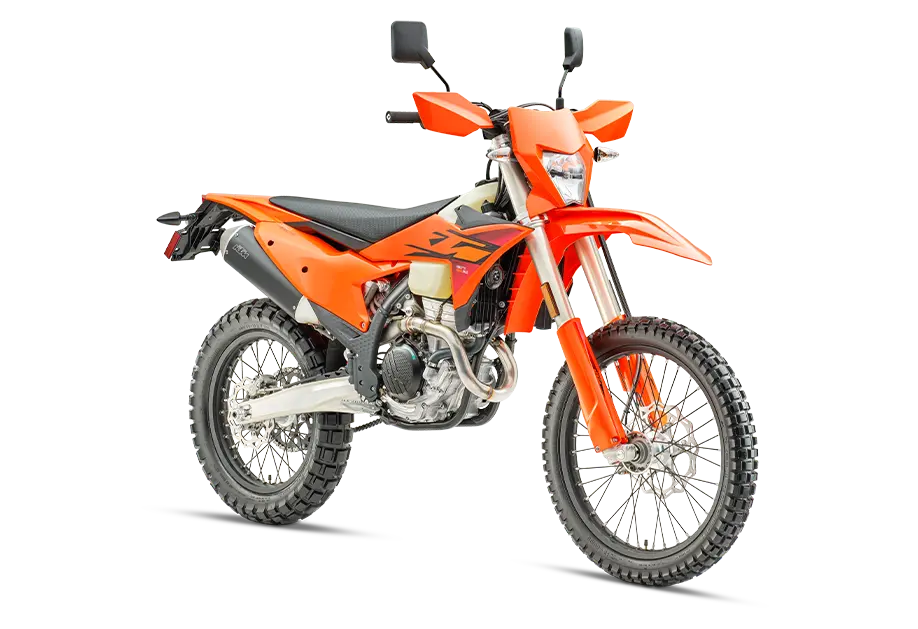
The KTM 350 EXC-F is my pick. Not because it’s the flashiest bike on this list, but because it does everything well and nothing badly. That’s a harder target to hit than it sounds in enduro.
The 350cc single-cylinder 4-stroke makes genuinely usable power across the whole range. It’s not a peaky, nervous engine. It pulls from low, holds mid-range torque cleanly, and responds to trail inputs without drama. KTM’s fuel injection calibration on the EXC-F is dialed, and the WP XACT/XPLOR suspension is among the best stock setups you’ll find on any production enduro bike.
The trade-off is real, KTM parts and service pricing isn’t cheap. You’ll feel that at the dealer and in the maintenance schedule. The 350 EXC-F isn’t a set-it-and-forget-it machine. But if you’re riding seriously, you were never going to neglect the bike anyway.
For trail riding and mountain exploring, this is the benchmark. Everything else on this list gets measured against it.
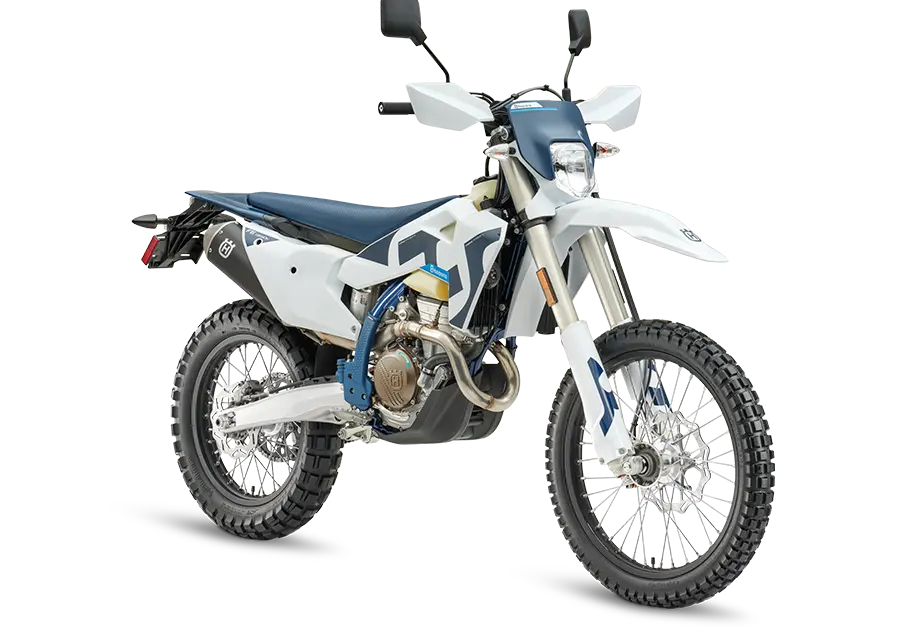
Husqvarna shares its platform with KTM, same Austrian parent company, similar bones. The FE 350 isn’t a KTM with different plastics, though. It has a genuinely different character. The ergonomics are slightly different, the fueling maps are tuned differently, and there’s a softer edge to the power delivery that some riders actually prefer for trail work.
The 350cc displacement is the reason to choose this bike over the KTM 300. That displacement number sits at an interesting crossroads. It makes more torque than a 250cc, handles more predictably than a 450, and hits a daily ridability sweet spot that a lot of experienced trail riders gravitate toward. Husqvarna’s enduro program at the competition level backs this up, Billy Bolt has won six consecutive SuperEnduro World Championships on the brand. It’s also slightly lighter than the 450 options, which shows up after hour two on technical single-track.
The trade-off is the same one you get across the Husqvarna enduro lineup, parts availability is sometimes slower than KTM, and some dealers treat it as the secondary brand even though they share a service network. Minor frustration, not a dealbreaker.
If you’ve ridden 250s and want more torque without the full commitment of a 450, the FE 350s is worth a serious test ride before you decide.
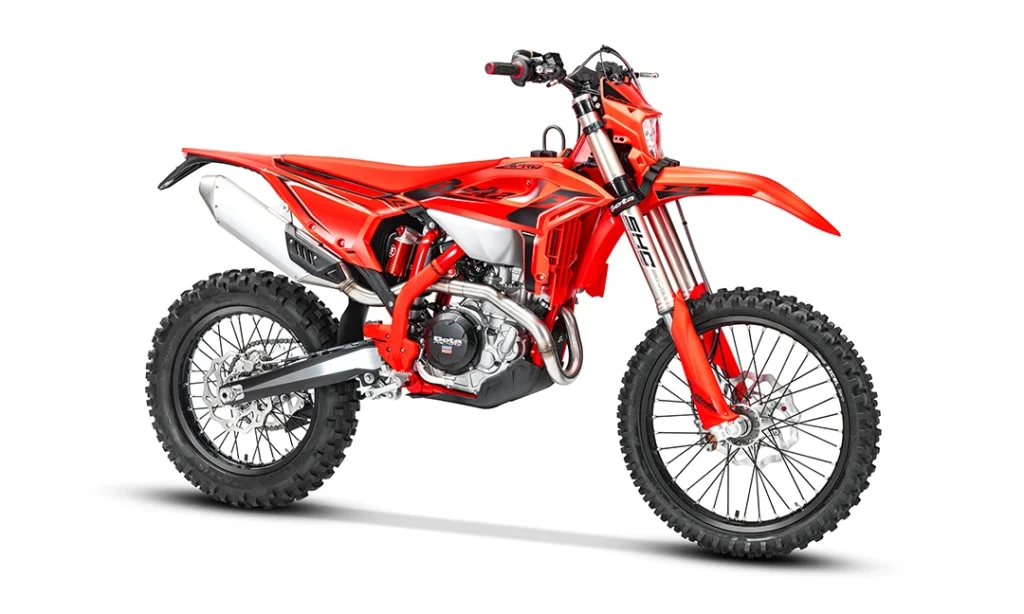
Beta is the alternative for riders who want something that isn’t a KTM or Husqvarna clone. The Italian brand has a legitimate enduro pedigree, they’ve been building competition-spec off-road bikes for decades, and the RR line shows it.
The RR 430 is the 4-stroke choice if you want Beta DNA. It’s a capable, well-sorted machine with a competitive suspension package and a 430cc engine that makes usable power without being an animal. What Beta does well is ergonomics and cockpit feel, the bike feels planted and communicative in a way that’s specific to their chassis geometry.
The trade-off with Beta is the dealer network. In North America especially, you need to know where your nearest Beta-authorized service center is before you buy, because it’s not always close. If you’re in an area with solid Beta support, it’s a bike worth serious consideration. If you’re not, factor that into the ownership reality.
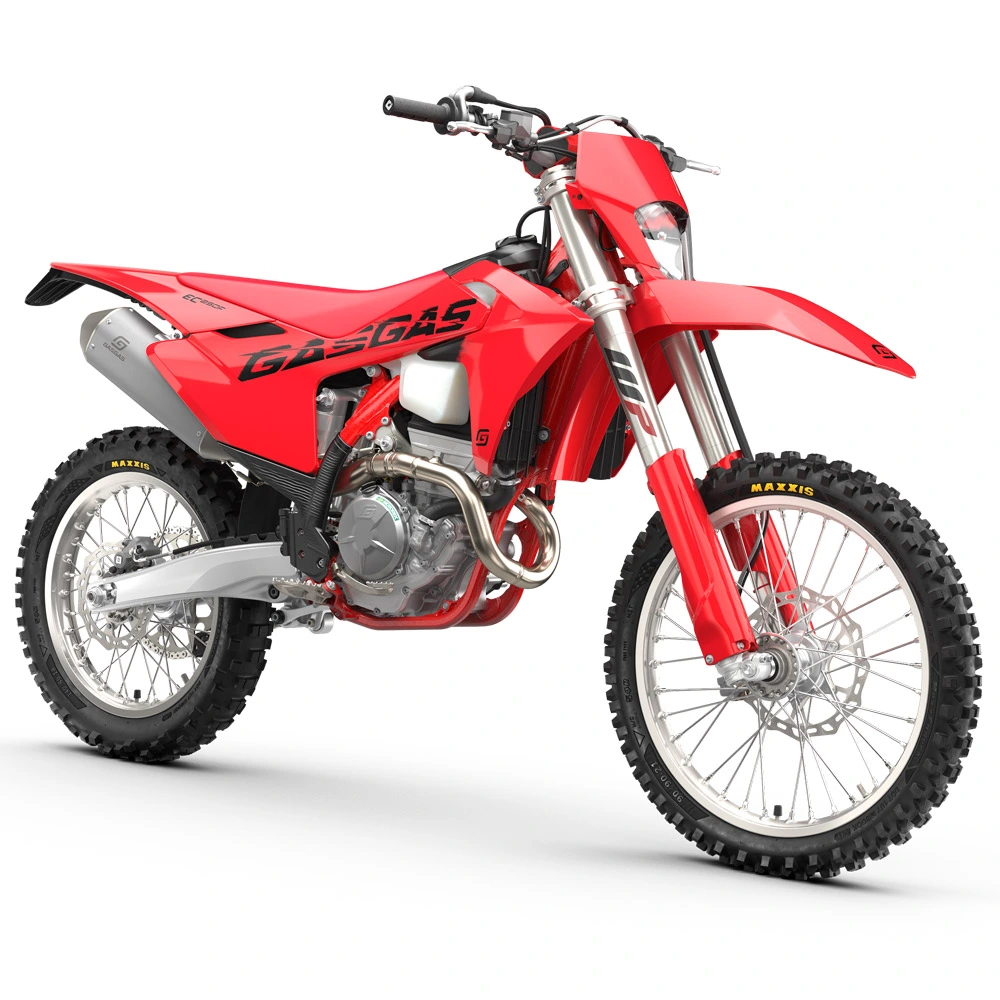
GasGas is the honest answer for riders who want proper enduro capability without the premium price. The EC 250F shares its platform with KTM, meaning the bones are good. WP suspension, solid fuel injection, race-ready geometry. This isn’t a budget compromise dressed up in red plastics.
The 250cc displacement keeps it manageable and nimble on tight trails. For riders who are still building their enduro-specific skill set, or who ride terrain where the 350 and 450 options can feel like too much bike, the EC 250F earns its place on this list on merit. At roughly $3,000 less than the KTM EXC-F, that’s a real price difference that funds a season of fuel and riding trips.
The trade-off is that the GasGas branding and dealer experience can feel like a third priority at some KTM Group dealerships. Mechanically, the bikes are proven. The ownership experience just has slightly less polish around the edges. Worth it for most buyers at this price point.
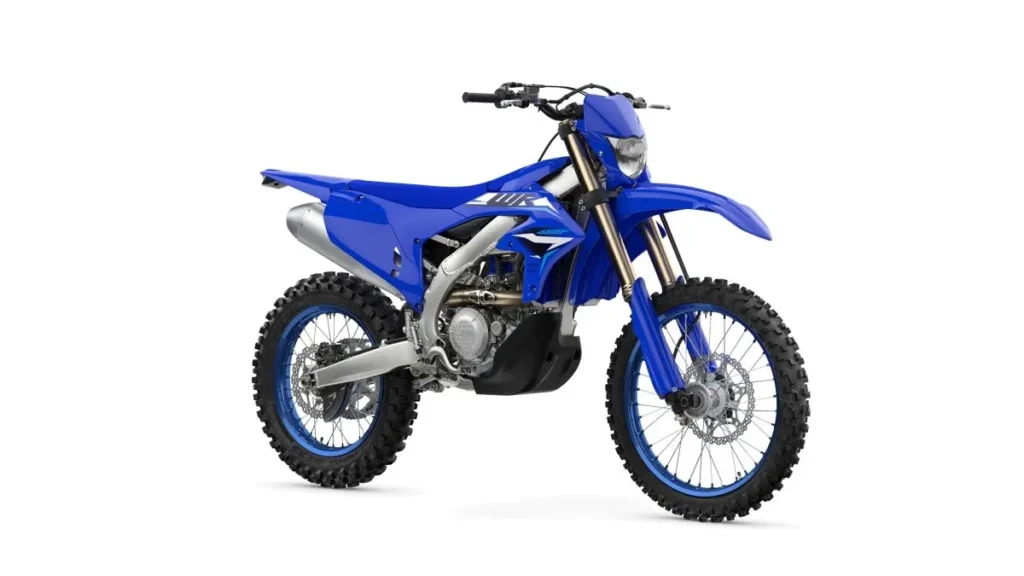
My first bike was a Yamaha. YZ250F, running single trails like an enduro bike because that’s all I had and I loved. But the first dirt bike I’ve tried was Yamaha WR450F. There’s a part of me that wanted to put the Yamaha higher on this list for that reason alone. The honest take is that it belongs here, just not at the top.
The WR450F is different DNA from everything else on this list. Where the Austrian and Italian bikes lean toward light and nimble, the Yamaha is more planted and stable. It’s a broader, heavier feel. For some terrain and some riders, that’s a feature, it doesn’t get pushed around by chop and it holds a line at speed with authority. The 450cc engine makes strong power, and Yamaha’s reliability reputation is deserved. These bikes don’t randomly break.
The trade-off is weight and feel in tight technical sections. The WR450F isn’t the bike you want in a narrow singletrack descent with roots and rock gardens. It’s better suited to longer trail formats with mixed terrain. If your riding involves a lot of fire-road linking, open mountain trails, and you want Japanese reliability with better parts access than the European brands, the WR450F makes a strong case.
What About the Used Market?
Short answer, worth it, if you know what you’re buying.
Enduro bikes get ridden hard. That’s the nature of the machine and the terrain. A used enduro bike with unknown history is a coin flip. A used enduro bike with a clear service record, documented chain and sprocket replacement, and fresh suspension service is often a better purchase than a new entry-level option.
The numbers work out. A 2022 or 2023 KTM EXC-F or Husqvarna FE in solid condition typically runs $7,000–$8,000. At that price you’re getting proven European enduro capability with most of the heavy depreciation already absorbed, and if you’re buying something that well-maintained, you’re not inheriting anyone’s deferred maintenance problems.
What to inspect before buying, suspension condition (look for oil weeping around fork seals), chain and sprocket wear, brake pad thickness, air filter condition (a neglected filter tells you a lot about how the bike was maintained), and whether the service intervals were actually followed. If you can’t assess those yourself, bring someone who can. A $100 pre-purchase inspection is worth every cent.
If you’re newer to dirt bikes and can’t spot a bike that’s been thrashed, a new GasGas EC 250F at $9,699 is a safer entry point than a mystery used KTM at $6,500.
For planning the kind of rides that actually make owning an enduro bike worthwhile, the weekend adventure planning guide on AFIELD is worth reading before you load up the truck.
FAQ
What’s the best enduro dirt bike for trail riding?
For trail riding specifically, the KTM 350 EXC-F is the top pick. It delivers usable torque across the range, handles varied terrain without drama, and comes with the WP Xplor suspension package dialed for trail work. If the price is the issue, the GasGas EC 250F shares the same platform at roughly $3,000 less. For riders wanting the displacement sweet spot, the Husqvarna FE 350s is the other strong option.
Is enduro riding hard to learn?
It’s learnable, but it’s a real skill gap from motocross or casual trail riding. The terrain demands are different, roots, rocks, long climbs, technical descents. The AMA estimates there are over 4 million off-road motorcycle riders in the U.S., and a significant portion start on easier trail systems before progressing to enduro-specific terrain. Start on trails you can manage, ride with people who are better than you, and build technique before horsepower. The confidence-building side of outdoor sport is something we’ve covered separately, it applies here more than most people admit.
What’s the difference between enduro and motocross?
Motocross is a closed, groomed circuit. Short motos, same lap repeated, predictable terrain. Enduro is point-to-point or timed special tests across natural terrain, trees, rocks, hills, creeks. Enduro bikes reflect that difference, they’re built for all-day riding with lights, wider gear ratios, and more forgiving suspension setups than pure MX machines. The riding style, fitness demands, and mental approach are genuinely different disciplines. If you want a feel for what the top of the enduro world actually looks like, Billy Bolt’s documentary series is the clearest window into it.
How much does a good enduro dirt bike cost?
New, you’re looking at ~$9,700 for a GasGas EC 250F on the accessible end, up to ~$13,000 for a Husqvarna FE 350s. KTM and Beta are in the same ballpark. Used, a well-maintained 2-3 year old EXC or FE in good condition typically runs $7,000–$8,000 and for experienced buyers who know what to inspect, that’s often the smarter purchase.

Filip Petreski is the founder of AFIELD and a multi-sport outdoor athlete. A two-time national cross-country MTB champion, snowboard instructor, and former dirt bike rider, he writes about the people, gear, and culture worth paying attention to in the outdoor world.