
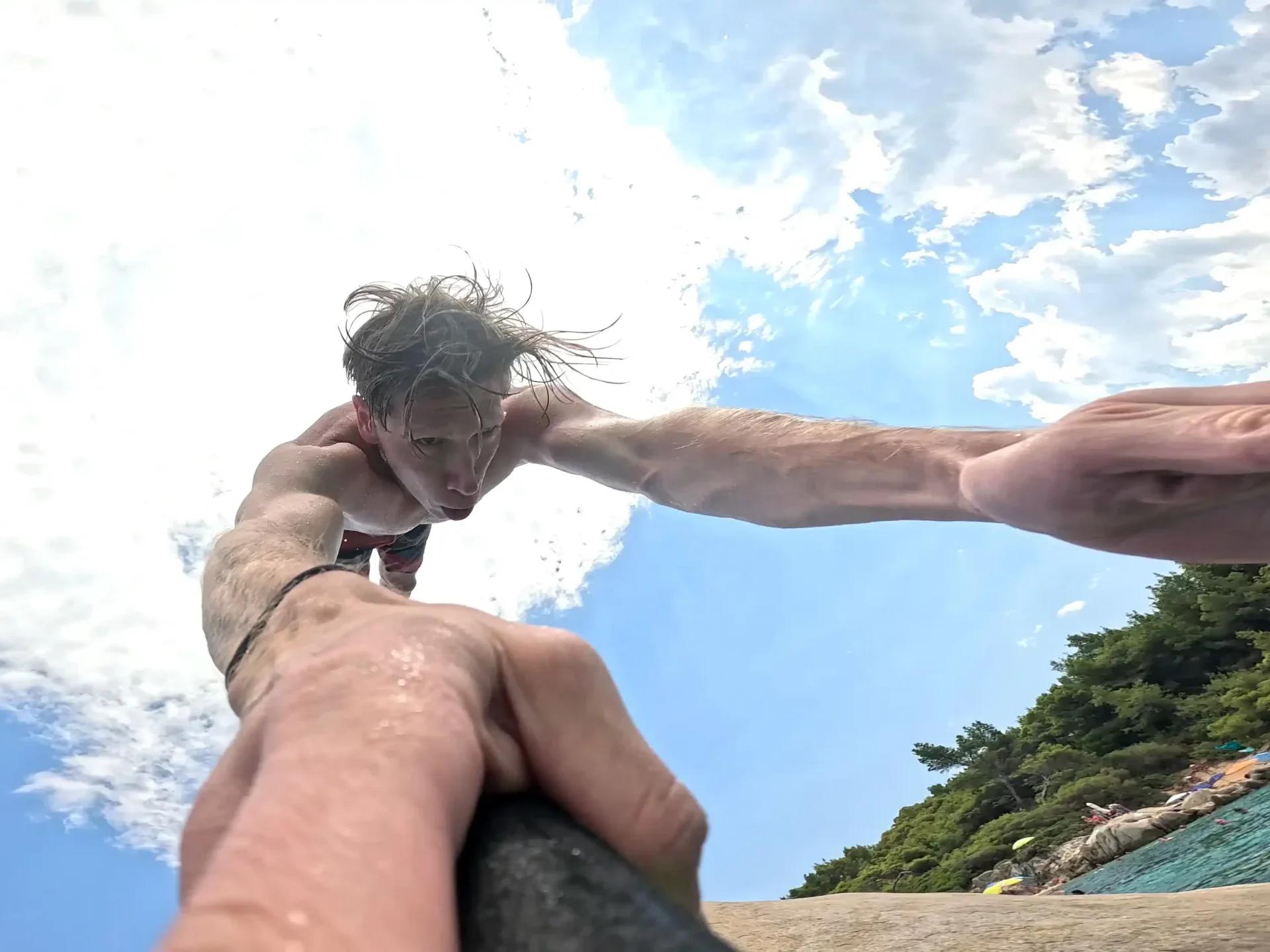
The thing about cliff diving is that the water always looks fine from up top. It’s clear, it’s deep, it’s not going anywhere. Your friends jumped. They’re down there, waving. Your brain knows it’s safe.
And you’re still standing there.
That hesitation, locked legs, recalculating mind, the “one more second” that stretches into a minute, isn’t fear exactly. It’s the gap between knowing something is fine and being willing to commit your body to it. That gap is what outdoor confidence is actually about. And it shows up in every sport, at every level, in ways that have nothing to do with skill.
I’m not someone who gets scared often. I’ve done dirt biking, mountain biking, snowboarding, slacklining, cliff diving. I don’t consider myself extreme, more jack of all trades than master of any one thing. But across all of it, I’ve noticed what actually moves you from the edge of hesitation to the middle of a landing. And what doesn’t. Here’s how to build confidence for outdoor adventures, from someone who does all of it. The principles apply whether you’re planning a weekend trip or something bigger.
Key Takeaways
The gap between knowing something is safe and committing your body to it is where outdoor confidence lives and it’s trainable
A 3-2-1 countdown physically interrupts overthinking and forces action; it works on yourself and on others
Repeated exposure is the only real fix: each time you do it, the fear response gets quieter (PMC, Exposure Therapy Research)
People doing 14+ hours of outdoor activity per week had 2.36× higher odds of reporting high happiness (Canada.ca / Health Promotion journal, 2025)
Who you’re with shapes whether you go, pick people who push forward
Table of Contents
Why Outdoor Fear Feels Different From Regular Anxiety
Most anxiety is vague. It’s a meeting you’re dreading, a conversation you’re avoiding. Something in the background that hums without a specific moment of reckoning. Outdoor fear is the opposite: localized, specific, and timed. There’s a jump in front of you. There’s a trail that drops away hard. There’s water thirty feet below.
You can’t negotiate with a cliff.
That’s why outdoor confidence doesn’t build the same way social or professional confidence does. It’s not about reframing your narrative or visualizing success. It’s about getting your body used to the fact that it can do the thing. That takes different work.
A 2024 review in BMC Psychology found that fear in extreme sports is most closely tied to personal mastery, not the activity itself, but the moment of confronting the gap between capability and commitment (BMC Psychology, 2024). The fear isn’t usually about whether you can do it. It’s about whether you’ll commit. That’s actually good news, because commitment is a trainable skill.
Research from Frontiers in Psychology confirms that adventure sports deliver real psychological gains: emotional stability, resilience, self-expression, and a measurable sense of accomplishment, specifically linked to facing and moving through that hesitation (Frontiers in Psychology, 2024). The reward isn’t just the landing. It’s the act of having committed.
Citation Capsule
A 2024 psychological review published in BMC Psychology found that fear in extreme and adventure sports is most strongly associated with the pursuit of personal mastery, participants describe fear not as a reason to stop, but as the challenge that makes the activity meaningful (BMC Psychology, 2024).
These gains go beyond sport. If you want to go deeper, the research on nature therapy and mental health runs parallel, same mechanism, different context.
The 3-2-1 SEND IT! Trick, Stop Thinking, Start Moving
I’ve landed on one technique that works every single time. Three, two, one, go. You say the numbers out loud and you go at SEND IT. No hesitation after one. No “one more second.” You move.
It sounds almost embarrassingly simple. It works anyway.
The reason it works is that your brain will do almost anything to delay an uncomfortable action if you give it time. The countdown removes the negotiation. It turns a decision with unlimited time into a decision with three seconds. And once you’re moving, once the bike is in the air, once you’ve left the cliff, the fear is gone. There’s nothing left to hesitate about.
Mel Robbins documented this exact mechanism in her work on the 5-Second Rule: counting down to one and moving interrupts the brain’s default hesitation loop before it can build a case for not going (Holon Health, 2024). It’s a pattern interrupt. A self-imposed deadline that your brain respects because it’s concrete.
What I’ve found is that it also works on other people. Standing next to someone who’s been staring at a jump for three minutes, “three, two, one, send it” gets them moving when nothing else does. The countdown is contagious. It makes the decision collective and removes the option to keep stalling.
The one rule, you have to mean it. If you count down and don’t go, you’ve trained your brain that the rule doesn’t apply. Say it once. Go at one. It earns its authority through follow-through. If you’re still building out your mountain bike kit, get the fundamentals right before worrying about upgrades.
Repetition Is the Only Real Cure
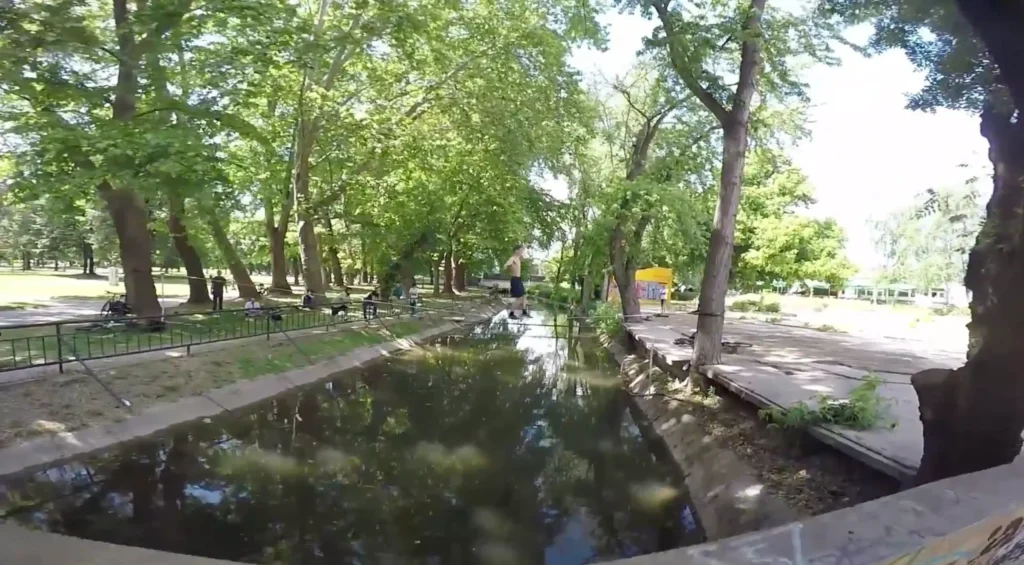
A few years ago I crossed a small canal on a slackline. No harness. The first crossing was genuinely chaotic in my head, not panicking, but fully occupied. Every step demanded attention. The line moved in ways I hadn’t processed before. The water below was real and close.
I made it across. Then I crossed again.
By the third or fourth time, it felt identical to slacklining on grass. Same line, same physics, same drop, but the mental noise was completely gone. That’s not willpower. That’s what happens when your nervous system collects enough evidence.
This is the core mechanism of exposure therapy: repeated, graduated exposure to a fear-triggering situation reduces the anxiety response each time. Research published in PMC found that with each exposure, the brain creates new associations between the feared situation and a neutral outcome, essentially overwriting the alarm signal with accumulated data that says “and nothing bad happened” (PMC / Exposure Therapy Neural Research). The effect isn’t linear and it doesn’t plateau. It compounds.
The same pattern plays out in every outdoor activity. The first time you ride a trail at the edge of your skill, it takes everything you’ve got. The tenth time it’s familiar. The twentieth it’s comfortable enough that you’re looking for the next step up. Nothing changed except the number of times you did it.
That changes the right question. It’s not “how do I stop being scared?” It’s “how do I get more repetitions?” Dirt biking at jumps. More laps on the trail. More time in open water. More sessions on the slackline. Fear doesn’t respond to logic. It responds to evidence.
Citation Capsule
A 2025 Canadian study found that people doing 14 or more hours of outdoor physical activity per week had 1.64× higher odds of positive mental health, 1.75× higher odds of life satisfaction, and 2.36× higher odds of reporting high happiness compared to less active peers (Canada.ca / Health Promotion journal, 2025).
The People Around You Change Everything
Whether you jump off a cliff has almost nothing to do with the cliff.
I’ve stood at the same height and jumped without hesitation when the right people were there and talked myself out of it with the wrong group. The dynamic shifts completely. One person who steps up and goes first changes the whole calculus. One person who keeps saying “I don’t know” makes the hesitation contagious.
Research backs this up. A PMC study on peer effects and risk behavior found that group identity significantly shapes how people approach risky decisions, risk-taking behaviors become normalized and reinforced within a group, and the desire for cohesion overrides individual hesitation (PMC / Peer Effects on Risk Behaviour). In plain terms: you match the energy around you.
That cuts both ways. A group that’s cautious, second-guessing, and asking “but is it actually safe?” will pull you back. A group that counts down together and goes one after the other will carry you forward with them. This is why picking who you do things with is one of the most underrated parts of building outdoor confidence.
It’s not about peer pressure in the negative sense. It’s about the baseline. Some people raise the floor of what feels normal. Others lower it. Over time, the company you keep shapes your own ceiling. That makes planning a trip together one of the highest-leverage things you can do.
Confidence Isn’t Recklessness – Know When to Pull Back
Here’s the honest part.
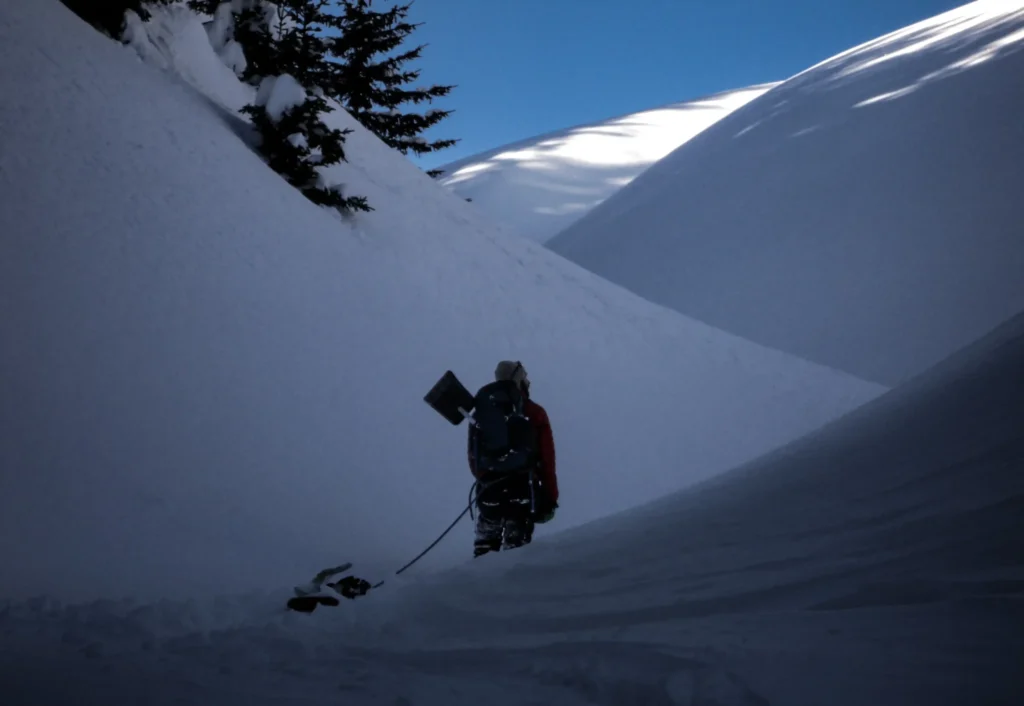
I’ve gone places I shouldn’t have. Snowboarding in a zone with high avalanche risk, we went anyway. Not the smartest call. And I’ve paid for bad decisions with my body: a bad cliff entry that hit my lower back hard enough that I still think about it before I jump. Those experiences aren’t separate from confidence. They’re part of it.
There’s a version of outdoor confidence that’s just not thinking about consequences. That’s not confidence, that’s recklessness with good luck attached. Real confidence includes the ability to read a situation, take the information seriously, and sometimes say no. Not because you’re scared, but because the math doesn’t work.
The way I think about it: getting hurt means you can’t do any of this. You can’t ride, you can’t dive, you can’t ski. One bad decision can take out an entire season or more. That matters. Take the risk you’ve actually assessed, not the one that looks good in front of your friends.
The Distinction That Matters. Are you hesitating because of real risk, or because of imagined risk? Real risk has specific, nameable consequences, that landing is too short, the snow is unstable, the water is too shallow. Imagined risk is just general discomfort with commitment. The first one deserves serious attention. The second one is what the countdown is for.
How It Plays Out Across Different Activities
Every sport has its own version of the commitment gap. Here’s what I’ve noticed across the ones I’ve spent time on.
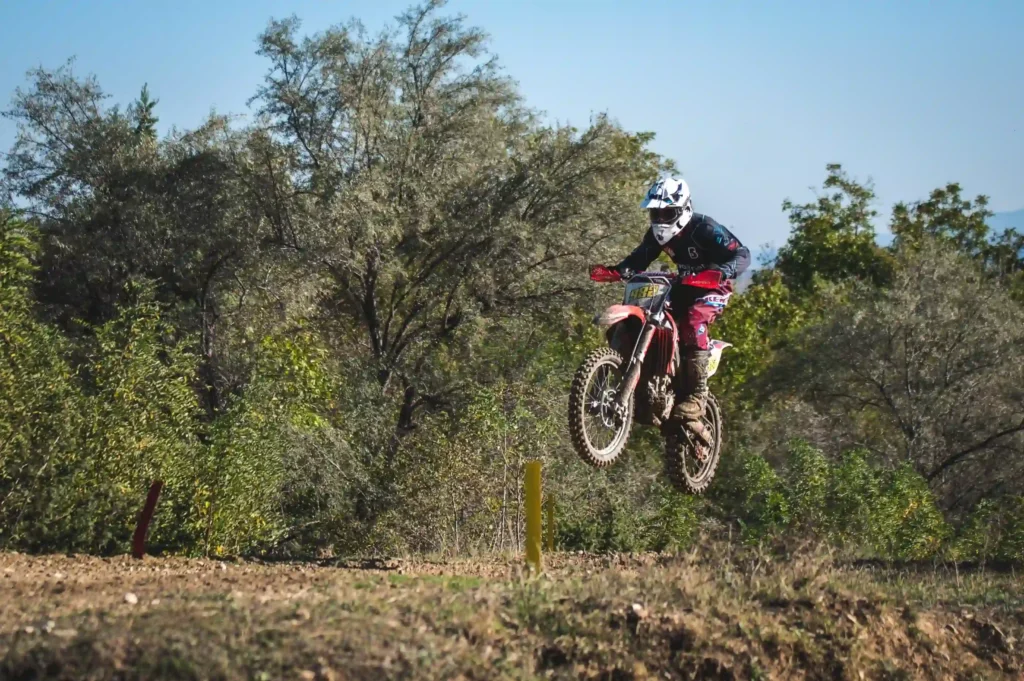
Dirt biking – the motor helps more than people realize. The bike carries weight and direction, so even on big jumps, the machine does part of the work. That makes it the most forgiving for building confidence. Start smaller than you think you need to, get reps in, step up gradually.
Mountain biking jumps – harder than dirt biking because there’s no motor assist. Everything is on you and your speed. The gap between “I can clear this” and “I trust that I can clear this” is wider here than almost anywhere else. Repetition is the only path.
Snowboarding – chaotic in a good way. The terrain varies, the conditions change, and you’re reacting constantly. The confidence here is less about committing to one decision and more about being comfortable operating in controlled chaos. Val d’Isère steeps taught me that going anyway, even imperfectly, builds more than waiting for the right conditions.
Cliff diving – pure commitment. There’s no middle ground, no adjusting mid-air. You go or you don’t. The 3-2-1 SEND IT! was built for this exact situation. The other factor: height perception is notoriously unreliable. What looks like twenty feet from the top is almost always less than you think. This is also where I’ve been hurt, so: know your entry, know your depth.
Slacklining over water – repetition on a schedule. There’s no shortcut. First crossing is hard. Fourth crossing is easy. Just get the reps.
Open water – if you’re less comfortable in water than on land (I am), the key is time, not technique. Spend more time in it. The discomfort is about unfamiliarity, not actual danger. The same logic, stacking low-intensity sessions to build a base, is exactly what zone 2 training is about.
Frequently Asked Questions
How do I stop overthinking before a jump or drop?
Use a countdown, three, two, one SEND IT! and commit at send it. The more time you spend thinking, the more reasons your brain invents to not go. A countdown cuts that loop. Make it non-negotiable: you say the numbers, you move at one, no extensions. Done consistently, it becomes automatic.
Does fear ever fully go away in outdoor sports?
Not completely, and you probably don’t want it to. Some level of alertness keeps you honest about real risk. What does go away, with repetition is the paralyzing version. The low-grade “should I?” noise disappears once you’ve done something enough times. What’s left is just appropriate attention.
Why do I feel braver with certain friends than others?
Group dynamics shape individual behavior more than most people acknowledge. Research shows that risk-taking becomes normalized within a group over time (PMC). When the people around you approach things with “we’re going,” that becomes the baseline. When they approach it with “I don’t know,” that does too. Choose your riding partners deliberately.
Is it normal to feel more fear in one outdoor sport than another?
Yes, and the difference is usually motor assistance, familiarity, and control feedback. Dirt biking feels easier than MTB at the same jump height because the weight helps stabilize at least that’s how I feel. Snowboarding feels chaotic because the feedback loop is slower. The sport with the least control feedback will always feel harder to commit to, which means it needs more repetitions, not more courage.
How do I know when hesitation is smart vs. when I should just commit?
Ask whether your hesitation is about specific, nameable risk (that landing is short, the snow is unstable, the water is too shallow) or about general discomfort. Specific risk deserves attention, sometimes the answer is no. General discomfort is the countdown’s territory. If you can’t name the actual danger, count down and go.
Conclusion
Outdoor confidence isn’t about not feeling fear. It’s about having a reliable way to move through it. The countdown stops overthinking before it can win. Repetition builds the evidence your nervous system needs. The people around you set the floor for what feels normal. And honest risk assessment is what keeps you on the right side of the line between brave and stupid.
None of this is complicated. It’s just easier to read about than to do the first time. Go anyway. Land it. Do it again. Then plan the next one.
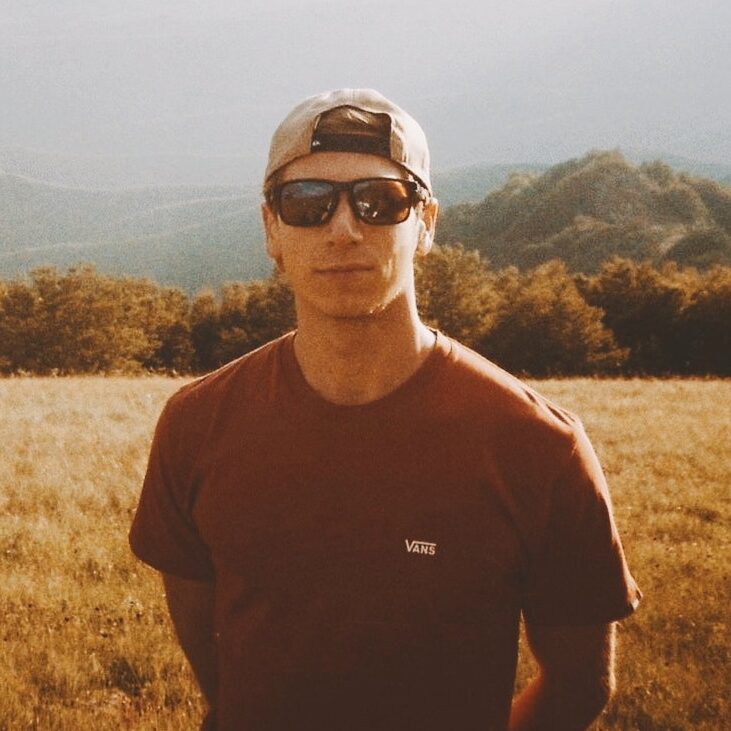
Filip Petreski is the founder of AFIELD and a multi-sport outdoor athlete. A two-time national cross-country MTB champion, snowboard instructor, and former dirt bike rider, he writes about the people, gear, and culture worth paying attention to in the outdoor world.