
Think about a shower. Ten minutes of hot water and you walk out a different person. Mood lifted. Thoughts quieter. Whatever was grinding on you five minutes ago is somehow smaller now.
That’s ten minutes of water.
A full day in the mountains, a hard one, where you come home tired and covered in dust and your legs don’t work properly, does something that’s not even in the same category. I know this from years of doing it. When life gets loud and my head gets heavy, there’s one thing that consistently resets everything. A whole day outside. Something demanding. Something that requires me to be somewhere other than inside my own thoughts.
The science agrees. Nature therapy, what researchers call the mental health benefit of deliberate time spent in natural environments is real, measurable, and most people are nowhere near their optimal dose. It took a while to catch up with what old village people figured out centuries ago.
Planing a full day in the mountains → How to Plan a Weekend Adventure
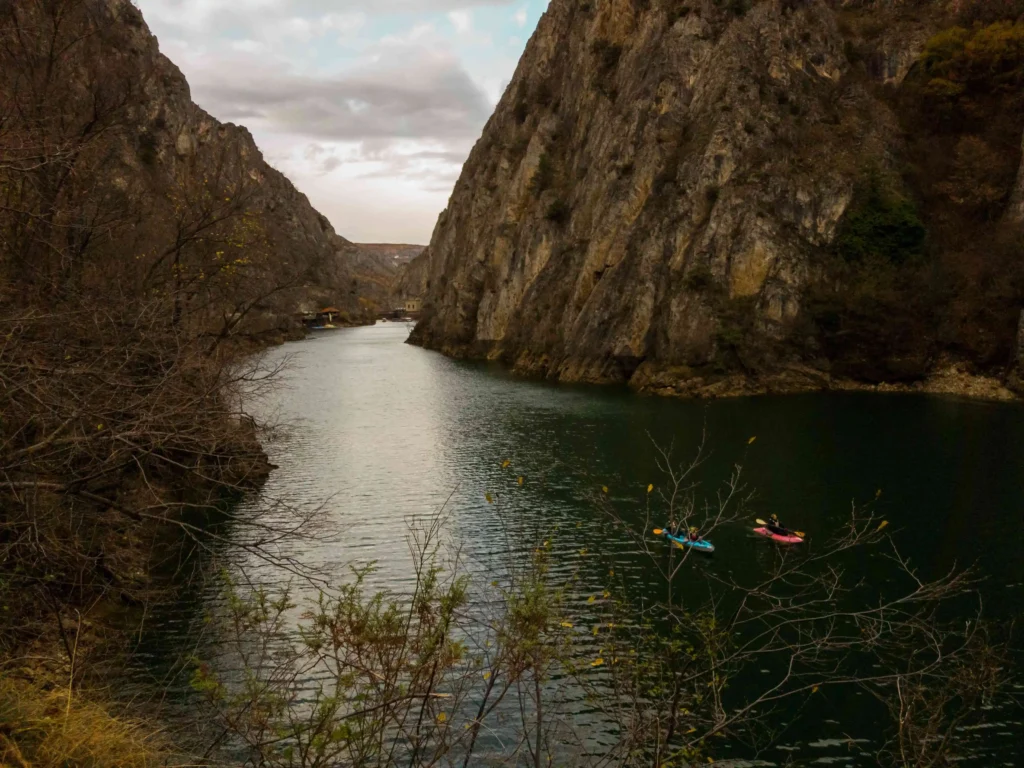
Key Takeaways
- Adults who spend at least 120 minutes per week in nature are significantly more likely to report good health and high wellbeing (White et al., Scientific Reports, 2019)
- Just 20–30 minutes outdoors reduces cortisol, your primary stress hormone by 21% (Hunter et al., 2019)
- Outdoor exercise produces greater decreases in tension, anger, and depression than the same exercise done indoors
- Physical drain is the mechanism, demanding activity creates the deepest mental reset, not just passive time in green space
What the Wellness Industry Gets Wrong
Adults who report spending no time in nature show no meaningful wellbeing advantage over those who get a few minutes, but the jump happens fast. Two hours a week is the threshold where significant benefits begin (White et al., Scientific Reports, 2019). Most wellness advice doesn’t mention that number. It should be the starting point.
The conversation around mental health usually points inward, talk to someone, track your mood, meditate, try breathwork, download something. None of that is wrong. But it’s all looking at the problem up close, processing it, managing it, building coping strategies around it.
What it often skips is the other option, go outside, make yourself tired, and let the environment do the work.
There’s a version of this that old people in villages have lived out without ever calling it therapy. They’re outside most of the day. They move a lot. They sleep well. They live long and healthy lives. No subscriptions. No protocols. Just outside, consistently, as a natural part of being alive.
Modern wellness framing treats nature as a supplement, a scenic backdrop for a mindful walk, a nice addition to your routine. That’s underselling it significantly.
Unique Insight
The people I know who handle stress the best aren’t the ones with the most refined coping strategies. They’re the ones who go outside the most. That’s anecdotal, but it holds across every person I can think of. The correlation is too consistent to ignore.
What the Research on Nature Therapy Actually Shows
People who spent at least 120 minutes per week in contact with natural environments were 59% more likely to report good health and 23% more likely to report high wellbeing, compared to people who spent no time outside, across a study of 19,806 participants (White et al., Scientific Reports, 2019).
The peak benefit showed up between 200 and 300 minutes per week. After that, diminishing returns. But 120 minutes is the floor and most people aren’t hitting it.
Separately, a study measuring salivary cortisol found that 20 to 30 minutes spent sitting or walking in a natural setting produced the biggest drop in stress hormones of any time interval tested (Hunter et al., Frontiers in Psychology, 2019). Cortisol fell 21%. The benefit continued after 30 minutes but slowed. Fastest return on time invested: the first half-hour.
Two hours a week. Twenty minutes at a time. That’s what the data is actually saying.
Why Draining Yourself Completely Is the Point
Personal Experience
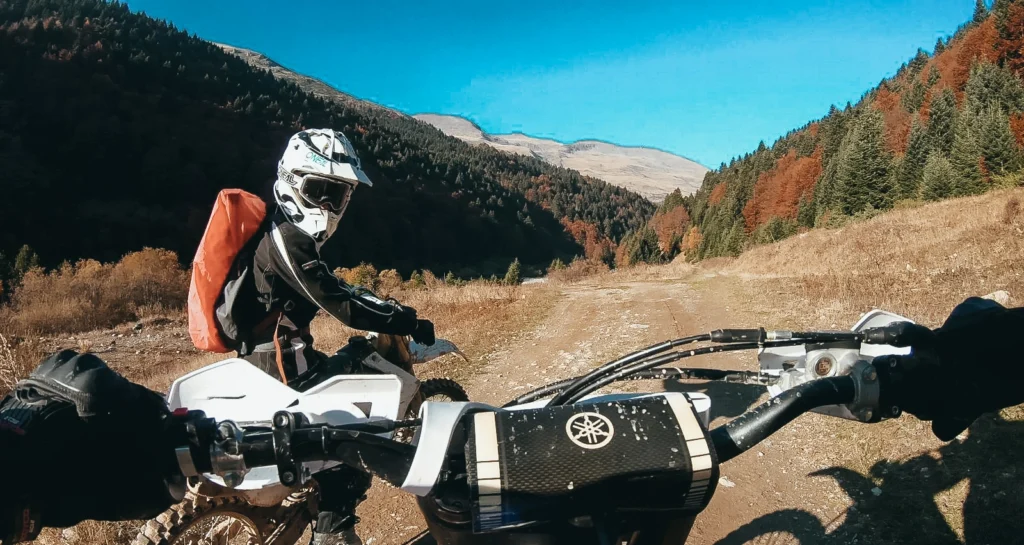
When I talk about going outside for my head, I don’t mean a gentle walk. I mean I go until I’m done. Dirt bike in the mountains where you’re reading technical terrain for six straight hours and one wrong line puts you over the edge of something. A full backcountry snowboard day where the approach takes as long as the riding. Or an MTB route where the climbs are long enough that your legs start complaining halfway up.
I come home too tired to be anxious. That’s not accidental. That’s the goal.
Outdoor exercise, the most accessible form of nature therapy produces measurably better mental health outcomes than the same exercise done indoors. Research comparing indoor and outdoor sessions found that people exercising in natural environments reported greater decreases in tension, confusion, anger, depression and greater feelings of revitalization, compared to people doing the equivalent effort indoors (Barton & Pretty, Environmental Science & Technology, 2010). The environment is doing something that the exercise alone isn’t.
Part of it is sensory. You’re not staring at a wall or a screen, you’re processing terrain, weather, distance, changing light. Your brain is occupied with the present moment not because you’re trying to meditate, but because the mountain is demanding your attention. You don’t need a mindfulness practice. You need something that makes mindfulness unavoidable.
The harder the day, the deeper the reset. That’s been consistently true for me across every discipline, bikes, dirt bikes, snowboard, hiking. The days I come home completely finished are the days I feel the best.
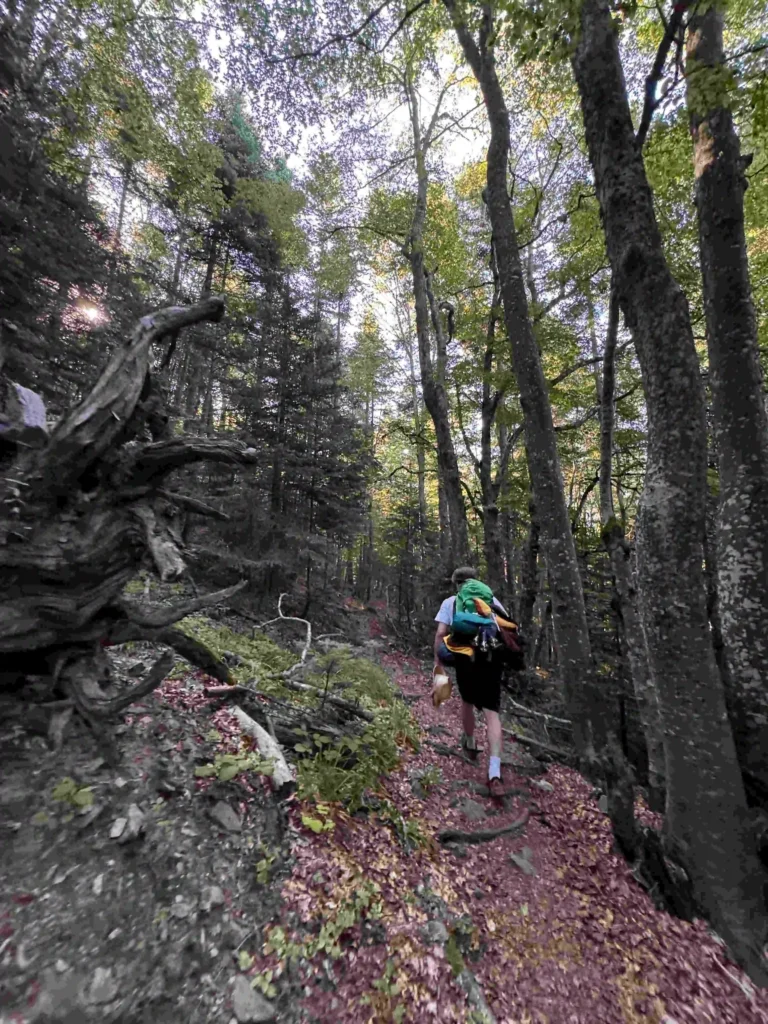
The Part Nobody Says Out Loud – Go With Someone
Personal Experience
Some of the best days I’ve had in the mountains weren’t the hardest technically. They were the ones where I called a friend who was going through something and said: let’s go. No agenda. No plan to fix anything. Just go outside together.
Those days solved more than anything else could have at that point in time.
There’s something about being in the mountains with someone, moving, tired, focused on the same terrain, that makes conversations happen that wouldn’t happen anywhere else. The pressure comes off. You’re both just people somewhere hard and beautiful. Whatever was heavy going in gets smaller because your body is doing something physical and your brain has context, sky, distance, open space, that puts the problem at its real size.
If you have a friend who’s been quieter lately, or who mentioned something that didn’t sound right, don’t overthink it. Call them. Not to talk about it. Just to go somewhere. A long ride, a hike up something that takes effort, a camping trip with a fire and a couple of beers. That’s not avoiding the conversation. That’s creating the conditions where the real one can happen.
Social connection and physical activity are independently linked to better mental health. Combined, in a natural environment, the effect compounds. One day in the mountains with the right person is worth more than most things.
The Notebook in the Forest Park
Personal Experience
I live near a forest park. Nothing dramatic, not a national park, just trees and trails close enough to walk to from home. I bring a notebook. Sometimes I write a few lines. Sometimes a few pages. Depends on what’s going on.
Being outside plus writing is two things working at the same time for me. The environment quiets the noise. The notebook opens, not to write answers, not to judge, not to fix, but to listen! It holds the things I don’t say out loud and the thoughts I am still figuring out.
A shower can lift your mood in ten minutes. Outside for an hour with a notebook and a pen does something different. It doesn’t just lift the mood. It puts things in their correct order.
If you’ve never written outside, it’s worth trying. No system required. Just paper and somewhere you can sit without a screen.
How to Actually Do This
Not a protocol. Not a checklist. Here’s what it actually is:
Go outside. Make it hard enough that you have to pay attention. Bring someone if you can. Come home tired.
The specifics of your nature therapy practice are yours, dirt bike, MTB, trail run, backcountry hike, a long day on skis, even just a walk somewhere you’ve never been. The activity doesn’t matter as much as the intention. You’re going outside to be somewhere, not to exercise while outdoors. That difference is real.
A few things that consistently make it work better:
- Duration over intensity on rough days. When you’re already mentally flat, a long, moderate day does more than a short, brutal one. You need the time, not just the exertion.
- Leave the phone somewhere inconvenient. GPS if you need it, then screen-down in a pocket you don’t check. The goal is to actually be out there, not to be outside while still half-present online.
- Complete the loop. Good food, shower, rest. The reset includes the recovery. Don’t shortchange it.
Two hours a week is the threshold the research points to. Most people reading this clear that in a single session. The question isn’t whether you have time. It’s whether you’re treating it as the priority it actually is.
Frequently Asked Questions
Does it have to be mountains or wilderness, does a local park count?
Yes. A 2019 study of nearly 20,000 people found the wellbeing benefits kicked in at 120 minutes per week regardless of whether people visited parks, coastlines, forests, or mountains (White et al., Scientific Reports, 2019). Urban green spaces, local trails, and coastal paths all produce measurable cortisol reductions. More wild and immersive environments amplify the effect, but the local forest park still counts.
Can time outdoors replace professional mental health support?
No and it’s not trying to. For anyone dealing with serious depression, anxiety, or trauma, professional support is the right move. What the outdoors offers is a complementary input, something that regulates your nervous system, reduces cortisol, and shifts your perspective in ways that make everything else more manageable. Use both. The research on nature’s benefits doesn’t come with a disclaimer that it replaces clinical care.
Is outdoor exercise genuinely better for mental health than the gym?
Research comparing indoor and outdoor sessions consistently found that natural environments produced greater decreases in tension, anger, confusion, and depression, plus greater feelings of energy and revitalization than equivalent indoor exercise (Barton & Pretty, 2010). Both are good. Outdoor is measurably better for mental state. Given the choice, go outside.
What if you’re not athletic, can you still get the benefit?
Absolutely. The White et al. study found consistent benefits across all groups, including older adults and people with long-term health conditions. The activity can be as simple as sitting in a park or walking a flat trail. The evidence on demanding physical activity suggests the reset goes deeper when you challenge yourself, but the baseline benefit of just being outside is well established. Start where you are.
How quickly does being outdoors actually change your mood?
The cortisol research found the fastest improvement in the first 20 to 30 minutes of sitting or walking in a natural setting, with salivary cortisol dropping approximately 21% (Hunter et al., Frontiers in Psychology, 2019). After that the benefit continues but slows. If you’re short on time, twenty minutes in a nearby park moves the needle, it’s not nothing.

Filip Petreski is the founder of AFIELD and a multi-sport outdoor athlete. A two-time national cross-country MTB champion, snowboard instructor, and former dirt bike rider, he writes about the people, gear, and culture worth paying attention to in the outdoor world.