
When I was a kid, Goli Otok was something you said to another kid. We’ll send you to Goli Otok because you’re a bad kid. It went between us kids, at the age where you repeat a thing without knowing much about it. We learned about it at school as well, and it was taught the way a lot of things get taught, which is to say it went past me.
Tour companies sell it now as the Croatian Alcatraz. This September I spent an hour there with my wife, free roaming the place. We went through the old buildings, had a little freediving session in the clearest water and a beer before we jumped on the boat.
At a glance
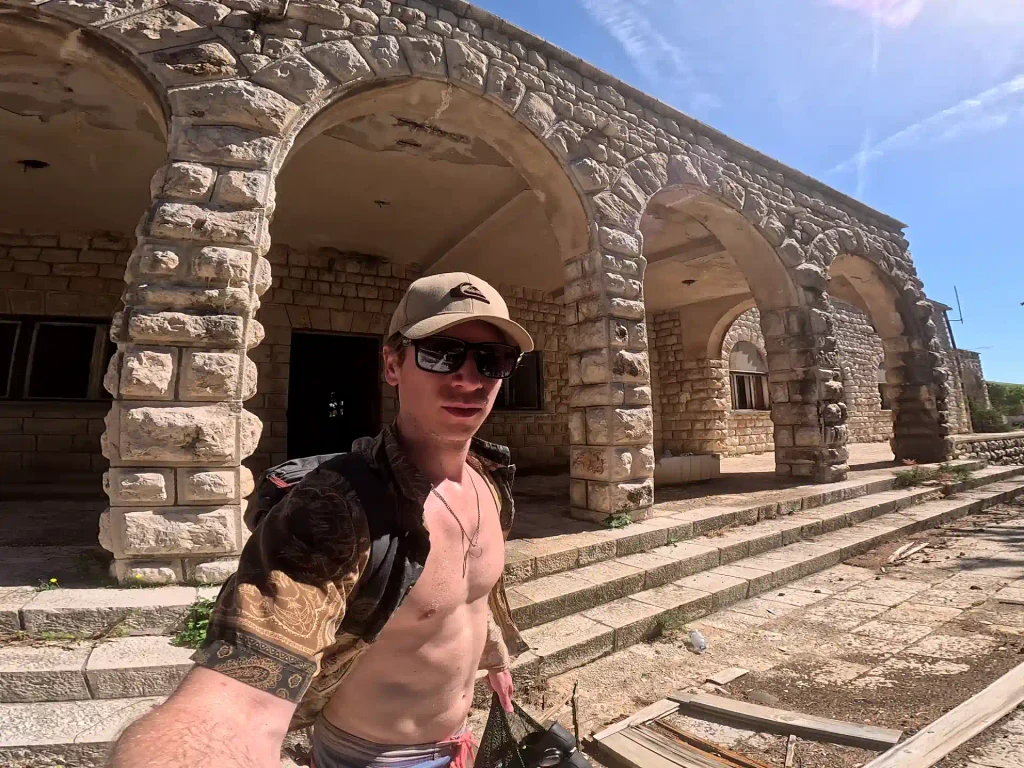
Goli Otok is a small island off the Croatian coast that held political prisoners from 1949 into the mid-fifties. Now it’s empty, protected and boat trips stop there so people can visit the old prison island. We skipped the tractor train and went free roaming instead, had the beach to ourselves and I dived to the edge of a drop-off in the clearest water of the whole trip.
Table of Contents
What Was Goli Otok?
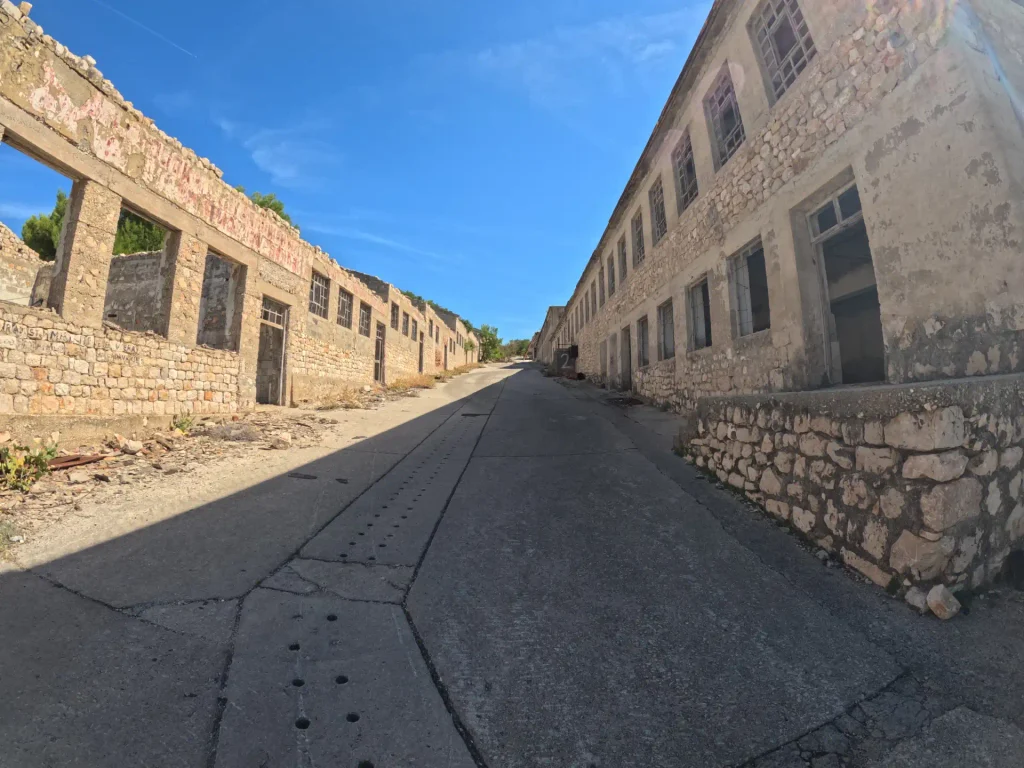
A political prison, and the timing is most of the explanation. Tito broke with Stalin in 1948. The camp opened the year after and held men suspected of being on the wrong side of that split (Balkan Insight, 2019).
The work was limestone. The island is rock and the prisoners quarried it. There were three factories, and men were put on wood, rock or metal.
It closed decades ago. The island is a protected nature reserve now (Wikipedia), which is part of why it looks the way it does.
On the Alcatraz thing: Alcatraz held criminals and this held political prisoners, so the comparison is loose. It gets used anyway because it travels well.
What I knew before going was roughly this: a prison, hard work, heat, breaking rocks. That’s what school left me with and I never went looking for more of it. Most of what I understand about the place now came from the guide on the boat, a woman who lives on Rab and knows the history of every island out there. Nothing she said stuck with me as a line. What stuck was that she pulled out an old paper map and showed us where we were and where we’d already been.
What’s Still Standing?
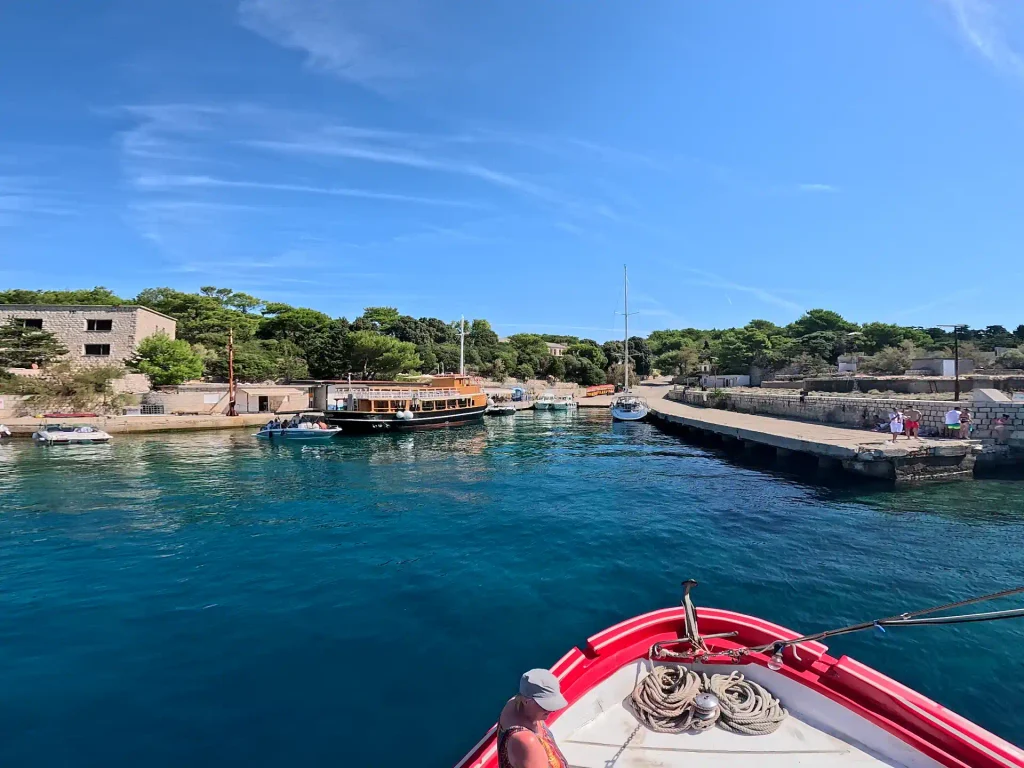
You arrive at a small marina. There’s a restaurant, private boats come in through the day so people can have a beer or lunch. So it isn’t an abandoned island exactly, not at that end of it.
There’s a little train pulled by a tractor that takes the group around. We didn’t take it. We went free roaming instead, which is how you end up inside the buildings rather than looking at them through a window.
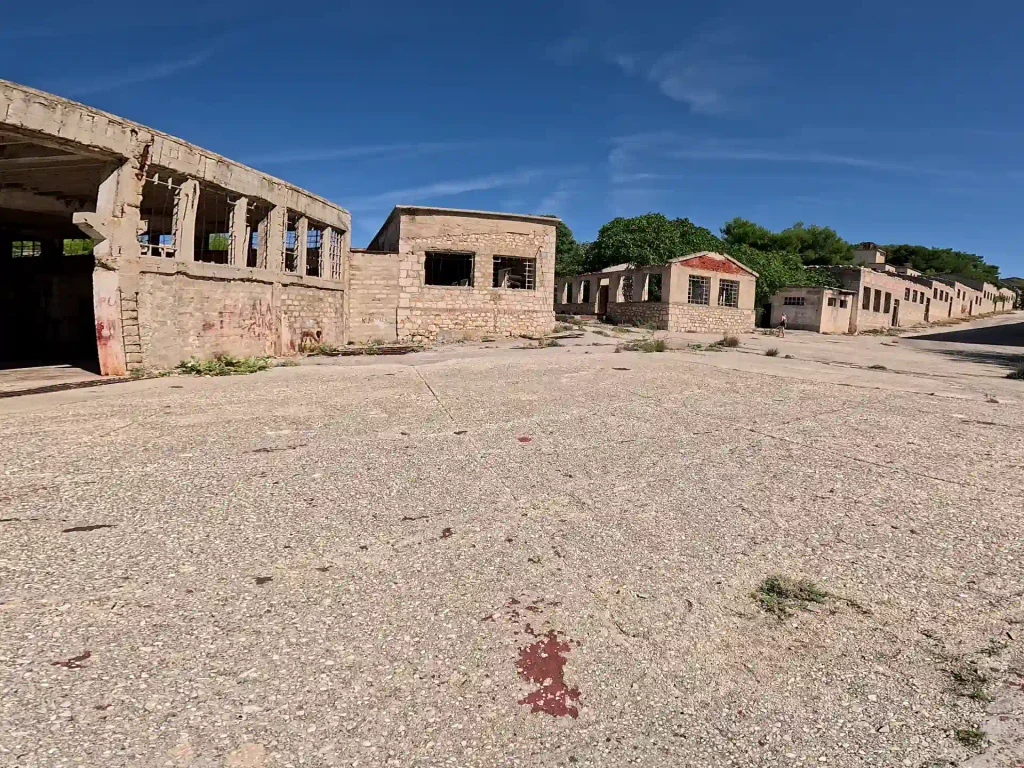
We went into a couple of the factories. Everything is broken. Glass from every window, doors still on some of them, almost nothing left inside. Not much furniture. Just rooms with the weather in them.
The one that stays with me is the building the prisoners called the hotel. It’s where the guards lived. They called it the hotel because it was the most beautiful building on the island, and they were the ones who built it, out of limestone they cut out of the ground here. It has an Italian feel to it. Good balconies. Big.
We went up onto one of the balconies and looked in. No windows, flooring gone, standing there for however long. You can tell it was beautiful when it was in function.
We only knew what it was because there’s a board outside explaining it, the kind you get in a museum.
And there’s cactus everywhere. Growing naturally, all over the island. I love cactus and the way it looks, here it has taken the whole place over.
The Water
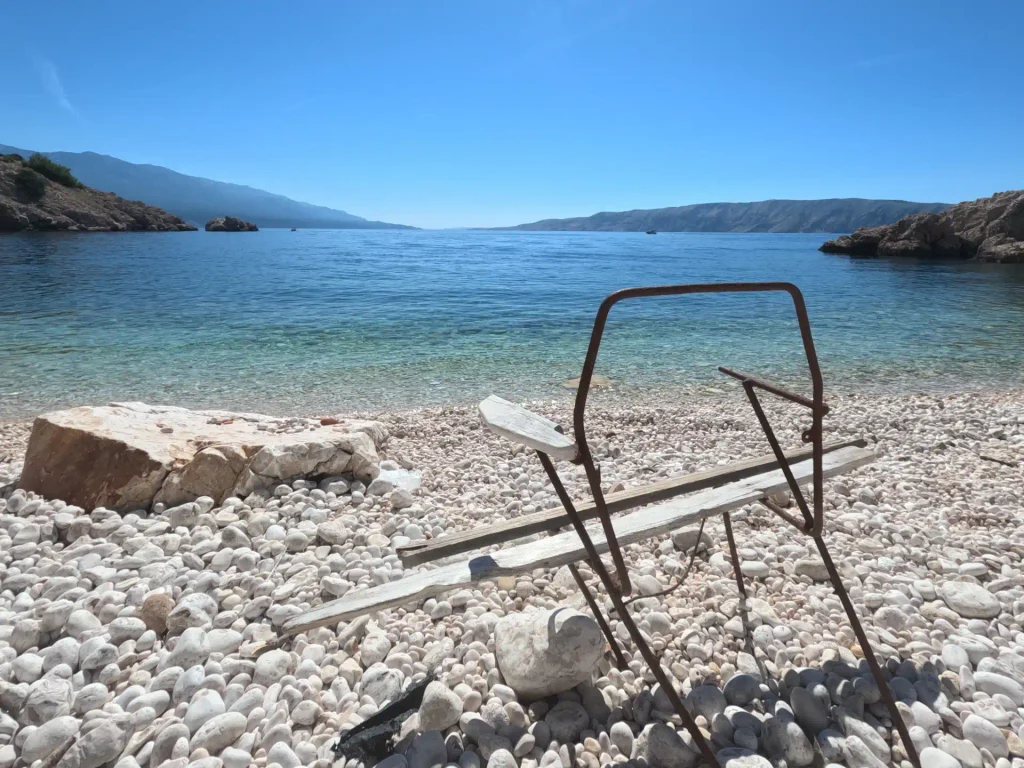
The beach is five or ten minutes’ walk from the marina, and when we got there nobody else was on it. That’s the part I wasn’t expecting. You can be on an island with a restaurant and a tour group and still have a beach to yourself, as long as you’re willing to walk to it.
It’s quiet. You just hear the waves, and here and there a boat passing somewhere in the distance. The rocks on the beach are big and white, and the water is clear because the bottom is rock as well. The whole Adriatic is like that.
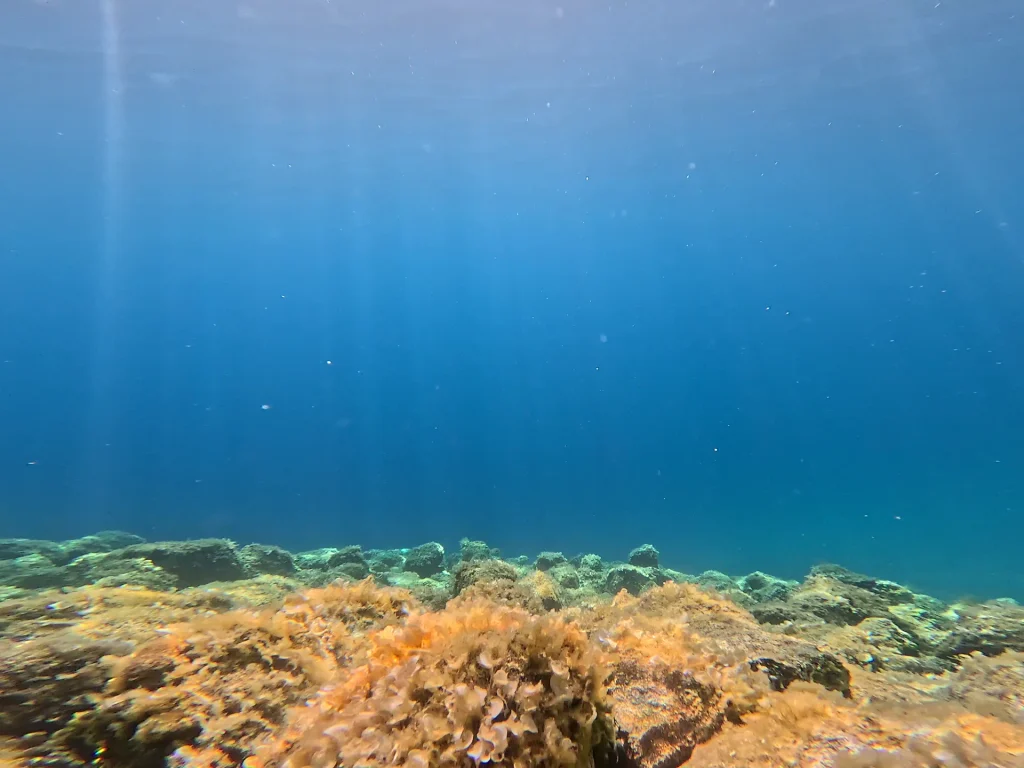
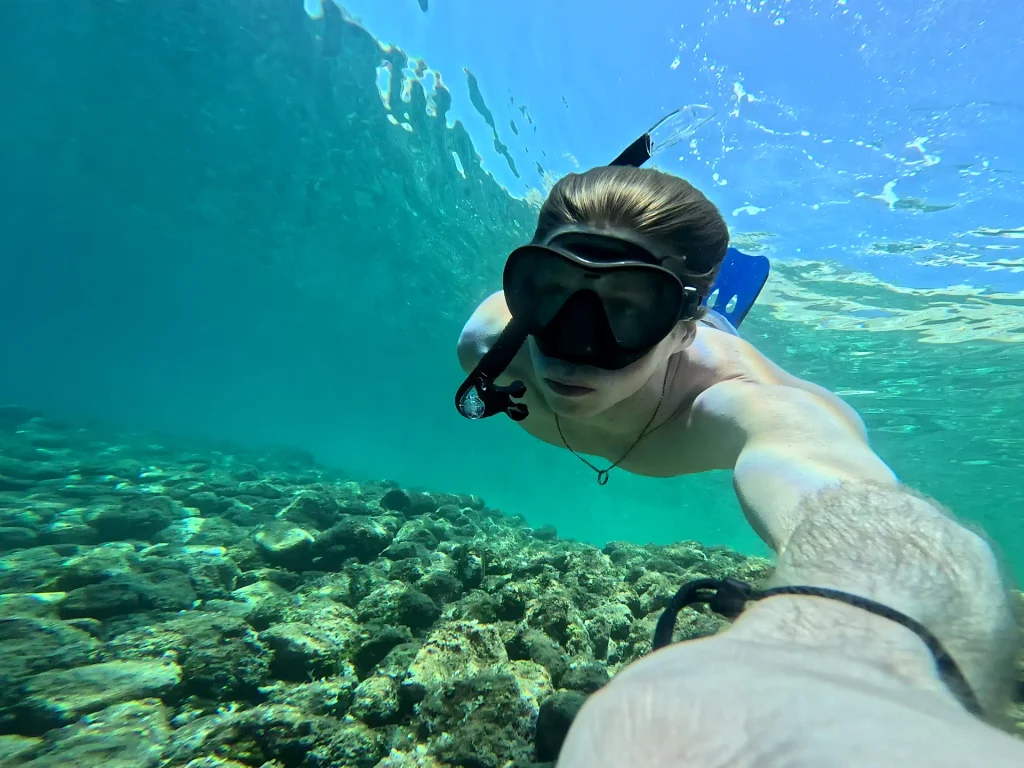
There’s a shallow part, and then it drops. A shelf, and past the shelf it goes down into dark blue and you can’t see the bottom. I had a mask, a snorkel and fins. I wasn’t trying to get deep, I wanted to get to the edge of the drop and feel it, so I dived down to where the shelf ends and stayed there a moment feeling the power of endless blue.
If a bigger fish had come out of the dark I’d have turned myself into a jet ski and left. There were small gaps between the rocks and I went under and through a few of them. Tiny fish, nothing dramatic, it was beautiful. It does the same thing to me that a week of diving with my brother on Rab did, and the same thing going fast does, which is that nothing else is running while you’re down there.
Is It Strange to Enjoy a Place Like This?
Standing there I said it out loud to my wife. This is super weird, coming to a place that was a prison, and now we’re just enjoying life here, because honestly it’s super beautiful.
I don’t have anything after that. Everyone who came here before us was brought here. We came on a boat we paid for, with towels and a backpack.
There’s no shade at that beach and we didn’t bring an umbrella, I’m really white and I burn fast. So we walked back with about fifteen minutes to spare and had a beer at the restaurant by the marina.
Frequently Asked Questions
What was Goli Otok used for?
It was a Yugoslav political prison. The camp opened in 1949, the year after Tito’s split with Stalin, held men suspected of siding with the Soviet Union. The work was forced labour in the island’s limestone quarries, and there were three factories on the island where prisoners were put on wood, rock or metal.
Can you visit Goli Otok today?
Yes. Seasonal boat trips run from the surrounding islands and the mainland, usually as part of a route taking in more than one island. There’s a small marina with a restaurant, a tractor-pulled train that takes visitors around, and information boards at some of the buildings. You can walk into the ruins yourself.
Can you swim at Goli Otok?
Yes. There’s a beach about five to ten minutes’ walk from the marina, big white rocks rather than sand. The water is very clear because the bottom is rock, which is true of the whole Adriatic. Close to shore there’s a shallow shelf that drops away steeply into deep water, so it suits snorkelling and freediving.
What is Sveti Grgur?
The neighbouring island, which held women political prisoners. More than 850 women were sent there from 1950 (Balkan Diskurs). It’s also uninhabited now, boat trips that visit Goli Otok often stop there too.

The boat went on to Sveti Grgur after that. Neither of us knew it existed until that day. It’s the women’s island, and more than 850 women were sent there from 1950.
We had an hour and we didn’t swim, walked about five minutes off the main beach to get away from the group, and there were deer. They came right up to us. We fed them out of our hands.

Filip Petreski is the founder of AFIELD and a multi-sport outdoor athlete. A two-time national cross-country MTB champion, snowboard instructor, and former dirt bike rider, he writes about the people, gear, and culture worth paying attention to in the outdoor world.