
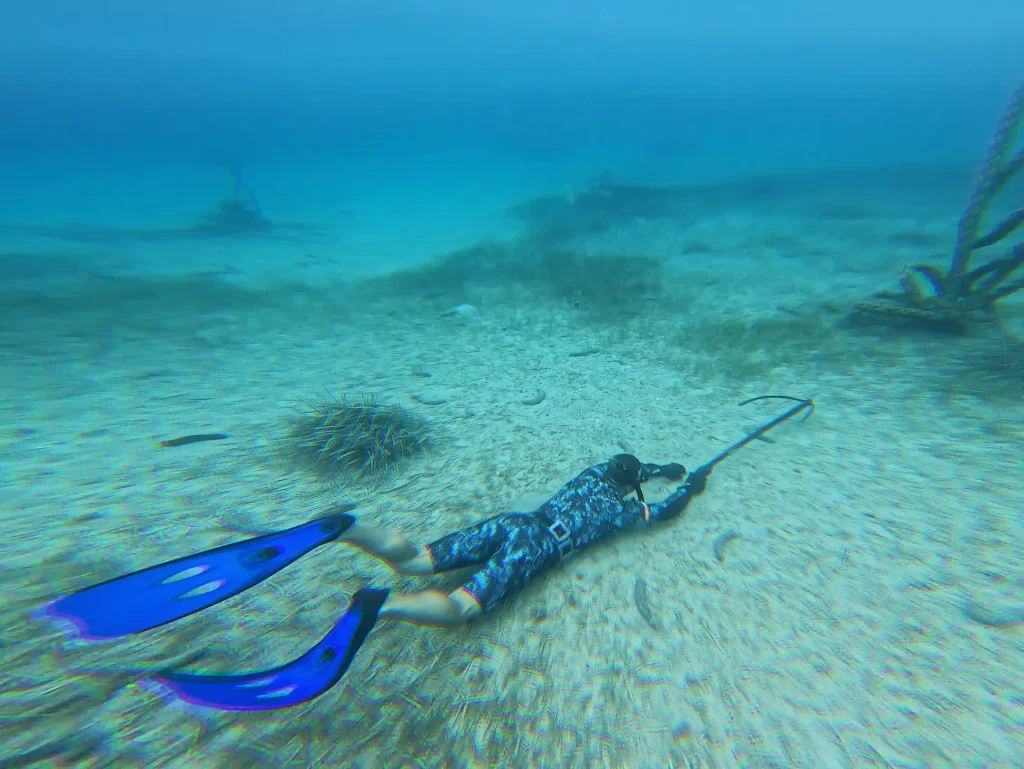
My brother Andrej spent this season working on Rab, an island in Croatia, with two friends, Gjorgji and Damjan. Outside work they started freediving and spearfishing, and by the end of it they were going out almost every day. I went over at the beginning of September for eight days. Everything I know about spearfishing in Croatia comes from that week, watching three people who had started a few months before I got there. I was the worst one in the water.
At a glance
Nobody on Rab bought a spearfishing kit. Andrej bought a snorkel mask, then a pole spear, then a second pole spear, then a 2mm suit, then a speargun, then weights. Each piece came after he ran into the limit of what he already had. I turned up with borrowed fins, a mask and a snorkel. No suit, no weights. I found out fast what both of those are for.
Table of Contents
What Do You Actually Need to Start Spearfishing?
Not much to begin with. Andrej’s order tells it better than a list would.
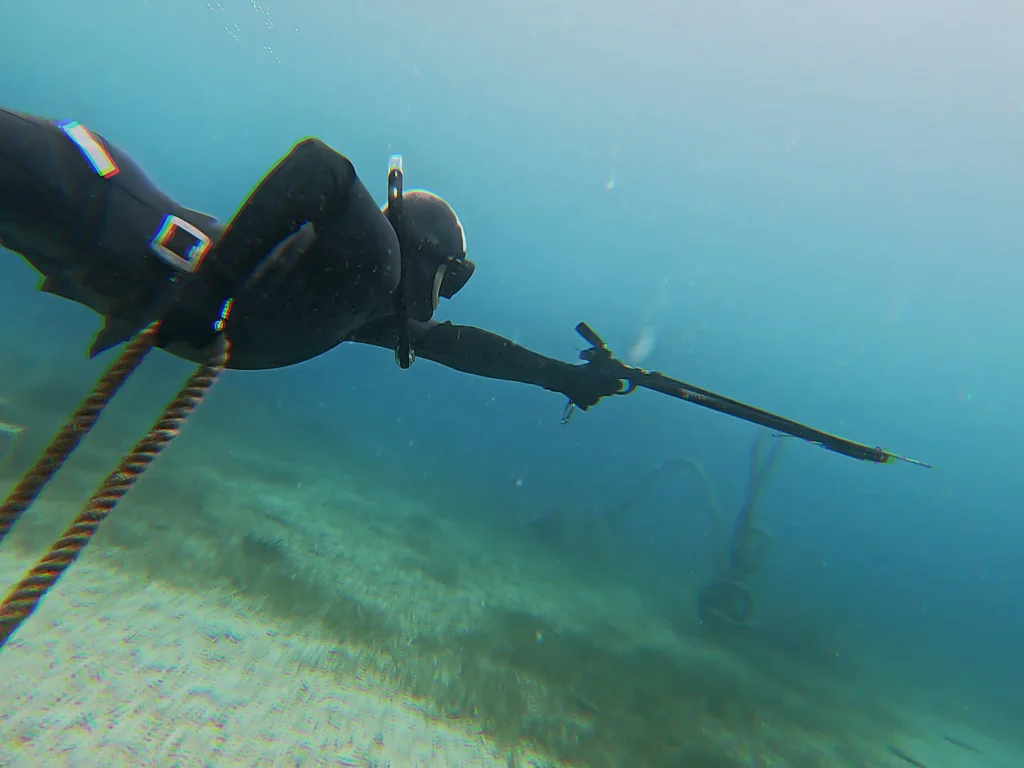
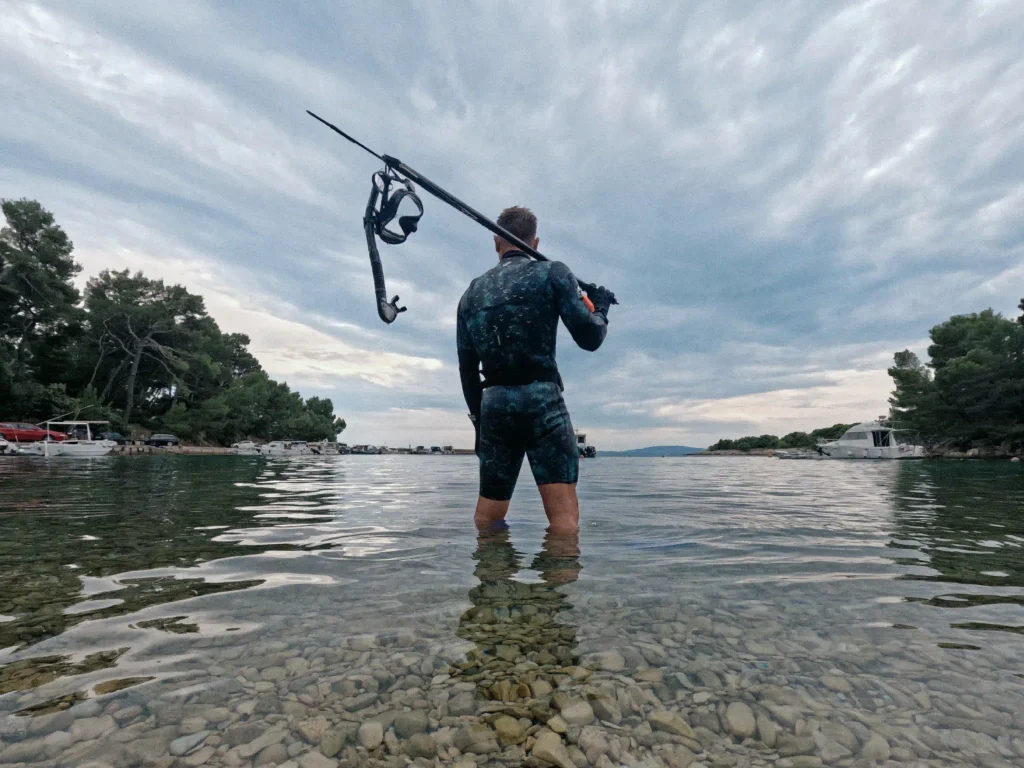
He bought a snorkelling mask first, with the snorkel and fins. That was it for a while. Then a pole spear, which is the simple version, a shaft with an elastic loop, no trigger, no mechanism. He went through two of those before he bought an actual speargun. Somewhere in there came a 2mm wetsuit and then weights.
Gjorgji went the same way and ended up in a full long-sleeve suit with gloves and boots. Andrej stayed in a short-sleeve one. The masks, fins and separguns are all Mares, which I only know because I asked.
The weights are worth explaining because I didn’t understand them until I watched them work. It isn’t one solid three-kilo block. It’s a belt, and you attach separate blocks of metal to it, about a kilo each, so you can run two or three depending on the day and the suit. A wetsuit floats. The weight cancels that out. Once it does, you stop fighting the water on the way down, and you stop drifting up once you’re there.
None of them went all in at the start. They also weren’t guessing, because the people they work with were locals and have been diving that coast for twenty and thirty years, so there was always someone to ask which spot was worth a look and what they’d got wrong. That’s the same pattern I’ve hit in every sport I’ve tried, the equipment arrives when the activity asks for it.
What Happens If You Show Up Without It?
I borrowed fins, a mask and a snorkel from my brothers spares. No suit, no weights.
This isn’t my first time freediving. I’ve done it in Egypt, over coral, and I know how to equalise. What I’d never done was freedive next to people who’d been at it every day for months. You find out where you are pretty fast.
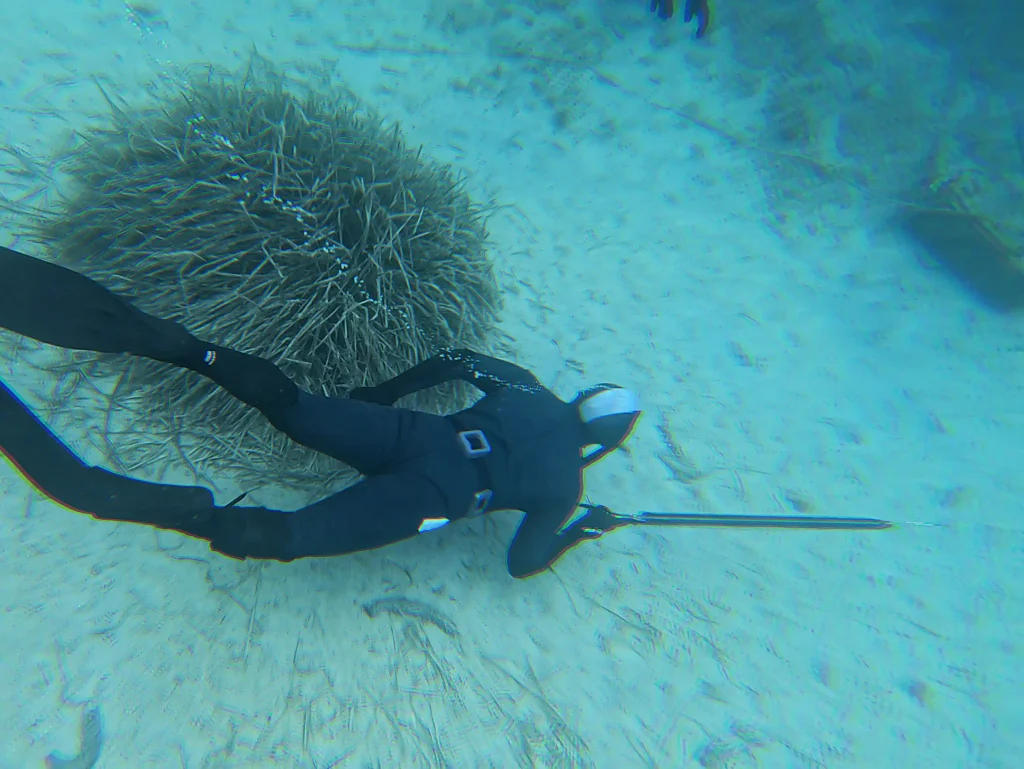
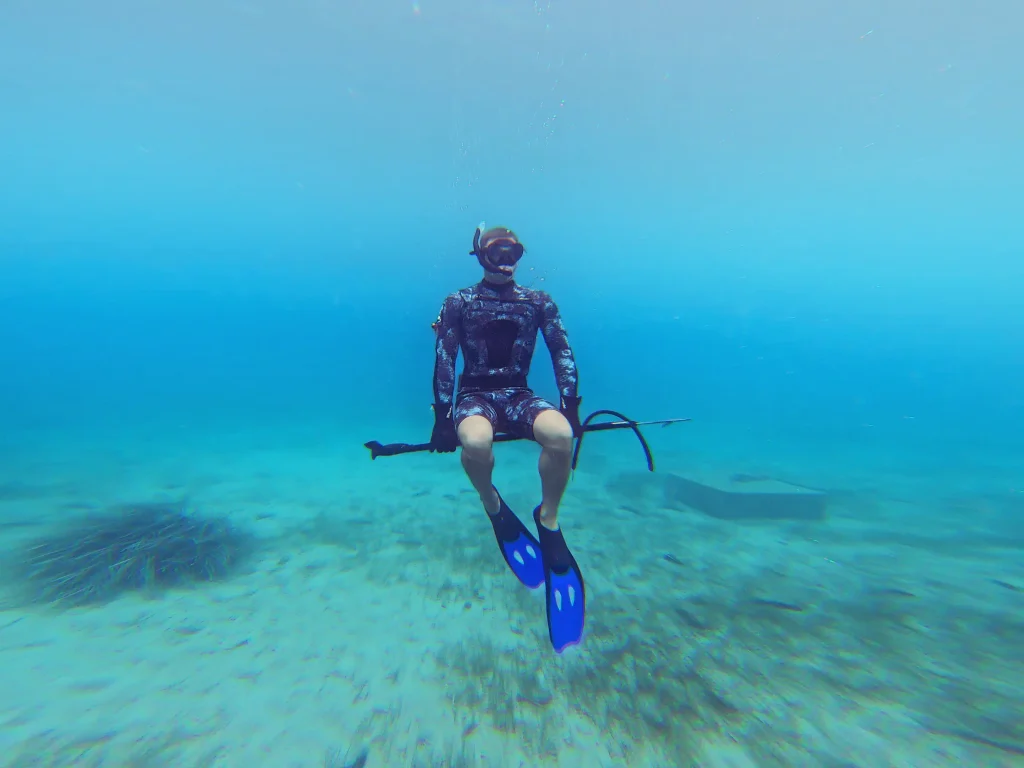
They sank. I had to swim down, and then keep working to stay down. Two or three kilos of lead does that for you and it doesn’t get tired. I was spending energy just to be at the depth they were resting at.
The clearest version of this happened while I was filming them. I had the GoPro, they were on the bottom doing their thing, and I’d get a few seconds of decent footage before I started rising. Slowly, without deciding to. The people I was pointing the camera at stayed exactly where they were, and I floated away from my own subjects.
The other one was cold. The water on Rab is clear and properly blue, good visibility all the way down, which matters for spearfishing because you have to see something before you can take a shot at it. It’s also colder a few metres down than at the surface and it gets there faster than you expect. There came a point where I was shaking and had to get out. Andrej and Gjorgji carried on in their suits.
On breath, they were holding forty to fifty seconds on the bottom. I was at something like twenty, and that was without pushing it. A few months of going out daily had taken them somewhere I hadn’t been.
So Does the Gear Matter or Not?
Both, which is annoying, but it’s what happened.
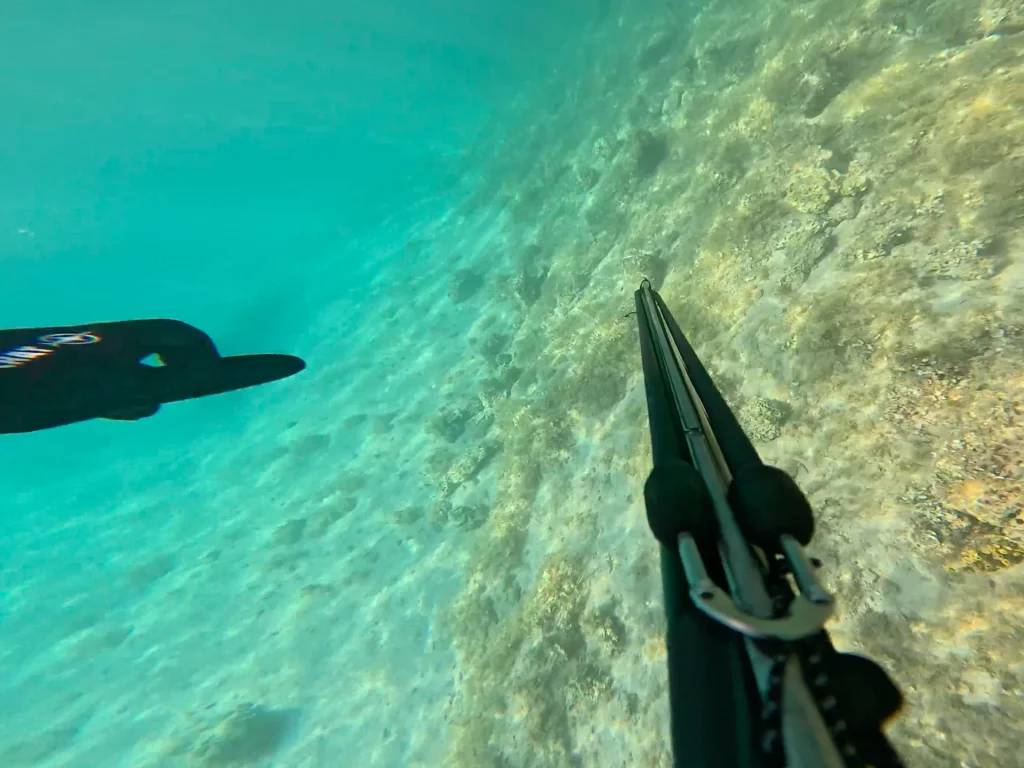
You don’t need any of it to start. Andrej started with a mask, snorkel and fins and got in the water. I got in with borrowed spares and saw everything I went there to see, rock, sand, patches of seagrass, that clear blue that makes the whole thing worth doing. None of that needed buying.
And then the suit and the weights turned out to be real, and I felt their absence specifically, not in theory. I was colder, shallower and less able to stay still than three people carrying maybe two hundred euros of kit between the relevant bits. I didn’t even try the weights, which I regret a little now.
Here’s the honest version. The gear buys you time in the water and nothing else. My brother wasn’t better than me because of the belt, he was better because he’d been in that water almost every day for a season and had worked out a technique. I’d have been warmer in a suit and still worse than him. That’s the same argument as not needing a rig to sleep outside, with one thing added, once you’re going often enough, the right kit is what lets you keep going.
A Month of Frozen Fish and One Storm
The catching is a smaller part of this than it looks.
Across about a month they’d caught five or six small fish. One was a sea bass. I couldn’t tell you what the others were and I couldn’t at the time either. They are genuinely going out to catch fish, that’s the point of carrying a speargun, but a real catch is rare enough that it can’t be the reason you keep getting in the water. Everything they did catch went into the freezer.
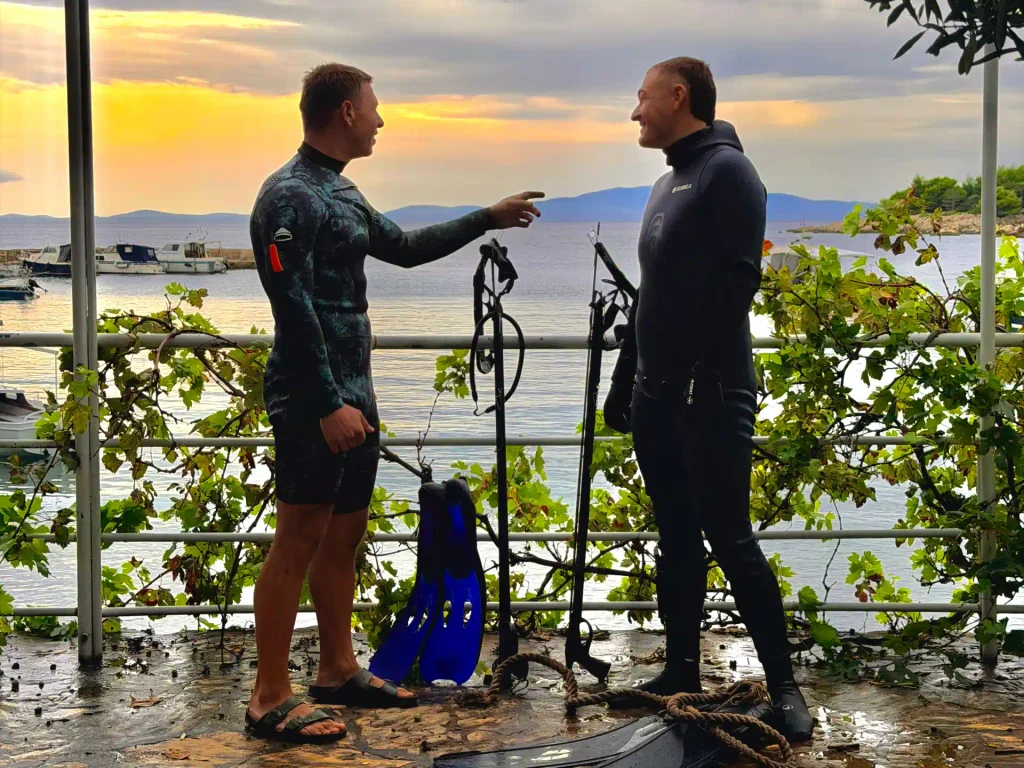
The day we took the photos for this was stormy and there was nothing down there at all. We watched for a gap in the weather, got in, took the pictures, got out. No fish.
After the filming session the same day, they pulled out everything they’d been freezing for a month and cooked all of it. We found a spot with something over our heads so the rain wasn’t an issue, and the three of us plus my wife ate a month of their fishing in one afternoon. They’d been saving it so we can celebrate and try everything together.
Frequently Asked Questions
What gear do you need to start spearfishing?
A mask, a snorkel and fins will get you in the water. After that, a pole spear is the cheapest way to start actually hunting, since it’s just a shaft and an elastic loop with no trigger mechanism. A wetsuit and a weight belt come next, and most people buy them once they’re getting out often enough to notice the cold and the effort of staying down.
Do you need a wetsuit for spearfishing?
Not to try it, and yes if you want to stay in. Water a few metres down is noticeably colder than at the surface, and without a suit you’ll be shaking and heading for shore long before anyone wearing one. Thickness depends on where you are. A 2mm suit was enough on the Croatian coast in early September.
Why do freedivers wear weights?
A wetsuit is buoyant and pushes you toward the surface, so weights cancel that out. They go on a belt as separate blocks of around a kilo each, so you can run two or three depending on conditions. Without them you have to swim down and then keep working to stay at depth, which burns the air you’re trying to hold onto.
How long do you need to hold your breath to go spearfishing?
Less than you’d guess to take part, and it improves fast with regular diving. After a few months of going out almost daily, my brother and his friends were comfortable at forty to fifty seconds on the bottom. I manage about twenty without training for it, and that was enough to see everything worth seeing.
I don’t live anywhere near the sea. That’s most of why a week of this was worth it, and why I’d take it again in whatever form it turns up. You’re managing your breathing, keeping yourself calm, thinking about nothing except where you are and how long you’ve got, and everything else stops running in the background. Going slow and holding still did the same thing to my head that going fast does, which I did not expect.
My brother lent me the fins, the mask and the snorkel. Gjorgji and Damjan put up with the slowest person in the group for couple days. I hope they get a serious fish this season, and I owe them a dinner they didn’t have to cook.
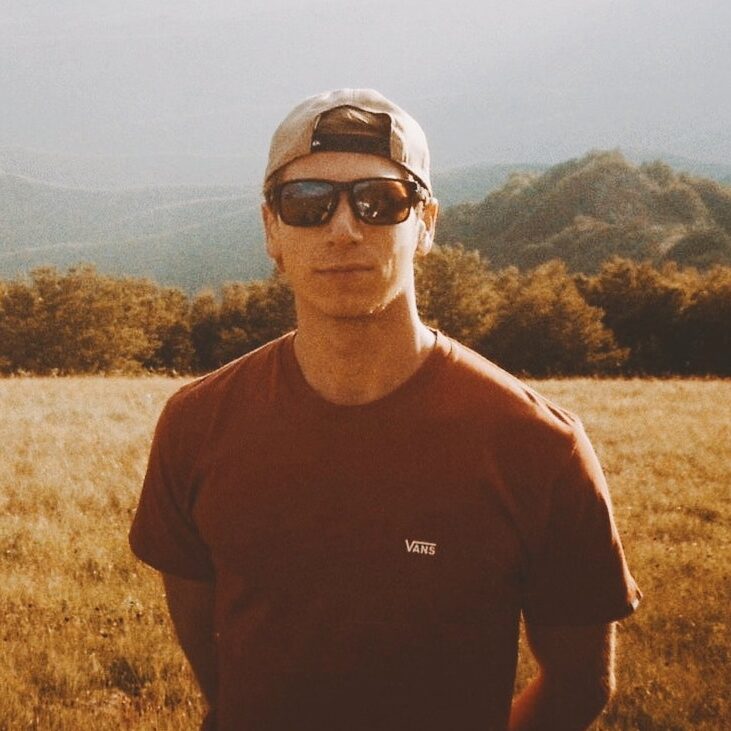
Filip Petreski is the founder of AFIELD and a multi-sport outdoor athlete. A two-time national cross-country MTB champion, snowboard instructor, and former dirt bike rider, he writes about the people, gear, and culture worth paying attention to in the outdoor world.