
490 million people do extreme sports worldwide. Most think it’s about adrenaline. A 2x MTB champion breaks down the real extreme sports psychology, it goes deeper than the rush.
Tell someone you ride mountain bikes, or that you’re into dirt bikes, snowboarding, slacklining and at some point the same line comes back at you. “Oh, you’re an adrenaline junkie.” It’s shorthand. It’s not entirely wrong. But it’s the least interesting part of the answer, and it misses almost everything that actually matters.
Ask someone who’s been doing it their whole life why they still do it. The answer gets more honest. More complicated. Harder to say in one word. There are 490 million people globally who participate in extreme sports (University of South Wales, 2024). Most of them aren’t reckless. Most of them have been doing this for years. And most of them, if you ask the right questions, will tell you the adrenaline stopped being the point a long time ago.
I do MTB, snowboard, dirt bike, slackline, bouldering. I’m writing this while feeling the pull to close the laptop and go ride. That feeling is part of the extreme sports psychology too.
Why being outside is one of the most underrated mental health tools.
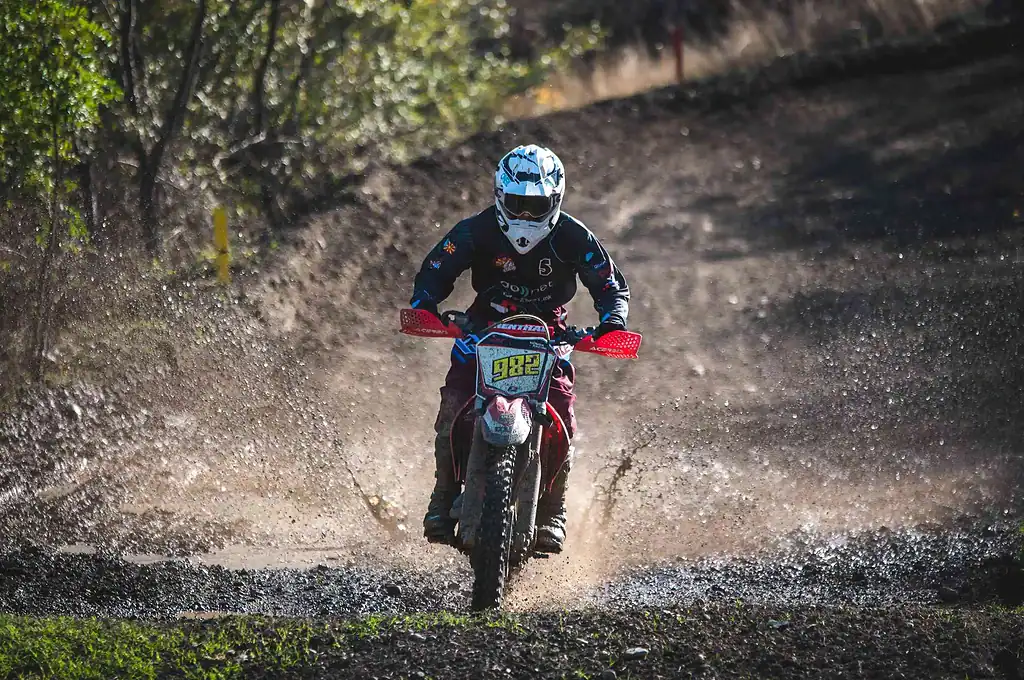
Table of Contents
The Adrenaline Gets Old And That’s Where It Gets Interesting
Yes, it starts with adrenaline. The first time you clip into a pedal and actually commit to a steep section, your body doesn’t know what’s happening. First time a dirt bike engine catches under you and pulls you forward harder than you expected, same thing. The rush is everything. It’s the reason you come back the next day.
But adrenaline has a ceiling. The same stimulus stops producing the same response. The trail that scared you at 16 feels routine at 26. Your body adapts, that’s not a character flaw, it’s biology. And here’s where it gets interesting: to feel the rush again, you have to push further. New terrain. A line you haven’t cleaned. Something outside what your body already knows. The edge of your comfort zone is where the adrenaline still lives.
This is what drives progression. Not ego. Not recklessness. A physiological mechanism pushing you toward growth. Adrenaline triggers brain responses similar to antidepressants, increased blood flow, improved mood regulation, glucose conversion that sharpens focus (PMC / University of Pennsylvania, 2004). The body is designed to respond to it. But it’s also designed to adapt.
I’ve been doing this basically my whole life. MTB, snowboard, dirt bike, all of it. And at some point I noticed something shift. The things that used to get my adrenaline going just don’t anymore, not in the same way. I need to do something I’ve genuinely never done before. Get out of my comfort zone. That’s where the feeling is now. I just came up with a name for it: adrenaline tolerance. Not junkie, tolerant. There’s a difference.
The reframe matters. These people aren’t chasing a rush, they’ve graduated beyond it. They’re chasing the moment just before a new limit breaks. That’s not recklessness. That’s what progression actually feels like from the inside.
Why Your Brain Has No Choice But to Switch Off
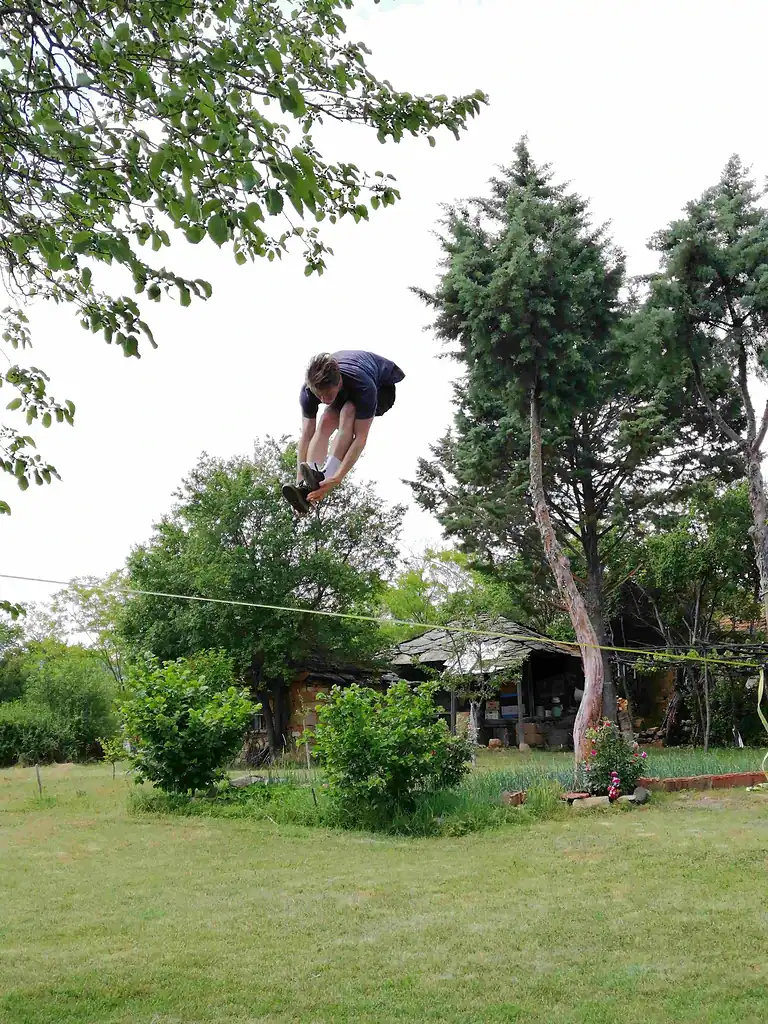
As I’m writing this, I feel the urge to go to the bike park. And the reason isn’t complicated, when I’m on that track, nothing else exists. Not the things I need to do, not whatever is sitting unresolved in my head. The terrain takes everything. You can’t ride a technical section while also thinking about your problems. The brain doesn’t have the capacity. It’s a forced reset and for a lot of athletes, that’s the whole point.
This has a name in neuroscience. It’s called transient hypofrontality, a temporary reduction in activity in the prefrontal cortex, the part of the brain responsible for self-criticism, time perception, and the constant inner monologue that most people can’t turn off. Extreme sports force entry into this state reliably. During it, the brain releases norepinephrine for focus, dopamine for motivation, endorphins for pain suppression, and serotonin afterward. That combination is why the reset feels real, because it is.
The American Psychological Association found something that extends beyond the sport itself, extreme sports participants developed transferable coping skills, flexibility, the ability to focus on what they can control, adapting when plans fall apart and carried those skills into non-sport stress situations during COVID-19 lockdowns (APA, 2023). The mental training doesn’t stay on the trail. It moves.
A 2025 literature review found meaningful mental health benefits in extreme sports participants, stress reduction, improved emotional regulation, better psychological resilience as sustained outcomes (Discovery Journals, 2025). The reset is cumulative. Regular participants don’t just feel better after a session. They build a different baseline.
We Need to Talk – Mental Health in Extreme Sports
This is a film I watched not long ago called We Need to Talk. I was in tears. It was born out of something tragic, a good person in our community who took their own life and somehow that pain became a conversation the extreme sports world has needed for a long time. I watched people talk about what goes on inside their heads and I recognised myself. Not the darkest parts of the story. But the way they described what this life does to you, what it gives and what it takes, the things you carry that nobody outside of it would understand. I recognise myself a lot in that. This film requires an article by itself and later this week I will write about it.
At Some Point, It’s Not a Choice Anymore
Ask any serious extreme sports athlete what happens when they can’t do it. Injury. A long work stretch. A season that doesn’t line up. And the answer is consistent: something shifts. The mood changes. There’s a restlessness that doesn’t have a cleaner word than withdrawal, a low-level wrongness that doesn’t go away until you’re back on the bike, the board, the trail.
Research has documented this. A systematic review from the University of South Wales found addiction-like patterns in extreme sports participants, mood disturbances when unable to participate, a persistent drive to return, behavioral patterns comparable to those seen in substance dependency (USW / Odette Hornby, 2024). The framing that matters: this isn’t a disorder. It’s a regulatory system. The sport manages energy, mood, focus. Remove it and the system flags the absence.
490 million participants and a market that keeps growing, that’s not a hobbyist trend. That’s people who need this, not just want it.
I don’t even want to think about not being able to do it. I need it. It’s not like I sit down and decide to go ride, it just happens. Something builds and I need to go do something outside my ordinary daily life. I’m still young. I try not to think too far ahead. But the need is real and I don’t think it’s going anywhere.
That vulnerability is part of the story. The sport isn’t separate from who you are anymore. It’s part of the system that keeps everything running.
The Right People Put You on the Right Path
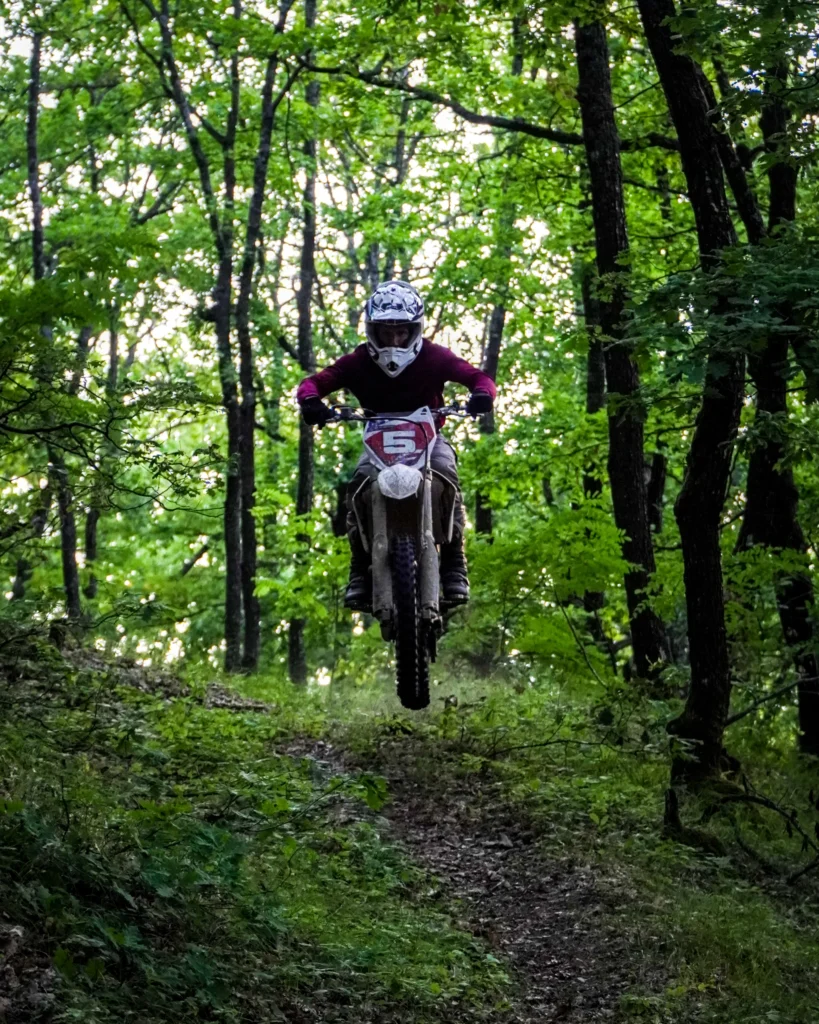
Some of the sports in my life exist because of one specific moment, a friend saying “try this” and handing me something. The first time I got on a dirt bike, it was because a friend let me try his. When something broke on mine, another friend lent me his so I didn’t miss the ride. That’s not background detail. Those moments are why those sports are in my life.
Community in extreme sports does something active, it expands what you try and increases how often you do it. You don’t find a sport in isolation; you find it because someone around you is already doing it. Once you’re in, the frequency goes up because there are people to ride with, trips to join, sessions to show up for. The commitment deepens because it’s shared.
A systematic review from the University of South Wales identified community and belonging as core motivators for extreme sports participation, alongside personal growth and risk management (USW, 2024). The research backs what anyone inside this world already knows: the friendships built through shared risk are different. People who’ve seen you scared, seen you fall, seen you get back on, those friendships last.
Going dirt biking with a couple of good friends is a really good story. Snowboarding with friends is completely different from snowboarding alone. It’s not just the sport and it’s not just the friends. It’s the combination. Maybe it’s deeper than that. Except on powder days. No friends on powder days!
The adrenaline is the door. The reset is why you keep going. The need is why you can’t stop. The people are why it becomes the best part of your life.
The outdoor athlete who can’t answer ‘what’s your sport?’ with one word.
Extreme Sports Psychology: Frequently Asked Questions
Is extreme sports participation actually good for mental health?
Yes, with solid research backing. The American Psychological Association found participants developed transferable coping skills, adaptability, focus, resilience, that extended beyond sport situations (APA, 2023). A 2025 literature review confirmed meaningful benefits including stress reduction and emotional regulation. Flow state, the brain’s forced present-tense focus is the primary mechanism.
Why do extreme sports feel addictive?
Because for regular participants they function as a genuine regulatory system for mood, energy, and focus. A University of South Wales systematic review (2024) documented addiction-like patterns including mood disturbances when unable to participate. This isn’t pathology, it’s the body signalling that a key outlet has been removed. The 490 million people globally in extreme sports aren’t all reckless. Most have built a need that’s biological.
Does the adrenaline rush stop working over time?
Yes, adrenaline tolerance is real. Experienced athletes consistently report needing to push into new territory to produce the same physiological response. This is what drives progression, the comfort zone becomes the new adrenaline threshold. The rush is still there. But it moves with you, always just past the edge of what you’ve already done.
Filip Petreski is a 2x National MTB Champion and founder of AFIELD, an outdoor culture publication for people who can’t answer “what’s your sport?” with one word.
Filip Petreski is the founder of AFIELD and a multi-sport outdoor athlete. A two-time national cross-country MTB champion, snowboard instructor, and former dirt bike rider, he writes about the people, gear, and culture worth paying attention to in the outdoor world.