
I watched We Need to Talk, a documentary about extreme sports mental health, for the first time maybe 2 years ago and I lost it. Not lost it as in forgot about it. Lost it as in it hit somewhere real. I watched it again this week to write this. Same feeling both times.
The film was made by Reuben Lenten, a professional kiteboarding world champion who was diagnosed with major depression. He went looking for answers the way we all do. The search results he got were Andy Irons. Sunny Garcia. Dave Mirra. Ben Rhema. Death, overdose, suicide. “Do you have to kill yourself before people start talking?” he asks in the opening.
I think about that question a lot. That question is the whole conversation this world has been avoiding.
I’m not a psychologist. I’m not a researcher. I’m a 2x national MTB champion who trained six days a week for years, won what I set out to win, and then quietly, with no injury and no outside pressure just stopped. Nobody understood it at the time. I barely understood it myself. I wrote earlier about the psychology behind why extreme sports athletes keep doing it in the first place, the adrenaline tolerance, the mental reset, the need. This article is the harder part of that conversation.
Table of Contents
What the Film Refuses to Ignore
Reuben had his first panic attack in the ocean. In the ocean, his happy place, the place that fixed everything. Depression had taken from him the one thing that was supposed to be the solution. That opening stays with you.
The athletes in this film, kiteboarders, wakeskaters, mountain bikers, are all performing at the highest level of their sports. And they’re all carrying something. The film names a structural problem that nobody inside extreme sports talks about openly, these are mostly small sports with limited money and no real support infrastructure. You’re in it alone. And the whole culture rewards you, sponsors, results, the community, for doing more extreme things. So you keep going. Even when something inside you doesn’t want to.
One in four people will be affected by a mental health condition at some point in their lives (WHO, 2023). Men die by suicide at significantly higher rates than women in almost every country. You would not know it from the way the extreme sports world carries on.
We Need to Talk is the attempt to start that conversation before it reaches the worst place. Watch it.
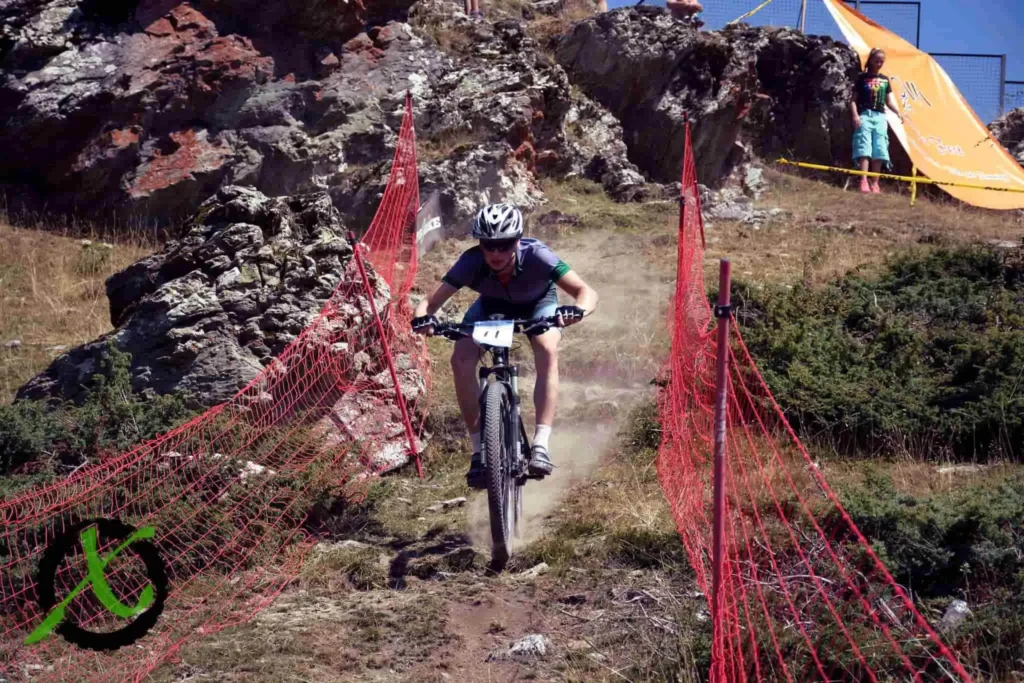
Why Is Mental Toughness Making Extreme Sports Mental Health Worse?
There is a sports psychologist in the film and she says something that a lot of athletes already know but need to hear from outside their own head: mental toughness is the problem, not the solution.
The idea that showing vulnerability means weakness, that having doubts, fears, or nerves means you cannot handle it, puts enormous pressure on athletes to perform being fine. He has worked with over a hundred international athletes across eleven sports. Not one of them was without insecurity, doubt, or negative thoughts. The males, especially, just got very good at hiding it.
Then he gets to ego. The ego needs to look good and is terrified of looking bad. In sport, looking good means winning, the result, the shot the sponsor wants, the numbers going up. Looking bad is everything in reverse. So you build a performance. A version of yourself the world sees. And the real version goes quiet.
I recognise that. I cannot let myself be average at anything I do. That’s not other people pushing me, it’s internal. And it still counts. Self-imposed pressure is still pressure. The source does not make it lighter.
Here is the thing that hit me hardest in the whole film: if you could have solved it yourself, you would have already solved it. The logic of an extreme sports athlete, someone trained to endure, to push through, to get back on the bike after a crash is exactly the logic that keeps you stuck when the problem is internal. You apply the same endurance to your mental state that you apply to a painful race or a difficult recovery. You try to muscle through it. It does not work. Because this is not a physical problem. It is a conversation problem.
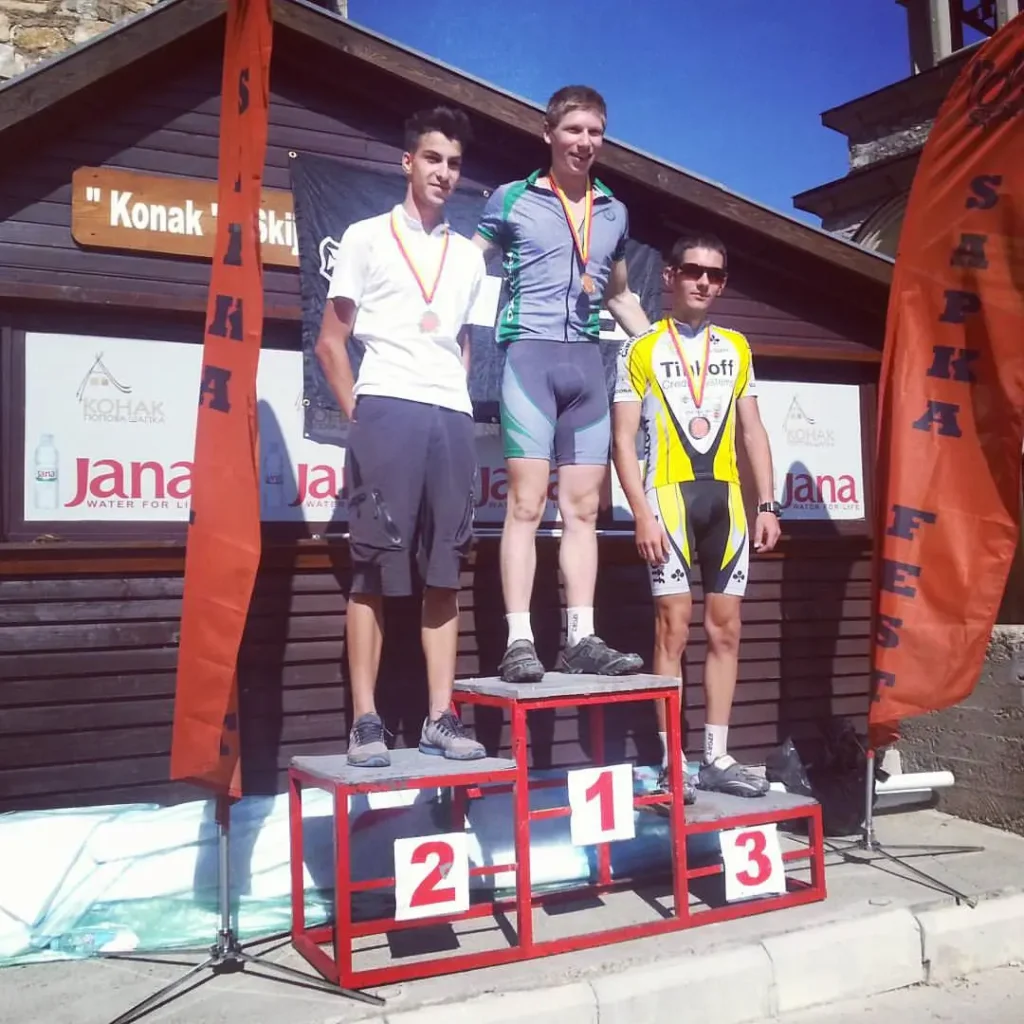
I Won Two National Championships. Then I Just Stopped.
Let me tell you the best race of my career. Not because it ended well, it did not, at first.
I was in the race, running first place, and got a puncture. I had to carry the bike and run more than half a lap to get to the feed zone and change the tire. By the time I got there I had dropped from first to fourth or fifth. There were still laps to go. I changed the tire, got back in, and won. Back to first.
I will never forget that race. Not for the result, for what it showed me about myself. Something in me does not quit. Something always comes back.
That same quality worked against me later.
I was seventeen, racing as a junior. I trained hard, mostly on my own that first full season. Won the majority of races, won the championship. Then I moved to seniors the following year. First race, I finished sixth. I remember exactly how that felt, defeated, like the ground had disappeared. I stopped for a moment. Did not know what to do or where to go with it. My coach stepped in and we got back to work, and by the second or third race I was back.
I had always told myself one thing: I want to be national champion twice in a row. That was the goal. And that is what happened.
And then I stopped.
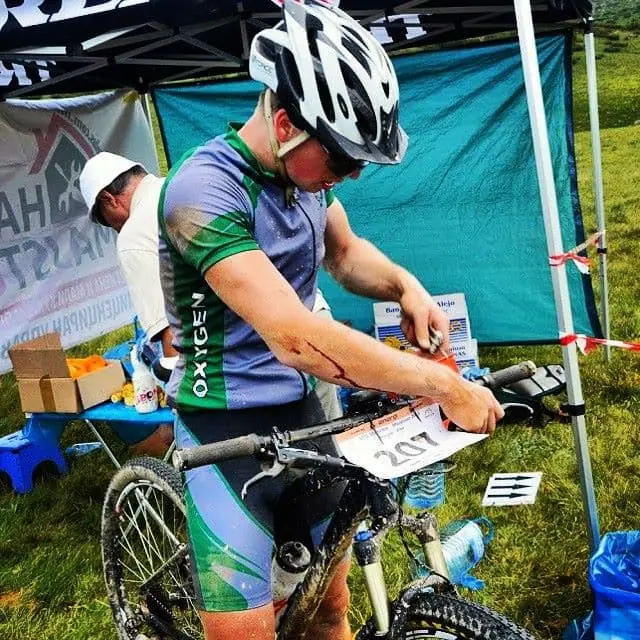
Not because of an injury. Not because anyone said anything. Not because I burnt out in a way I could identify or explain. The next season came and I did not want to go. Did not want to train. Did not want to race. The pull was gone.
Everyone assumed someone had said something to me, something that had put me off. They could not find another explanation. My team kept calling, kept trying to get me a license for the following year. Nobody believed it was simply my own decision. And I did not have a clean explanation to offer them, because I did not fully understand it myself.
The hardest conversation I had was not in racing. It was telling my team I was not coming back. It took time for them to accept it. And when the season ended I had six days a week of training-shaped emptiness and no clear answer for what it was supposed to become.
What helped, more than anything else, was a notebook. Not a diary. I did not write dates or structured reflections. I just put whatever was in my head onto paper and let it leave my system. Things I was carrying that I did not want to carry anymore. Getting them out of my skull and into sentences made space for other things. I still do it. It still helps.
The identity question, who am I when I am not the guy on the bike, did not have a fast answer. It still does not, entirely. But the answer I found was AFIELD. Not a replacement for the sport. I still ride, still snowboard, still do all of it. But a new purpose built around something larger than results. Helping athletes. Talking about this world honestly, from the inside. Building something that lasts beyond a season’s points table. That is the identity I am building now. Yours will be different. But the question is worth asking while you are still competing, not only after it ends.
You Can Endure the Sport. You Can’t Endure the Silence.
Extreme sports makes you very good at endurance. Physical pain, difficult conditions, bad races, long recovery, you get through it by continuing. By not stopping. That is what the training builds, year after year. And it is a genuinely useful thing to build.
Until it is not.
Because when something goes wrong internally, you apply the same logic. Push through it. Continue. You will get there. And sometimes you do. And sometimes you reach the end of a day and you are lying in bed and you are alone with your thoughts and the pushing does absolutely nothing. Because thoughts are not a terrain problem. You cannot ride through them.
The athletes in We Need to Talk all describe versions of the same isolation. Small sports, limited support, rewarded for extremes so pushed to do more. The culture says endure. And you endure. And you keep enduring. And at some point the silence is the thing that is doing the damage, not the struggle itself.
The research is clear, these feelings are universal. The psychologist in the film has never worked with a professional athlete who did not have them. The difference between athletes who found a way through and those who did not is not toughness. It is whether they found someone to say it to.
I am not telling you to book a therapist, though there is nothing wrong with that. What actually helped me, and what I hear from people inside this world, is simpler: one person. One friend you can talk to without performing. Not everyone, just one. Saying something out loud makes it smaller. The thing that lives in your head becomes a sentence, and sentences are easier to deal with than the original.
The film is called We Need to Talk. Not “we need to be tougher.” Not “push through it.” We need to talk. About the fear. About what it feels like when the sport stops. About the days when even the thing that usually fixes everything does not fix anything.
If you are reading this and you are in one of those stretches, reach out. The AFIELD contact form is there, and I mean it when I say I will respond. We can email, we can jump on a call, whatever makes sense for you. You do not need to be a professional athlete. You do not need a dramatic story. You just need to be someone having a hard time who does not know who to say it to. That is enough.
We need to talk.
For more articles like this, browse AFIELD Health.
Mental Health in Extreme Sports: Frequently Asked Questions
Is it normal for extreme sports athletes to struggle with mental health?
More common than the conversation suggests. A sports psychologist who has worked with over a hundred international athletes across eleven sports has yet to meet one without insecurity, doubt, or negative thoughts. The suppression of those feelings, not their presence is where the damage happens. The struggle is universal. The silence is the problem.
What do you do when you lose your sport and don’t know who you are without it?
Give it time, but do not try to endure it alone. The identity collapse after a career ends or a serious injury hits is real. What helped most, personally and in the stories of athletes across We Need to Talk: one honest conversation. A person you can actually talk to without performing. The void fills, but usually not by force and not alone.
Why don’t extreme sports athletes talk about mental health more?
The culture rewards toughness and punishes vulnerability. There are limited support structures in most extreme sports. And the ego, as the psychologist in We Need to Talk explains, needs to look good and is terrified of looking bad. Talking about mental health feels like looking bad. That is the trap. This film is the attempt to break it.
Filip Petreski is a 2x National MTB Champion and founder of AFIELD, an outdoor culture publication for athletes who can’t answer “what’s your sport?” with one word. If you want to talk, reach out through the contact form on AFIELD. I will respond.

Filip Petreski is the founder of AFIELD and a multi-sport outdoor athlete. A two-time national cross-country MTB champion, snowboard instructor, and former dirt bike rider, he writes about the people, gear, and culture worth paying attention to in the outdoor world.