
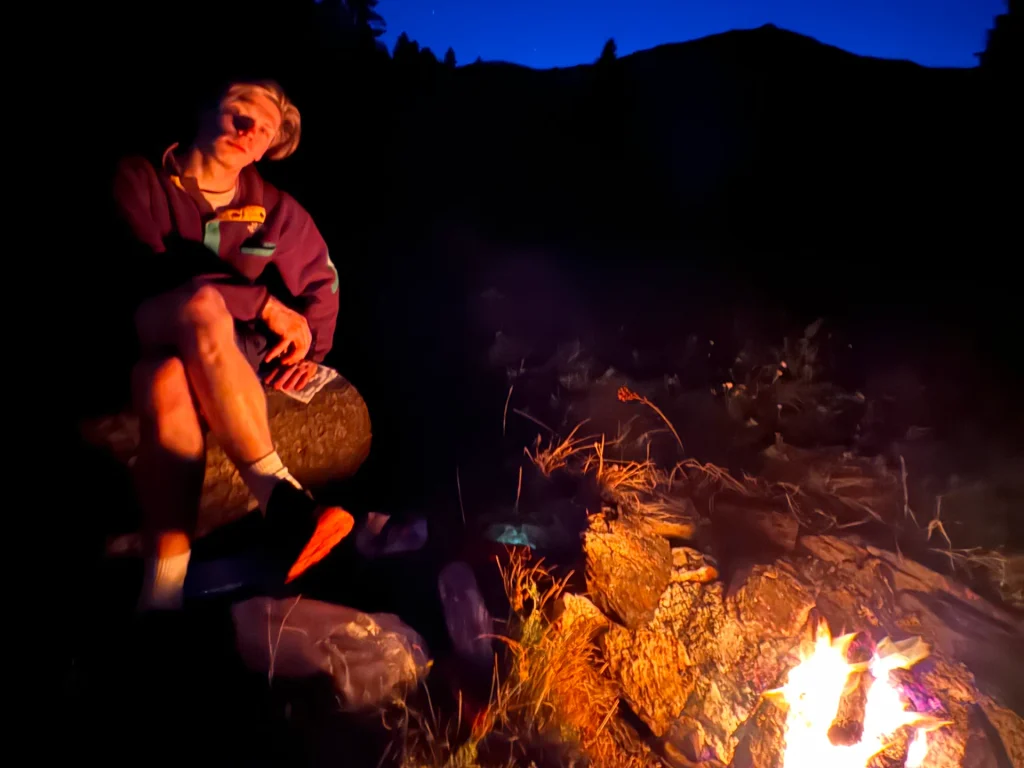
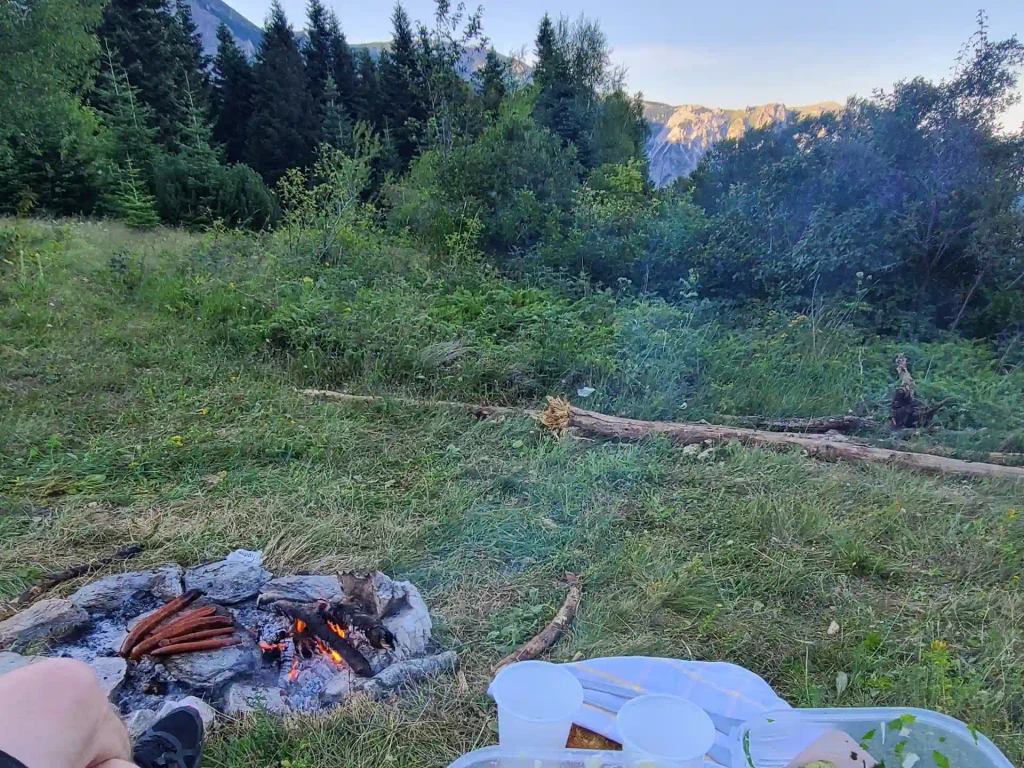
It was just me and one of my best friends, a tent, and the mountains under Solunska Glava, the highest peak of the Jakupica range in Macedonia. Late at night we were prepping food, sausages, a salad, the regular things you eat in the mountains, and talking about life the way we usually do up there. Just dark, and a small campfire keeping us warm and giving us light at the same time.
I was really hard on myself in that period and I wasn’t feeling great. And in life, more or less, everything was good. Everyone around me was healthy, my family was good, everything was fine with my girlfriend, who’s my wife now. We kept talking about life and what’s going on, and at some point I just burst out crying. I didn’t know why, I was just so sad. My friend asked me, “What’s going on?”
It’s November, the month of Movember, the campaign where men grow moustaches to raise awareness and money for men’s health, mental health included. Thursday, November 19, is International Men’s Day. So this is a post about men’s mental health, written from the only place I can write it from: what helped me and the men around me. I’m not a psychologist and I’ve never been to one, which I’ll come back to. AFIELD has written about the silence athletes carry before, and this one is closer to home. After that night, and a few with my friends since, I believe one thing pretty strongly, sometimes men need a little bit of push to talk about something.
Table of Contents
At a glance
Men often don’t know what’s wrong until it comes out, and the old rules a lot of us grew up with (hold it in, rely on yourself, be strong) make it harder to say.Doing something side by side helps. A review of 46 studies of nature-based programs for men found they do best with a purpose, something practical to do and other men around them.
People you just met count too. Commuters who talked to a stranger had a better ride than those who sat alone, even though others predicted the opposite.
Writing it down helps a little, consistently, and private writing showed bigger effects than writing people handed in.
None of this replaces a professional. I’ve never been to a psychologist, and maybe I should have. If you feel like going, go.
What Happened at the Campfire?
“Man, I really don’t know what’s going on,” I told him. “That’s the worst part.” Then it came out that I’d been keeping all of this in myself for so long, and now I was just letting it go. He didn’t try to fix anything, he just sat there with me, quiet, while I let the bad stuff out, and later we went back to talking about life and having fun like any other night on the mountain. That was the comforting part, and honestly that’s why friends are here, why people are here.
I still can’t tell you what it was. I’m not going to call it depression, because nobody diagnosed anything and I never went to anyone who could. I was hard on myself, everything around me was fine, and I felt bad anyway, for whatever reason. After that night I felt way better, and I can’t explain that part either.
Research on men and depression helps with the not-knowing a bit. A 2016 review in Clinical Psychology Review pulled together 37 studies and found that sticking to traditional masculine norms affects men in three ways, how they experience and show what they’re going through, whether they look for help at all, and how they manage it. Those norms are the old rules a lot of us grew up with, which a 2026 review on men’s mental health sums up as holding emotions back, relying only on yourself and “being strong.” My guess is that if you’ve practiced that for years, you just don’t have the words ready when it finally comes out, and I didn’t have them that night.
Why Do Men Need a Push to Talk?
I’ve known most of my friends my whole life. They’re the same group that ends up trying every sport, snowboarding included, so I can usually tell when things aren’t moving well for one of them, with work, with women, or just with life. When I see it, I push a little. “What’s going on? Tell me about it. It’s okay, bro, just share it, it’s going to make you feel easier.” Honestly, I can’t remember exactly what I say, because in that moment I’m living it, just trying to help. It’s the same question my friend asked me at the fire.
The other thing I do is get them out. A few times, when friends went through a breakup or a bad stretch, I took them dirt biking, some of them on a dirt bike for the very first time. You get out, you spend the day with friends, you have a laugh, you try something you’ve never tried, and everything is better. Like, everything was better.
There’s research on men’s mental health that fits this. In September the University of Stirling reported on a review published in BMC Public Health that looked at 46 studies of nature-based programs for men, from Men’s Sheds in Australia to walking football in Scotland and forest therapy in Japan. Men’s wellbeing went up most when the activity had three things: a purpose, something practical to do, and support from other men.
The lead researcher, Josh Dumbrell, said it in one line: “Men often want to do something and feel useful before they will open up.” Men’s Sheds, local spaces where men do craftwork and spend time together, have a slogan for it, “Shoulder to Shoulder,” short for “Men don’t talk face to face, they talk shoulder to shoulder.” A day on dirt bikes isn’t a program, but I recognize the shape of it.

Does Talking to Strangers Actually Help?
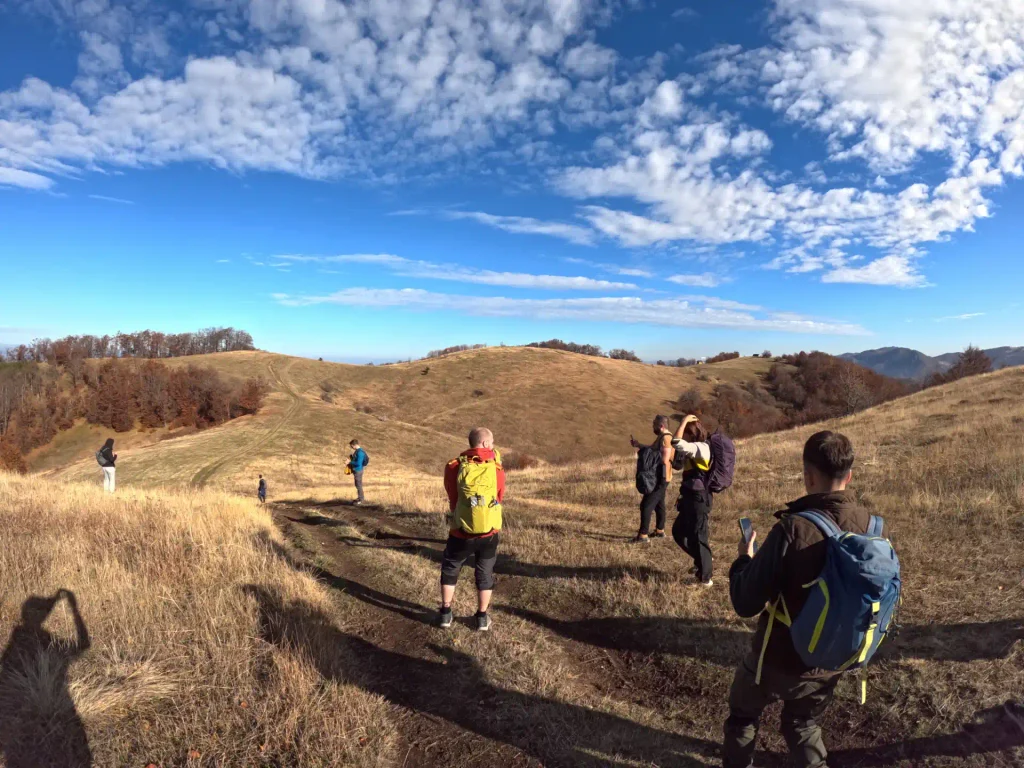
I’ve worked from home for years now, a lot of last summer from a table in the forest, and the last two weekends I spent on the mountains with people I barely knew, a group of about ten that gets together over WhatsApp, shares cars and goes hiking. I already wrote about the mushrooms we found on Cer. What I didn’t write about is the talking.
When you spend basically a whole day together, eventually you’re going to start talking, and if you don’t feel like it, you can walk alone for a while, and that’s perfectly fine. I really enjoy the talking part. I want to hear how other people live, what they do, what they’re into, the basic stuff, and you just get familiar with them. Be friendly, be nice, be polite, and everything is good.
It helps me a ton, and I think it’s because those conversations aren’t about me. You end up following everyone else’s stories and talking about whatever they’re talking about. It’s also a big part of why I started the podcast.
Psychologists have tested this. In a 2014 study, Nicholas Epley and Juliana Schroeder asked commuters on trains and buses to talk to a stranger near them, keep to themselves, or ride as normal. The ones who talked had a more positive ride, and it didn’t make them any less productive. A separate group, asked to predict how it would go, expected the exact opposite. Part of the reason, the researchers found, is that people underestimate how much the person next to them wants to talk too.
Another 2014 study, by Gillian Sandstrom and Elizabeth Dunn, found students were happier and felt more like they belonged on days they talked with more classmates than usual, and in two follow-up studies, interactions with acquaintances (people you only know a little) were again tied to social and emotional well-being. It measured how the two go together, so it can’t prove the chats caused the good days. Ten people on a mountain for a day is a lot of acquaintances, though.
What If There’s No One Around?
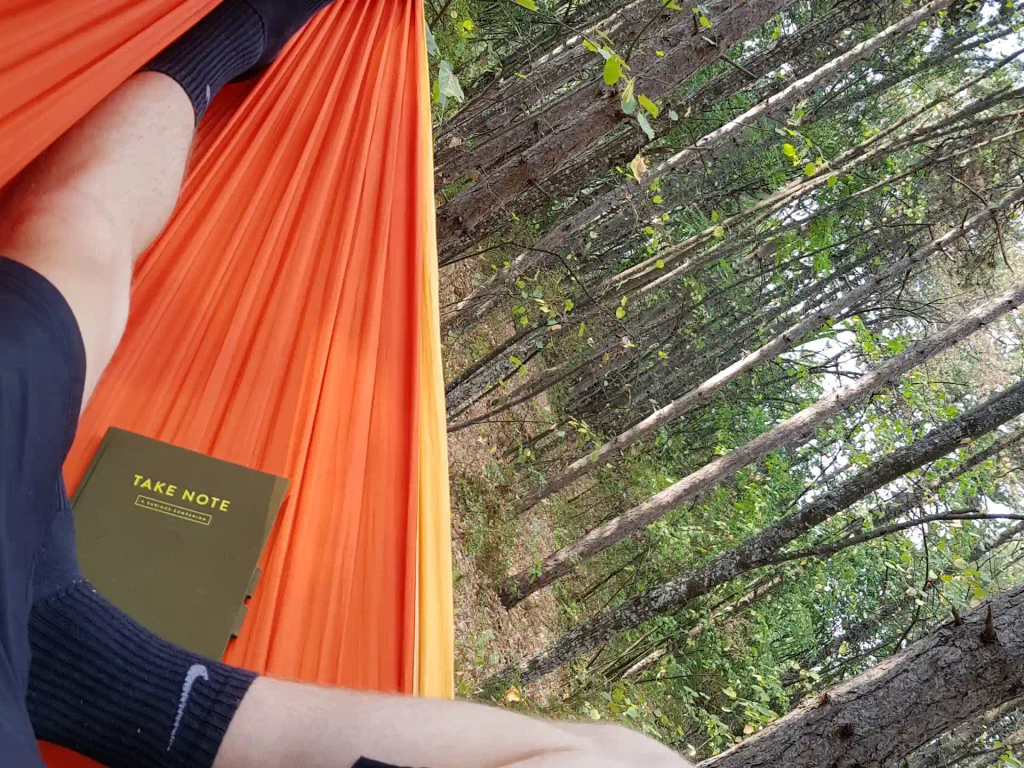
Two years ago I moved out from my hometown. New city, no stable job, and all the stress coming up at once. That was probably the worst I’ve felt. What helped a huge amount was going for a walk and writing, sometimes I don’t even know how many pages.
I still write every day about what’s going on, even small things that bother me, like wanting to read more books than I actually do. If something is a bit heavier, it’s heavier on your head, and putting it on paper gets it out. It’s the same thing I’m after when I push a friend to talk, getting the stuff out of the head, just on paper instead of out loud. And I never read it back. Never. I write, I turn the page, and whatever happened just stays there. It’s the past, and it’s good now.
Psychologists call this expressive writing. The biggest analysis of it, Joanne Frattaroli’s 2006 meta-analysis in Psychological Bulletin, combined 146 randomized studies, experiments where people were put into groups by chance and one group opened up about personal, meaningful things. Getting it out worked, and the effect was small but significant. Significant is research language for “very unlikely to show up by chance if the writing did nothing,” so it’s a small effect you can trust, not a big one. Nobody reads my notebook, not even me, and that turns out to matter: in Frattaroli’s analysis, studies where the disclosure stayed private had larger effects than studies where people handed it to the researcher.
Should You Talk to a Professional?
I have never been to a psychologist, and maybe at some point I should have. It’s nothing to be embarrassed about. If you feel like going, just go.
Most of what’s in this post is on the World Health Organization’s self-care list for depression: stay connected to friends and family, talk to someone you trust about your feelings, exercise, even if it’s just a short walk. The last thing on that list is “seek help from a healthcare provider.” That’s the one I’ve skipped, and if the research on men’s mental health and help-seeking is right, I’m far from the only one. And if it ever gets to the point of thinking about hurting yourself, the WHO’s advice is to talk to a health worker, such as a doctor or counselor.
Back at the Fire
We never talked about that night again. Sometimes I bring it up, but we’ve never really talked it through, and it’s good. If one of your friends has gone a bit quiet lately, ask him what’s going on, and then just sit there with him for a while.
Frequently Asked Question
Why do men find it hard to talk about their feelings?
A lot of men grow up with old rules, hold your emotions back, rely only on yourself, be strong. A 2016 review of 37 studies found that sticking to those norms changes how men experience and show what they’re going through, and whether they ask for help at all. Sometimes you also just don’t know what it is yet, which was me at the campfire.
How do you get a friend to open up?
Ask, and push a little: “What’s going on? Tell me about it.” Then do something together. A review of 46 studies of nature-based programs for men found they do best with a purpose and other men around them, and the lead researcher said men often want to feel useful before they’ll open up. A trail, a dirt bike or a campfire all give you that.
Does talking to strangers help your mental health?
The studies measured mood and a sense of belonging rather than mental health, but they point the same way. In a 2014 experiment, commuters who talked to a stranger had a more positive trip than those who sat alone, while other commuters predicted the opposite. Another 2014 study tied more chats with acquaintances to more happiness and belonging that day.
Does writing things down help?
A little, and consistently. A 2006 meta-analysis of 146 randomized studies found a small but significant benefit from disclosing personal, meaningful things, and studies where the disclosure stayed private showed larger effects. I write every day and never read it back.
When should a man see a psychologist?
If you feel like going, go. You don’t need a reason that sounds big enough. The World Health Organization’s advice is to seek care if you have symptoms of depression and to talk to a health worker if you have thoughts of hurting yourself. I’ve never been, and maybe at some point I should have.
Sources
- Seidler ZE et al. (2016). The role of masculinity in men’s help-seeking for depression: A systematic review. Clinical Psychology Review. PubMed 27664823
- A Narrative Review of Men’s Mental Health: The Role of Stigma and Gender-Differentiated Socialization (2026). Behavioral Sciences. PMC12938354
- University of Stirling (September 4, 2026). Hands-on nature projects and men’s wellbeing (review in BMC Public Health). stir.ac.uk
- Men’s shed. Wikipedia
- Epley N, Schroeder J (2014). Mistakenly seeking solitude. Journal of Experimental Psychology: General. PubMed 25019381
- Sandstrom GM, Dunn EW (2014). Social Interactions and Well-Being: The Surprising Power of Weak Ties. Personality and Social Psychology Bulletin. PubMed 24769739
- Frattaroli J (2006). Experimental disclosure and its moderators: a meta-analysis. Psychological Bulletin. PubMed 17073523
- Chasing elusive expressive writing effects (2023). Frontiers in Psychology. PMC10300201
- Do expressive writing interventions have positive effects on Koreans?: a meta-analysis (2023). Frontiers in Psychiatry. PMC10702225
- Statistical significance. Wikipedia
- World Health Organization (2026). Depression fact sheet. who.int
- Movember. About. movember.com
- International Men’s Day. Wikipedia
- Jakupica range. Wikipedia

Filip Petreski is the founder of AFIELD and a multi-sport outdoor athlete. A two-time national cross-country MTB champion, snowboard instructor, and former dirt bike rider, he writes about the people, gear, and culture worth paying attention to in the outdoor world.