
The cobblestones hit immediately. You feel every single one through the handlebars, through the seat, through your teeth. Ten of us were on Lime e-bikes in Prague and the old city was doing its best to shake the bikes apart. It didn’t. We kept going.
I’d been to Prague once before, in high school. I remembered almost nothing from that trip. So for practical purposes, this was a new city. No memory of streets, no sense of the layout, no idea what was around the next corner. The bike turned that into an advantage rather than a problem. What followed was four days of urban adventure that made a strong case for doing this anywhere.
At a Glance
Filip spent a weekend in Prague with 9 friends, using Lime e-bikes to move around the city instead of buses or tours. Multiple short rides throughout the days and nights, to parks, coffee, lunch, pubs, and back. Second day took them up to Letná Park, a lake, views over the city, the Metronome, and a skate spot behind it. The Astronomical Clock appeared around a corner on the first day. None of it was planned.
Table of Contents
The City Looks Different From a Bike
The Lime system is simple. Download the app, or use Uber if you already have it. Bikes sit at designated points throughout the city. Pick one up, ride wherever, drop it at any other point when you’re done. No booking in advance, no fixed route, no commitment to return to where you started.
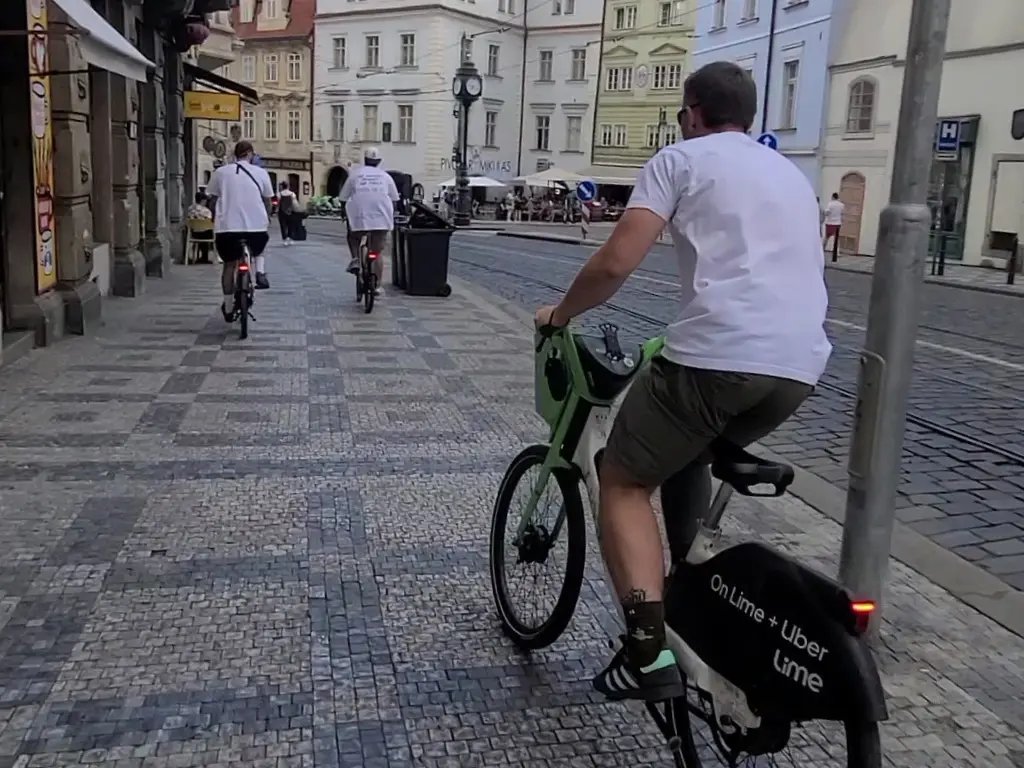
We weren’t doing a cycling day. There was no itinerary, no planned route, no guide. The bike was just how we moved between things. Going for coffee, bike. Finding somewhere for lunch, bike. Getting back from a pub after midnight, bike. It sounds like a small distinction. The difference it makes is not small at all.
On a bus or a tram, you sit inside something and the city happens outside the glass. On a bike you’re in the city. You smell it, old stone, bread from a bakery you haven’t spotted yet, coffee from somewhere you’ll want to find again. You feel the temperature drop when you go from a wide open square into a narrow street. You look up at the buildings because they’re right there, at the level of your eyes, and nothing is between you and them.
Prague has no bad turn. Every street is worth looking at. The cobblestones are rough. Genuinely rough, the kind of rough where you wonder for a second if the bike is going to hold together. But the streets are beautiful enough that the rattling becomes part of the experience rather than a reason to stop. You don’t regret the wrong turn. You just see something you weren’t expecting to see.
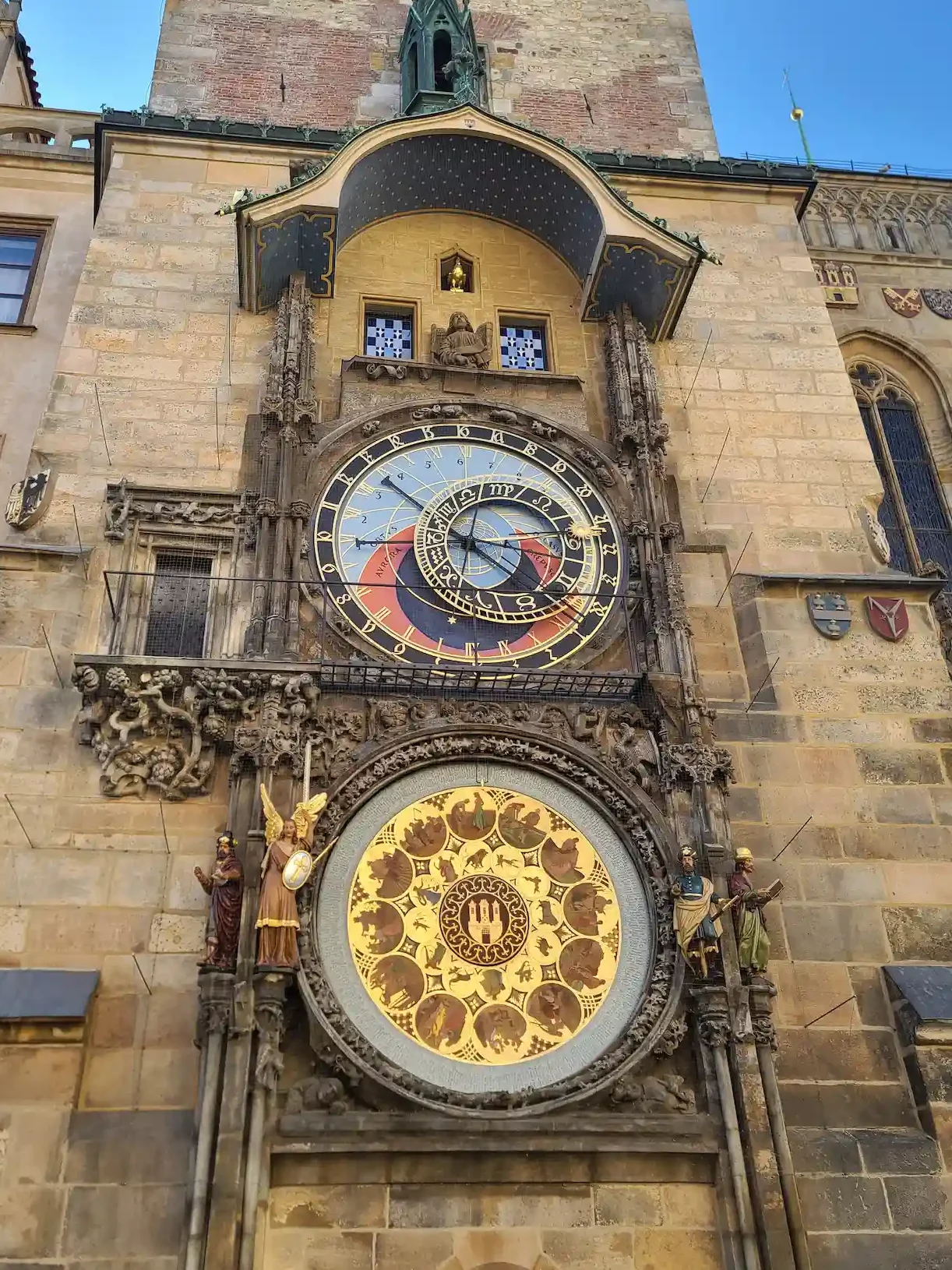
One of those things was the Astronomical Clock. We came around a corner into the Old Town Square and it was right there on the wall of the town hall. Built in 1410, it’s the oldest still-functioning astronomical clock in the world. Not a replica, not a restoration. The original mechanism, still working. It shows the position of the sun and moon, the zodiac calendar, solar and sidereal time. Every hour the Apostles appear in the windows above the dial. (Wikipedia) Built when Prague was one of the most important cities in Europe, and it has outlasted everything since. You wouldn’t find it the same way from a bus window. You turn a corner and it’s in front of you. You stop.
Letná Park, and What’s Under the Metronome
First day we saw Letná from the bottom. It sits up above the city on a hill and from street level looks like a green edge at the top of everything. We didn’t go up. Second day we had the bikes and went up properly.
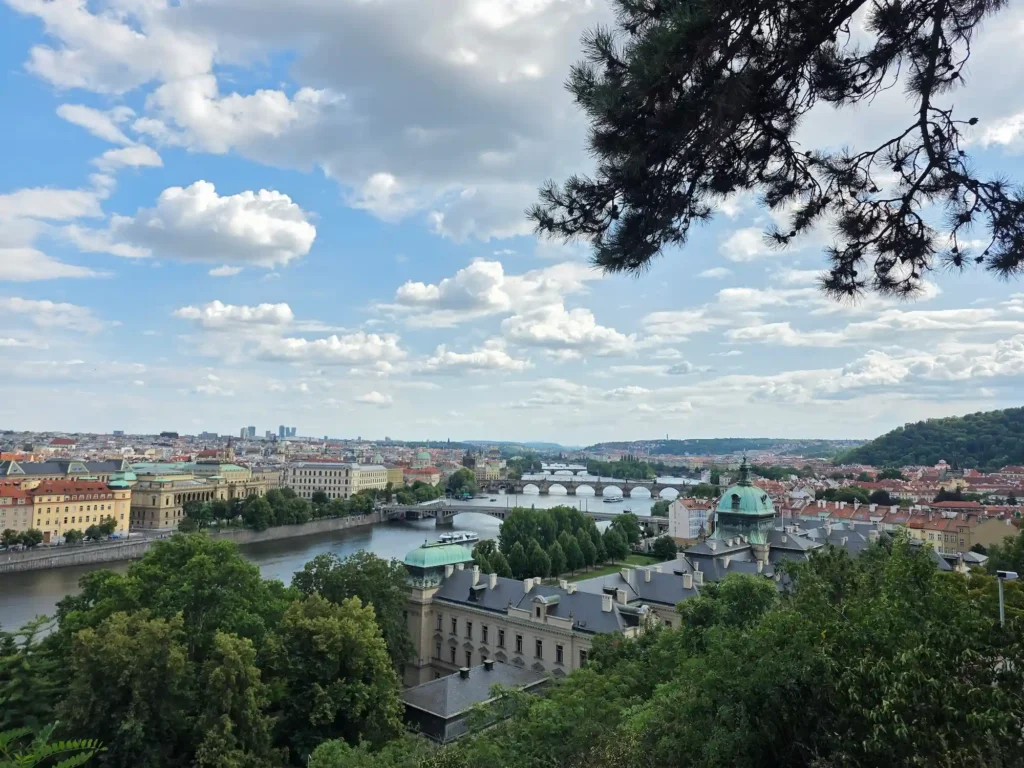
What’s there is worth the ride. The park is well-kept in the way that parks in central European cities tend to be, genuinely used, not just maintained. A small lake. Tall trees. People of every kind doing their own thing. And the views from the top over the city are the kind that make you stop talking mid-sentence. Prague spreads out below you across the river, the spires visible from up there in a way they aren’t from street level.
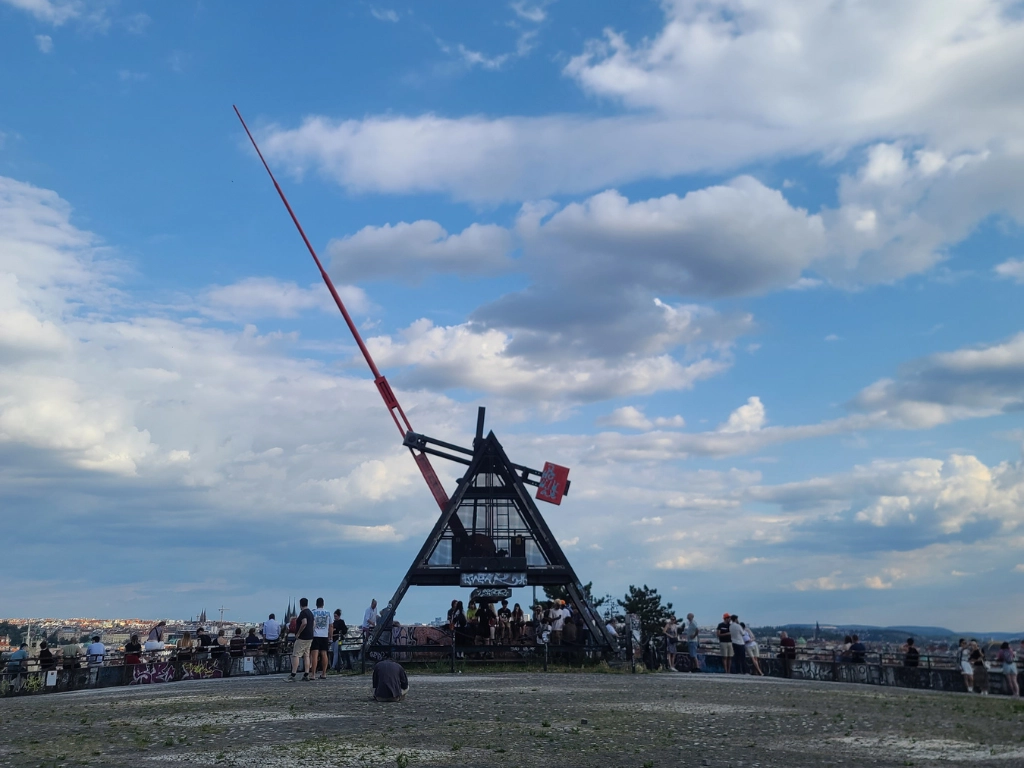
The Metronome is up there too. A 7.5-metre kinetic sculpture that swings back and forth at the top of the hill on a wide stone platform. Most people who visit don’t know what the platform used to hold.
In 1955, the largest monument to Stalin ever built was unveiled on this exact spot. Seven figures carved in granite, 14,200 tonnes of stone, 600 workers, four years to construct. When it was finished it was the biggest Stalin statue in the world. In 1962, following de-Stalinization, the Communist government demolished it with 800 kilograms of explosives. The pedestal stayed. In 1991, artist Vratislav Karel Novák installed the Metronome on it, originally as a temporary installation for an art exhibition. It’s been there ever since, swinging back and forth. (Wikipedia)
I was standing on that platform without knowing any of this. I found it out when I was researching for this post.
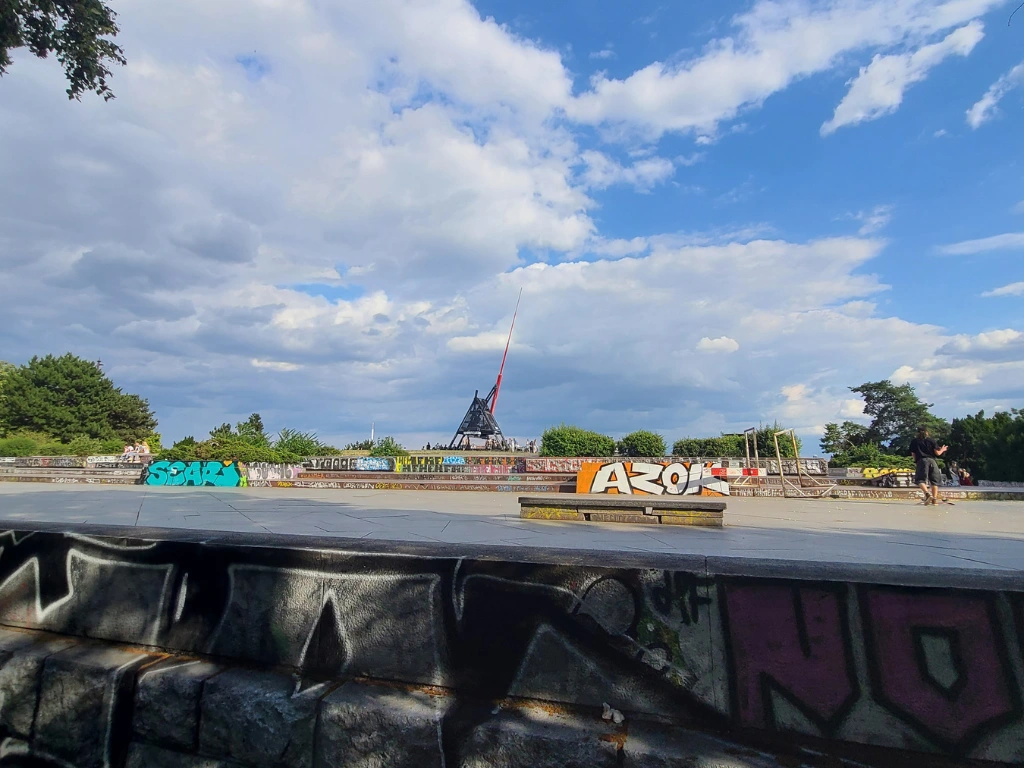
Directly behind the Metronome, a wide marble square that has become one of Prague’s main street skating spots. No signs pointing to it, no branding, nothing marking it as anything official. Just a space that skaters found and claimed. The level was high. Proper street skating, busy on a summer afternoon, nothing performative about it.
We spotted a skate shop while riding nearby and went in on impulse. Found LTB, a Czech snowboard brand we hadn’t known about before, and the first shop any of us had found that stocked downhill longboards. We didn’t buy anything. Some shops are worth going into just to remember that they exist. This was one of them.
Ten People on Ten Bikes
Ten bikes on a cobblestone street is its own kind of chaos. Everyone going slightly different speeds, someone always behind, someone always ahead, all of you navigating the same route through a city none of you know well. It should be harder than it is. Somehow it works.
What it brings back is something from being a kid. Everyone on bikes, no fixed agenda, just going somewhere together. That feeling disappears for most of adult life. It came back on these rides in a way I wasn’t expecting. A couple of the others said the same thing without me bringing it up first.
The night rides were the best version of it. Getting back from a pub after midnight through Prague with low traffic and the city lit differently than it is during the day. The streets feel like yours at that hour. A bike makes sense at midnight in a way that a taxi or a tram doesn’t. The wrong turns at night kept coming out fine. We went the long way home more than once. The city kept being worth looking at.
The city you move through is different from the city you ride past in.
Why This Counts as an Urban Adventure
An adventure doesn’t require a mountain. It requires moving through something unfamiliar under your own power and paying attention to what’s there.
A bus takes you from A to B. A bike takes you through everything in between. You make the decisions, which turn, when to stop, where to look. Nobody is pointing at the Astronomical Clock and telling you what you’re seeing. You come around a corner and it’s there. That’s yours.
We found Letná because the bikes made going up there easy enough to actually do. We found the skate spot because we walked around the Metronome. We found the skate shop because we were moving at the speed where you notice a door and can actually stop for it. None of it was on any plan.
That’s the same structure as any other adventure. Move. Notice. Adapt. Discover. The terrain is just cobblestones instead of a trail. The same logic that sent us up Rtanj at 1 AM to watch the sun rise below the summit applies here. Different altitude, same principle. The altitude is just a hill in a park instead of a mountain. The outcome is the same, you come back having seen things you wouldn’t have seen otherwise, and the city stays with you differently than it would have if you’d been watching it through glass.
Rent a bike next time you’re somewhere new. Do it with people if you can. Ten is the best number.
Frequently Asked Questions About Urban Bike Exploration
Is renting a bike a good way to explore a city?
Yes, and the gap between bike and bus is bigger than it sounds. It’s the same principle behind going for a walk every day, moving under your own power changes what you notice. On a bike you move at your own pace, stop when something is worth stopping for, and take turns that aren’t on any route. Works best in cities with a dockless system so there’s no fixed return point pressuring your route.
What are Lime bikes and how do you rent them?
Lime operates dockless e-bikes in cities across Europe and beyond. Rent through the Lime app or through Uber if you already have it. Find the nearest available bike on the map, scan to unlock, ride to wherever you’re going, and drop it at any designated point when you’re done. No advance booking needed. Charged by time or distance depending on the city.
The Drive Back
Friday to Monday. Bikes most of it, not all of it. Just whenever it made sense, which turned out to be most of the time.
What stays from that weekend, the Astronomical Clock appearing around a corner we hadn’t planned to turn, the views from Letná over the whole city, the skate spot existing quietly behind the Metronome, the midnight rides back through empty streets, the cobblestones rattling everything.
And ten people on ten bikes through a city none of us knew well, which felt exactly like being twelve years old again. Except the city was stunning and we actually appreciated it.
The 10 friends made it. The bikes made the 10 friends possible across the whole city.

Filip Petreski is the founder of AFIELD and a multi-sport outdoor athlete. A two-time national cross-country MTB champion, snowboard instructor, and former dirt bike rider, he writes about the people, gear, and culture worth paying attention to in the outdoor world.