
Most of us didn’t sit down one day and decide to work remotely. The jobs that let you camp and travel full time are more accessible than most people think, and COVID proved it. Offices closed, laptops moved home, and something quietly shifted. Work stopped being a place.
I’ve been a freelance motion designer for over five years. I’ve worked from my apartment, from villages running off a phone hotspot, from other countries entirely. I’ve stayed an extra day somewhere simply because the work allowed it. The jobs that let you camp and travel full time aren’t exotic or rare, but they don’t all work the same way.
TL;DR
There are more than 18.5 million American digital nomads in 2026, and the jobs that let you camp and travel full time span everything from remote software work to being paid to host a campground. The real divide isn’t tech vs. outdoors. It’s whether you need Wi-Fi or just a phone signal.
18.5 million Americans were living as digital nomads in 2026, up 2.2% year-over-year (Rent Remote, 2026)
Camp hosts earn $9–$15/hour plus a free campsite, cutting the biggest line item from your expenses
The most durable setups blend remote income with seasonal outdoor work, not one or the other
Internet reliability, not willpower, is the main practical wall for creative and technical remote workers
Table of Contents
Why Most “Outdoor Jobs” Lists Get This Wrong
The standard list gives you two buckets: remote desk jobs on one side, seasonal outdoor jobs on the other. Pick a lane. Reality is a spectrum, and most people who do this sustainably aren’t in either bucket cleanly. They work the space between them.
Model A: remote work where camping is a choice. Your job has no physical address requirement. You’re not camping because the role demands it, you just can, and you choose to. The constraint here is internet, not location.
Model B: outdoor or seasonal jobs where camping is part of the compensation. Your role is location-tied, and a free site comes with it. You’re not working from a laptop, you’re hosting a campground, running a trail crew, or guiding river trips.
Model C: the hybrid. You stack both. An outdoor gig covers your living expenses for a season, a remote skill fills the income gap in shoulder season. It’s not a glamorous pitch, but it’s how people actually sustain this for years without burning out or going broke.
Understanding which model fits your life right now changes everything about how you choose a job.
Which Remote Jobs Work Best From a Campsite?
Key Stat
Remote workers who build portable careers earn an average of $85,000–$124,000 annually, according to MBO Partners’ 2025 State of Independence report. That’s well above U.S. median household income, and achievable on four to five focused hours of daily output for anyone in a mid-tier tech or creative role.
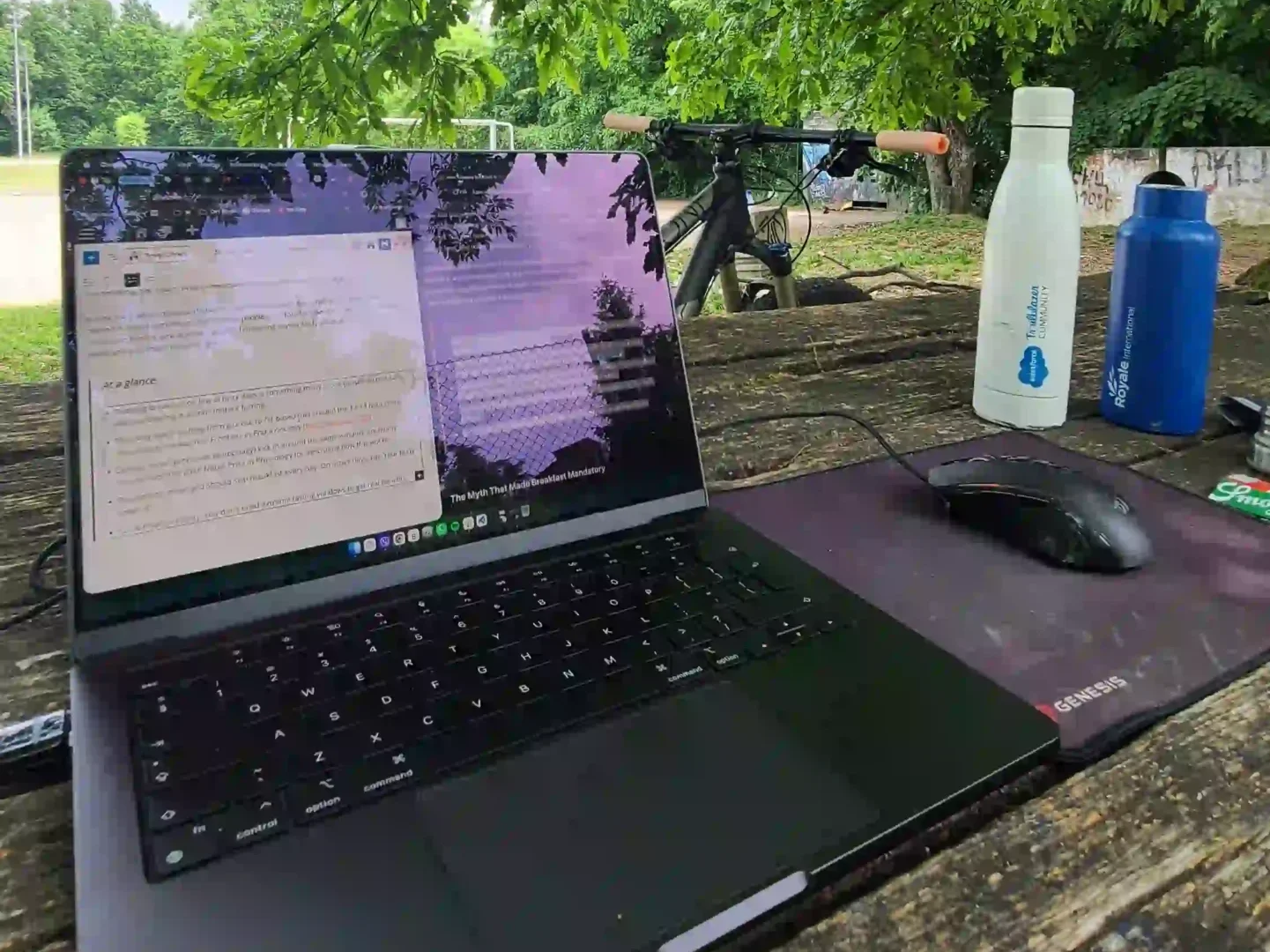
Here’s what that looks like in practice. There’s a small forest near my house. I ride my bike there with my MacBook, a mouse, a mousepad, some coffee, and maybe a snack. Set up on a wooden table and a bench, work for two or three hours outside, ride back. That’s the whole setup. The MacBook battery is good enough that power isn’t a consideration. It took me years to realise how simple the formula actually is, and how little gear it requires.
These are the remote jobs with the lowest friction for an outdoor lifestyle:
Freelance writing and content creation. Fully async, no large file transfers, functional on a phone hotspot. Income compounds over time as you build a client base. Barrier to entry is low, ceiling is limited only by how much you specialise.
Web development and software engineering. Highest earning ceiling on this list. Four or five hours of focused output equals a full day’s work. Bottlenecks are usually code review or async calls, both manageable from anywhere with decent signal.
Social media management and digital marketing. Schedule-heavy but batchable. Block two hours in the morning, schedule a week’s content, go ride. You need reliable signal more than raw speed. You’re pushing media, not pulling it.
Motion design and video production. This is my world, and I’ll be direct about the real constraint: files are heavy. Downloading assets, uploading final renders, pulling references on the fly all eat through mobile data fast. I’ve run jobs off a phone hotspot abroad, and it works until it doesn’t. The preparation habit that saves you every time, download everything you might need before you leave reliable internet. Don’t assume you’ll pull a large asset from a campsite on demand.
Virtual assistant and remote operations. Lower income ceiling, lowest barrier to entry. Good bridge work while you build a higher-value skill. Fully async, minimal bandwidth needs.
Online teaching and tutoring. Timezone-dependent; you’re locked to student availability. But the income floor is predictable and the schedule is structured, which some people find stabilising in an otherwise variable lifestyle.
According to MBO Partners, the number of Americans with traditional jobs doing nomadic remote work grew 10% in 2025, reaching 11.2 million. That’s a signal that portable income isn’t fringe anymore. It’s the norm for a growing slice of the workforce.
What Outdoor Jobs Include a Free Campsite?
Key Stat
Workamping positions in the U.S. typically pay $9–$15 per hour plus a free campsite and utilities. That’s not wealth, but it eliminates rent, your largest single expense, and keeps you living outside full-time while getting paid. The math is blunt, if you don’t pay rent, you need far less cash to survive.
Camp host and workamper. The most accessible entry point. Most positions ask for 20–25 hours per week, hosting arrivals, light maintenance, answering questions. The rest of your time is yours. Workamper.com and Kamper Jobs list hundreds of openings nationally, with peak hiring April–May for summer season.
National and state park seasonal worker. Ranger aide, trail crew, visitor services. These roles often include subsidised or free housing, or access to adjacent public land for extended camping. Competitive but not impossible. CoolWorks.com is the primary job board.
River guide and outdoor instructor. Physically demanding, seasonally intense, high personal reward if the outdoors is the actual point. You’ll need certifications (Wilderness First Responder at minimum for multi-day trips). Income is seasonal: high per hour during peak, nothing in winter. Not a standalone year-round solution.
Forest Service and BLM trail crew. AmeriCorps-adjacent positions with stipends plus housing. Great for younger starters who want structured outdoor work without heavy certification overhead. Apply through MyAmeriCorps.gov.
Ski resort and snowboard instruction. Winter anchor for a seasonal stack. Most resorts include staff housing or subsidised accommodation. Pay isn’t high, but living costs near zero. More on this in the next section.
The Hybrid Stack: How People Actually Do This Year-Round
The durable version of this lifestyle isn’t choosing between remote work and outdoor jobs. It’s stacking them across seasons. Nobody leads with this because it doesn’t fit cleanly into the “digital nomad” or “workamper” narrative, but it’s how people I know actually make it work for more than a year.
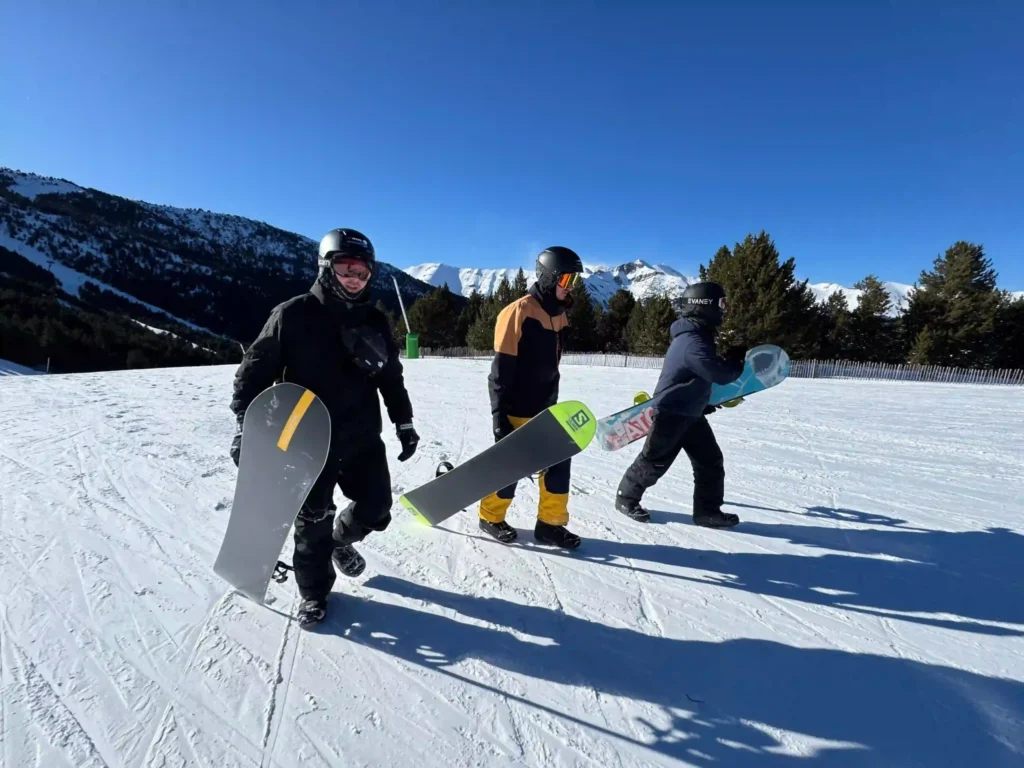
A friend of mine is a graphic designer who also works as a snowboard instructor in winter. She spends the ski season living in the mountains. Instructor pay plus staff housing covers her living expenses, and design work fills the gaps. The rest of the year she’s fully remote. She’s not sacrificing income for lifestyle or lifestyle for income. She stacked both on a calendar.
I’ve done a version of this. One season I was working for a company aligned to their timezone, starting at 6 PM my time and finishing around 2 AM. I also had a seasonal ski pass. That winter, I had more days on snow than any season before or since. Up on the mountain in the morning, back by midafternoon, at my desk by six. Was I exhausted some days? Yes. Did I go anyway? Every time. Would I do it again? Without question.
The model maps cleanly across a calendar:
Summer: outdoor gig or camp host role covers your site and basic income
Shoulder season: remote or freelance work ramps up while your living costs stay low
Winter: ski resort or snowboard instruction anchors housing, remote work fills the income
You don’t need to earn the same every month. You need to cover your floor. The math works if you’re honest about the numbers before you start. Research on why time in nature rewires how you think makes the case for building your work around being outside even more compelling. For people in the outdoor sports world (MTB, snowboarding, trail running, climbing), this seasonal rotation isn’t a concept. It’s how a lot of people already operate.
What You Actually Need to Make This Work
The job isn’t the bottleneck. The infrastructure is.
Internet. For any remote work involving files (video, design, development), connectivity determines everything. Running a hotspot through your phone works for lighter tasks, but it burns through mobile data fast when you’re transferring media. Abroad, international data caps become the ceiling.
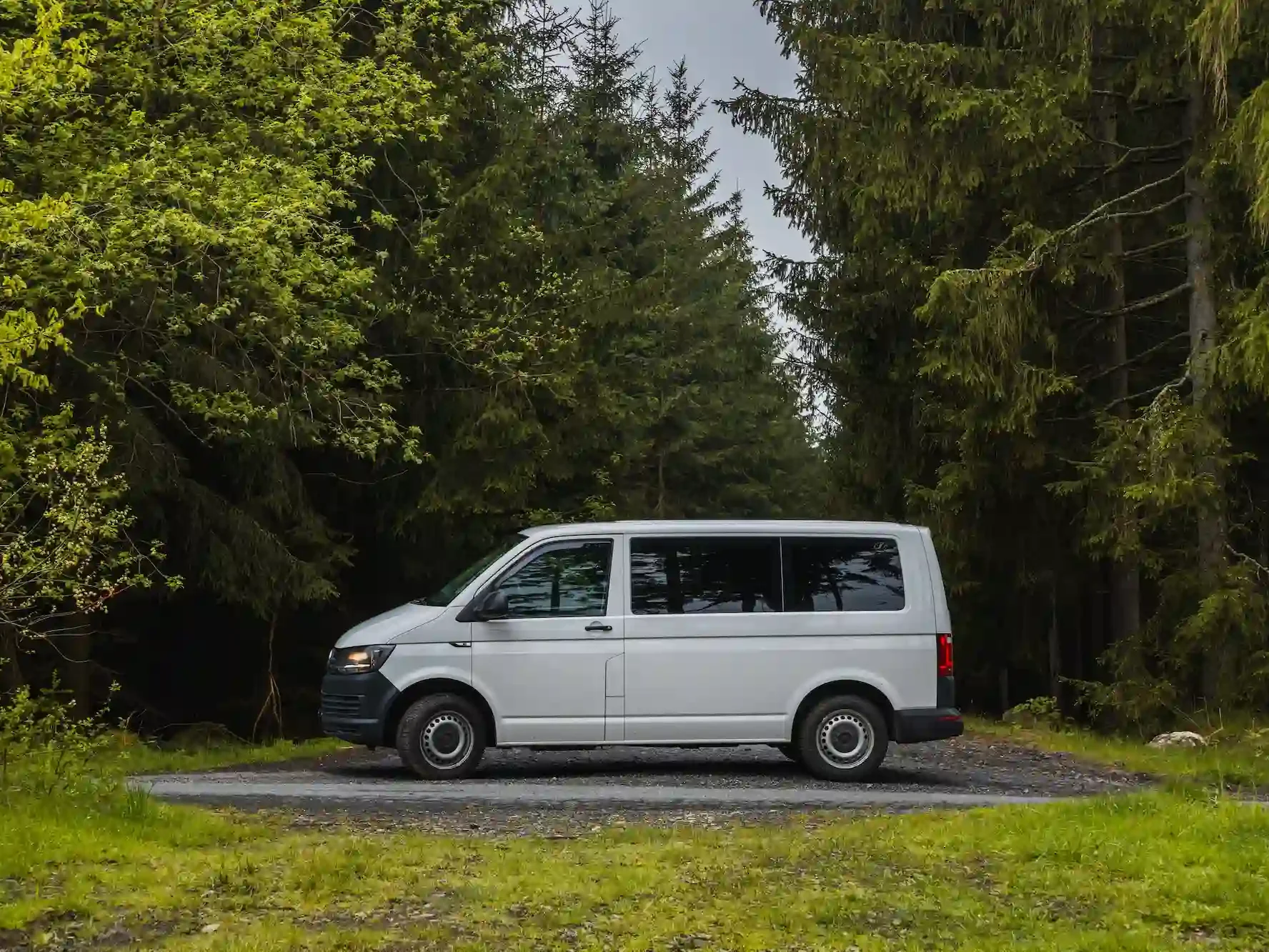
Starlink Mini changed the math for dispersed camp setups significantly, portable enough to run from a truck bed or fixed campsite, fast enough for almost any remote work. For van life without Starlink, Verizon or T-Mobile coverage maps and a booster are the baseline. The habit that matters most, prepare your files before you leave reliable internet. Download what you need, cache what you can, and don’t count on pulling large assets from somewhere remote on demand.
Income floor. Most lean setups need $2,500–$3,500 per month to function. A camp host gig plus a part-time remote skill covers most people. The goal at the start isn’t high income, it’s covering your floor while keeping overheads near zero.
Tax and domicile. Nomadic workers in the U.S. typically establish domicile in a low-tax state. South Dakota, Texas, and Florida are most common. Get this right before you start, not after. One session with an accountant who handles remote workers saves a lot of headache.
Gear. A van or truck setup is the real upfront cost: $5,000 for a basic used rig, $30,000+ for a full build. A tent and a reliable car is drastically cheaper and a perfectly valid way to test whether the lifestyle actually works for you before committing to a vehicle. Staying physically sharp on irregular schedules takes more discipline on the road than people expect. Your body doesn’t care that the view is good.
Where Do You Actually Find These Jobs?
These roles aren’t on LinkedIn or Indeed in any volume. You need the right boards.
Workamping
KamperJobs.com: strong summer listings, growing fast
WorkampingJobs.com: smaller volume, consistent quality
The Dyrt: increasingly listing camp host and ranger aide roles
Seasonal Outdoor
CoolWorks.com: primary board for parks, resorts, and outdoor roles
SeasonWorkers.com: international scope if you want to work outside the U.S.
Remote Roles
Remote.co: curated, low noise
We Work Remotely: high volume across all categories
Toptal: high-end dev and design contractors, rigorous vetting but strong rates
Ski & Snow
Vail Resorts, Alterra Mountain Company, and most major operators post directly on their own job boards. Check October–November for winter openings.
Trail & Conservation
MyAmeriCorps.gov: trail crew, conservation corps, national service with stipend and housing
If you’re already embedded in any outdoor sports community (snowboarding, MTB, trail running, climbing), word-of-mouth moves faster than any job board. Most of these positions fill before they post publicly. That network is real and worth using. Planning your first multi-day outdoor trip is also how you start building those connections in the first place.
Frequently Asked Questions
Do you need a van or RV to work and camp full time?
No. Camp hosts and most seasonal outdoor workers live in tents, cabins, or employer-provided housing. A van adds mobility and independence. It’s not a prerequisite. Starting with a tent and a reliable car lets you test whether the lifestyle actually fits you before spending $15,000+ on a vehicle build.
How much money do you need saved before going full-time?
Most people making this transition successfully have 3–6 months of living expenses saved before leaving a fixed income, roughly $7,500–$15,000 depending on your cost structure. The risk isn’t month one. It’s month two or three if your remote income takes longer to stabilise than you expected.
Are workamping jobs only for retirees?
They used to skew that way. According to Workamper News, the share of workampers under 45 has grown steadily since 2021, with younger workers and remote-job holders now the fastest-growing segment. The shift accelerated after 2020 as remote work normalised across industries.
What’s the minimum viable setup to start testing this?
A reliable car, a tent, and one remote income stream that covers your baseline. Everything beyond that (a van, a Starlink, a camp kitchen) is an upgrade. Start with a weekend where you work from camp. Then a week. The information you gather from two days of actually doing it is worth more than anything on a list. Start with one well-planned overnight and build from there.
The Honest Version
Here’s what I actually think when someone asks if they can do this, it depends almost entirely on income, not motivation.
I know people who earn well and make this look effortless. I know others who are skilled, motivated, and genuinely struggling, because the income floor isn’t there yet. The desire to be outside is universal. The stable freelance or remote income that makes it financially viable isn’t. And that’s the part most articles gloss over.
The jobs that let you camp and travel full time exist across a wide range. Some pay well. Some eliminate your rent but don’t pay much. Some are seasonal and physically demanding in the best way. What they all have in common is that they require honesty about your financial floor before you start, and they reward people who test the model in small doses before going all-in.
Start with a weekend. Work from camp. See how it actually feels when the novelty wears off on day two and you’ve still got a deadline. That information is worth more than any list of jobs. The mental side of making that first real leap is the same whether you’re learning to trust your body on a cliff or learning to trust your income without a fixed address.
Filip Petreski is a freelance motion designer and the founder of AFIELD. He has been working remotely for over five years, across countries, off phone hotspots, and occasionally from a small forest near his house. AFIELD covers outdoor lifestyle, gear, and the kind of adventure that fits around real life.
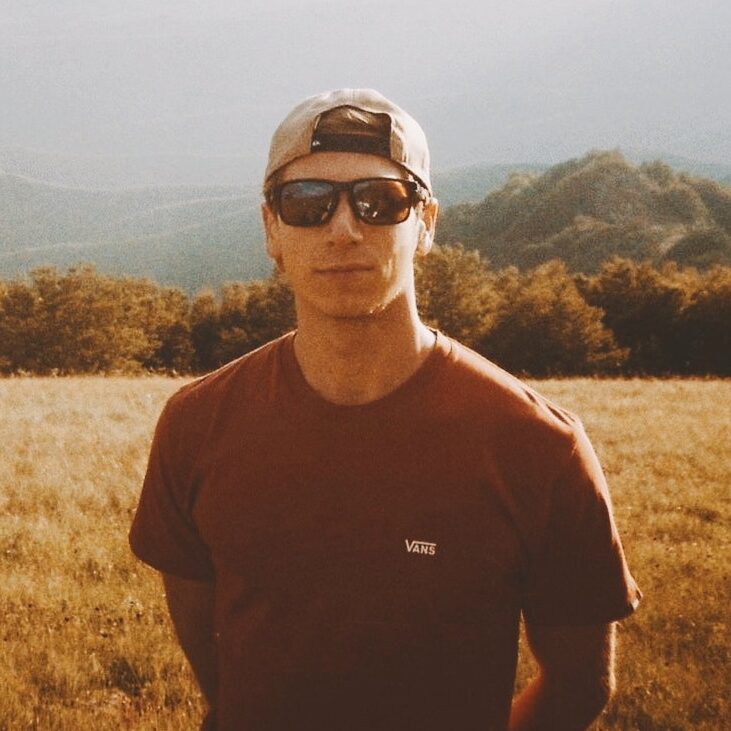
Filip Petreski is the founder of AFIELD and a multi-sport outdoor athlete. A two-time national cross-country MTB champion, snowboard instructor, and former dirt bike rider, he writes about the people, gear, and culture worth paying attention to in the outdoor world.