
Elite athletes average a 96-minute nightly sleep deficit. Here’s what that costs your performance and the exact protocol to fix it.
Sleep optimization for athletes is the most underrated tool in any training program. Most athletes obsess over load, nutrition, and gear. Sleep? It’s what happens when you can’t do anything else. That mindset is costing you more than you think.
I don’t track my sleep with a device. But I’ve noticed it. Go to bed before 11pm, wake around 7am, and the day feels longer. More gets done. The mind is sharper, the body more willing. That’s not a coincidence.
The science backs this up harder than most people expect. Not in a vague “rest is important” way. In a measurable, dose-response, your-sprint-times-actually-get-faster way. Here’s what the research actually says.
Key Takeaways
- Elite athletes average a 96-minute nightly sleep deficit vs. what they say they need (Lastella et al., 2023)
- Sleep deprivation reduced aerobic endurance by an SMD of -0.76 across 45 studies (Frontiers, 2025)
- Stanford athletes who extended sleep to 10.25h improved sprint times by 0.7s and free throw accuracy by 9% (Mah et al., 2011)
- Writing a to-do list for 5 minutes at bedtime cut sleep onset from 25.1 to 15.8 minutes – RCT confirmed (Scullin et al., 2018)
- The practical floor for athletes is 8 hours. Seven is the minimum, not the target.
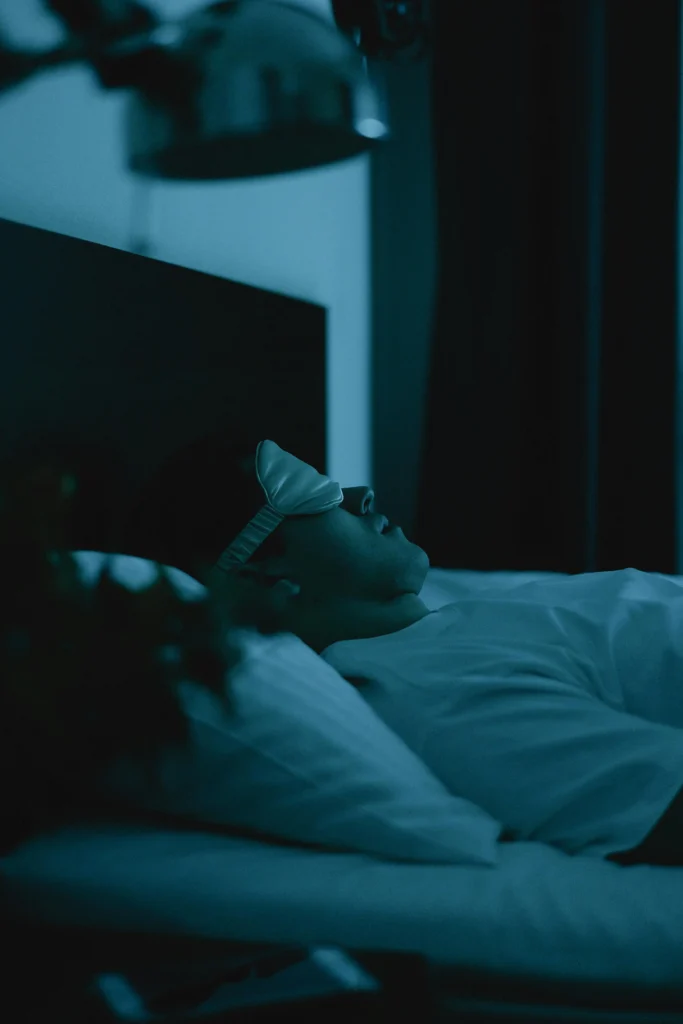
How Much Sleep Do Athletes Actually Need?
Elite athletes average 6.8 hours of sleep per night but report needing 8.3 hours, a 96-minute nightly gap compounding across every training block (Lastella et al., PMC9960533, 2023). That deficit doesn’t stay flat. It accumulates. And 60.9% of collegiate athletes report feeling “tired, dragged out, or sleepy” at least three days per week.
The British Journal of Sports Medicine expert consensus (2021) put it plainly: reject the universal “7-9 hours” recommendation for athletes. Seven hours is the hard floor, not the target. The actual target depends on training load, competition phase, and individual recovery needs. But it’s almost always higher than 8 hours for seriously training athletes (British Journal of Sports Medicine, PubMed 33144349, 2021).
The reason most athletes fall short isn’t laziness. Early morning sessions, late-night competitions, travel across time zones, and the general business of life compress sleep from both ends. You can’t out-supplement a 96-minute nightly deficit.
What Does Sleep Deprivation Actually Do to Performance?
The numbers are blunt. A 2025 Frontiers meta-analysis covering 45 studies and 670 athletes found that sleep deprivation reduced aerobic endurance by a standardized mean difference of -0.76, skill control by -0.87, explosive power by -0.63, and speed by -0.52 (PMC11996801, 2025). Perceived exertion went up by +0.51 SMD. Everything harder, nothing better.
The -0.87 SMD on skill control matters most for technical sports. MTB line reading, trail running footwork, route-finding on a ridge. These aren’t pure fitness outputs. They’re coordination and decision-making, and they degrade faster under sleep loss than your VO2max does. Athletes tend to notice fatigue in their legs first. The real damage is happening in the brain.
It gets worse. Adolescent athletes sleeping under 8 hours were 1.7 times more likely to get injured than those sleeping 8 or more hours (Milewski et al., Journal of Pediatric Orthopaedics, 2014). That’s not a study artifact. That’s ankles, knees, and shoulders.
One week of sleeping 5 hours per night cut testosterone by 10-15% in young men, equivalent to aging 10-15 years in hormonal terms (JAMA, PMC4445839, 2011). And approximately 70% of all growth hormone pulses occur during slow-wave sleep, with the largest single pulse in the first SWS episode of the night (Van Cauter et al., PubMed 8627466; confirmed by UC Berkeley, 2025). You can’t inject your way past a skipped sleep cycle.
What Happens When You Sleep More
Here’s where it gets interesting. The Stanford basketball study (Mah et al., PMC3119836, 2011) ran players at their natural sleep habits around 7.5 hours for several weeks, then extended them to 10.25 hours nightly. Sprint times improved by 0.7 seconds. Free throw accuracy went up 9%. Three-point accuracy jumped 9.2%. Reaction time dropped from 336ms to 286ms. No new training. No new diet protocol. Just more sleep.
A separate tennis study (Schwartz and Simon, PubMed 26325012, 2015) found adding 1.7 hours of sleep improved serve accuracy by 17.1%. Seventeen percent. From sleep. That’s a bigger gain than most athletes get from a full off-season of specific skill training.
You don’t need a new training program. You need more sleep.
What neither study explicitly calls out: these athletes weren’t sleep-deprived by clinical standards. They were just living like normal busy athletes, averaging around 7-7.5 hours. The performance gains came from moving from “adequate” to “optimal.” That gap is where most athletes operate without ever knowing it exists.
The Notebook Habit That Has Science Behind It
Before bed, I write in my notebook. A few things on my mind I am happy that happened that day or got done and what I want to get done tomorrow or maybe in like 6 months. Not a journal. Not a reflection on the day. Just what’s ahead, and what I want/need to handle. I’ve done this for years without attaching any sleep logic to it.
Turns out the research is there. A randomized controlled trial (Scullin et al., Journal of Experimental Psychology: General, PMC5758411, 2018) tested this head-on using polysomnography. Participants who wrote a prospective to-do list for 5 minutes at bedtime fell asleep in 15.8 minutes on average. Those who wrote about completed tasks took 25.1 minutes. The act of writing what’s ahead offloads the brain’s background processing. It stops running the open loop.
The longer the to-do list written, the faster participants fell asleep. Specificity matters. Vague intentions don’t clear the mental queue. Writing it down does.
Other pre-sleep inputs worth knowing: screens suppress melatonin production, and the research suggests avoiding them 60-90 minutes before bed. Room temperature between 60-70°F (15-21°C) consistently shows up as optimal for sleep onset and slow-wave depth (PMC6988893, 2020). Cold room, dark room, no phone, five minutes of writing. That’s the protocol.

Does Timing Matter? Chronotypes and When You Train
Evening chronotypes swimming in morning sessions move up to 6% slower than they do at their natural performance peak, which clusters around 17:00 for most athletes (Journal of Circadian Rhythms). If you’re forced into early morning training blocks, that’s real output on the table.
Going to bed before 11pm matters for a reason that’s mechanistic, not arbitrary. Cortisol levels are lowest in the late evening and melatonin rises in the 9-11pm window for most people on a normal schedule. Training, artificial light, and late eating all push that window back. The earlier you can protect the onset, the better the hormonal environment for recovery.
Napping works, with conditions. A 2021 systematic review covering 37 studies and 3,489 participants found naps between 13:00 and 16:00 improved athletic performance across multiple domains (PMC8238550, 2021). Length matters: 20 minutes for an alertness boost, or a full 90-minute cycle if time allows. Allow 30 minutes post-nap before training. Napping outside the 13:00-16:00 window starts cutting into nighttime sleep quality.
What to Actually Do
No framework, no system name. Just what the research supports, applied to athletes:
- Set a consistent bedtime before 11pm and a consistent wake time. Keep both on rest days. Your circadian rhythm doesn’t know it’s Sunday.
- Write tomorrow’s to-do list before bed. Five minutes. Specific, not vague. Not a diary. What’s ahead, written down. That’s what clears the queue (Scullin et al., PMC5758411, 2018).
- Cut screens 60-90 minutes before sleep. Melatonin suppression from blue light is well-documented. This isn’t debated.
- Keep your room cold. 60-67°F (15-19°C) is where most research lands for optimal sleep onset and deep sleep quality (PMC6988893, 2020).
- Avoid caffeine after 2pm. In one study, caffeine consumed 6 hours before bed increased sleep onset latency from 10 to 51 minutes (PMC12473705, 2025). That’s not a sensitivity issue. That’s the half-life of caffeine.
- If napping: 20 minutes or 90 minutes, 13:00-16:00 window. Any longer than 20 minutes outside a full 90-minute cycle and you wake in slow-wave sleep. That’s worse than no nap.
- Protect the sleep window like a training session. Don’t negotiate it away for one more hour of scrolling. The to-do list is why you write it down before bed.
Frequently Asked Questions
How much sleep do athletes need compared to non-athletes?
Athletes typically need more sleep than the general population, not less. The British Journal of Sports Medicine expert consensus (2021) treats 7 hours as the hard minimum for athletes, not the target. Most seriously training athletes need 8-10 hours depending on training load and competition phase.
Does napping count toward total sleep?
Partially. A 2021 systematic review (PMC8238550) found that daytime naps between 13:00 and 16:00 improved performance, but they don’t replace nighttime sleep quality. Slow-wave and REM sleep are concentrated nocturnally. Naps supplement, they don’t substitute.
How fast does sleep deprivation hurt performance?
Faster than most athletes realize. The 2025 Frontiers meta-analysis (PMC11996801) shows measurable performance decrements across aerobic, power, skill and speed domains with acute sleep restriction. Injury risk elevation from under-8-hour sleep was documented in adolescent athletes within a single season.
Does it matter what time you go to sleep, or just total hours?
Both matter. Total duration drives slow-wave and REM cycling. Timing relative to your chronotype determines whether that sleep aligns with natural cortisol and melatonin peaks. Going to bed before 11pm for most people keeps the sleep architecture intact and optimizes hormonal recovery.
Can you make up lost sleep on weekends?
Not fully. Social jet lag from irregular sleep timing disrupts circadian alignment even when total hours are “caught up.” The 96-minute nightly deficit found in elite athletes (Lastella et al., 2023) can’t be fully recovered in two weekend nights. Consistency across the week matters more than total hours in any single recovery block.
The gear, the training load, the nutrition protocol. All of it underperforms when the recovery isn’t there. Sleep isn’t the soft part of training. It’s the mechanism that makes training work.
It’s also the cheapest performance tool you have. No subscription, no device required. Just a consistent bedtime, a cold room, and five minutes with a notebook before you close your eyes.
Get the sleep right. Everything else gets easier.
I am Filip Petreski a 2x National Champion in cross-country mountain biking, snowboard instructor and the founder of AFIELD, an outdoor adventure digital magazine at afield.life.

Filip Petreski is the founder of AFIELD and a multi-sport outdoor athlete. A two-time national cross-country MTB champion, snowboard instructor, and former dirt bike rider, he writes about the people, gear, and culture worth paying attention to in the outdoor world.