
It was 1 AM on a Saturday. I was in the back of an SUV with three people, two of whom I’d met roughly an hour earlier when they pulled up to get me. One was a friend who’d been talking about climbing Rtanj for about a year and had finally picked a weekend. The other two were his friends. One of them had a serious mountaineering background, the guy who owned the SUV.
The plan was simple, drive as far as the car could handle on the dirt road, then start climbing in the dark, be on the summit before sunrise. Sunrise was at 4:43 AM.
We’d heard Rtanj was something specific. The highest mountain in the Serbian Carpathians. A pyramid shape. Something about energy and healing and a lot of people who take all of it very seriously. None of that was the point at 1 AM. The point was to get up there.
At a Glance
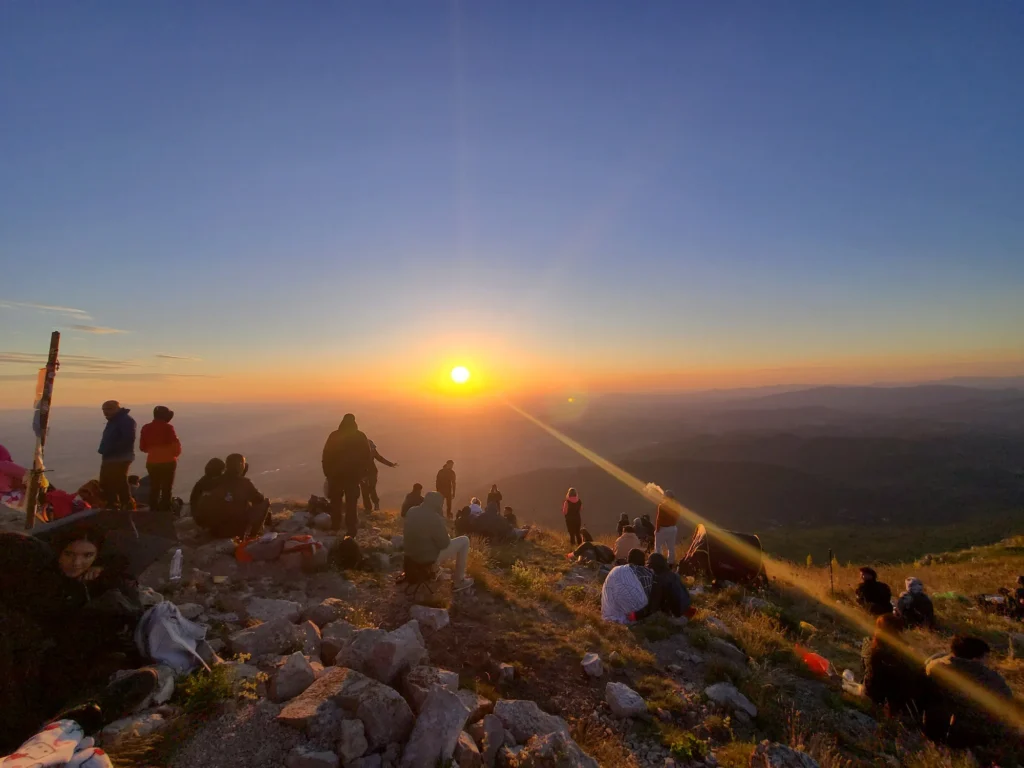
Filip climbed Rtanj’s Siljak peak (1,565 m / 5,135 ft) at night on July 4–5, 2026, with three friends. The climb took under three hours from the off-road starting point. Sunrise was at 4:43 AM. Because Rtanj is the highest mountain in the region, the sun rose below the summit, you look down to see it. The pyramid shadow it cast on the hillside on the other side was something none of us expected.
Table of Contents
We Left at 1 AM
The SUV turned off the road and kept going. One of those decisions that pays off immediately, the off-road approach cut thirty to forty-five minutes of walking before the actual climb even started. Nobody argued with it.
Then we were on foot. Into the forest.
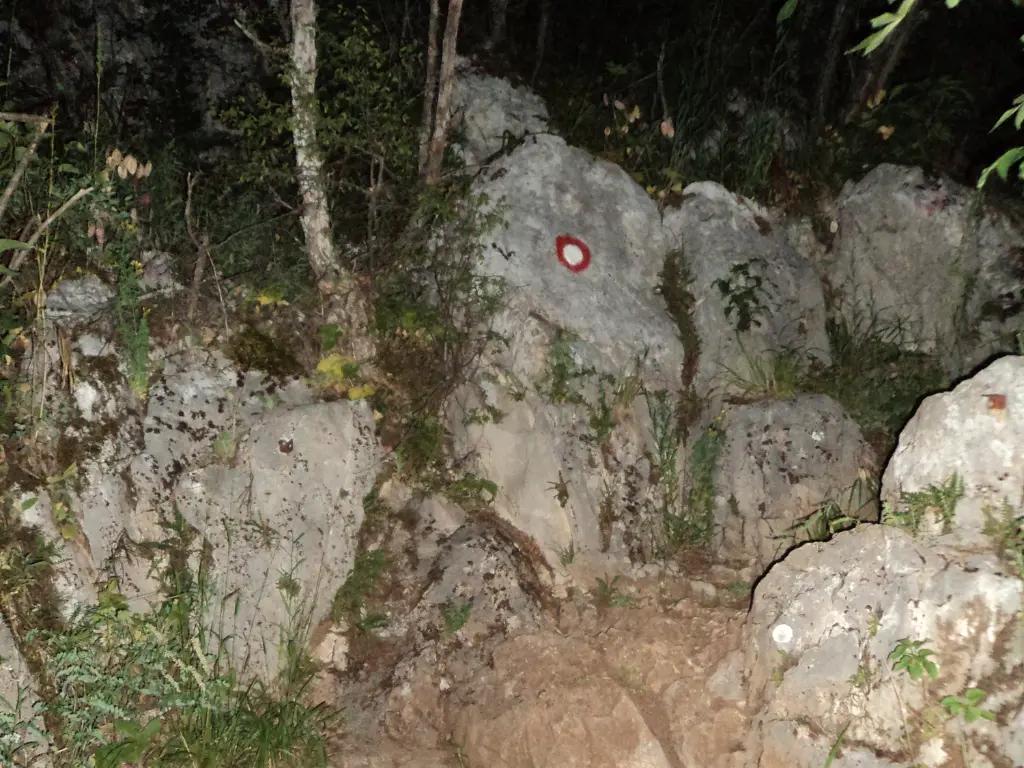
Dark is not quite the right word for what a dense forest looks like at 1 AM when the canopy is above you and no ambient light reaches the ground. What you can see is exactly what your headlamp touches, and nothing beyond that. Two of the four of us had headlamps. This had seemed fine. It wasn’t quite as fine as it seemed.
Both lamps were new. Neither had been charged before the trip. They’d been drawing from a power bank in the car on the drive out, but the cable had been left in the boot. So we had partially charged headlamps, no way to top them up, and one of them starting to dim within the first thirty minutes. Gradually, then faster. Then mostly off.
This should have been a bigger problem. What saved us was the moon. Almost full that night. In the forest it doesn’t help because the canopy blocks it completely, but the moment we cleared the tree line and got onto the open mountain, the moonlight took over. We switched the remaining lamp off. Didn’t need it.
Worth knowing if you’re doing this in a group, first and last person keeps a light on. Everyone in the middle doesn’t need one. Space yourselves right and one light covers the whole group. We figured this out by accident, but it worked.
One of the four of us had also packed flip flops. Just in case. No specific reason. He wasn’t sure either. They stayed in the bag.
One practical note, and I mean this, keep your hands free on loose terrain. Hands in your pockets on a steep rocky section, you slip, and you’re looking at broken bones or a tooth on a rock before you’ve had time to react. Not theoretical. Just keep them free.
Continuous Uphill
Nobody mentioned it doesn’t stop going up.
I’m active. MTB, trail riding, daily walks that keep me moving between the bigger days. Not unfit. But I don’t do structured weekly climbing. I tend to just show up for things and go. Rtanj pushed back on that approach a bit. The gradient is continuous from the car to the summit, no flat sections, no recovery stretches, no point where the mountain gives you a moment. Just up, the whole way.
Pauses help. We took them. That’s not failure, that’s just how this mountain works.
About twenty minutes before the top, we crossed paths with a guy coming the other direction. Walking downhill, alone, Bluetooth speaker going, moving through the dark at his own pace. I’ve spent enough time in forests and mountains at night to know it’s an unsettling place to be solo. This guy had no issue with it. We guessed he’d been up for the sunset and was making his way back down. Didn’t stay for the sunrise. Just did his own thing. I respect that more than I can explain quickly.
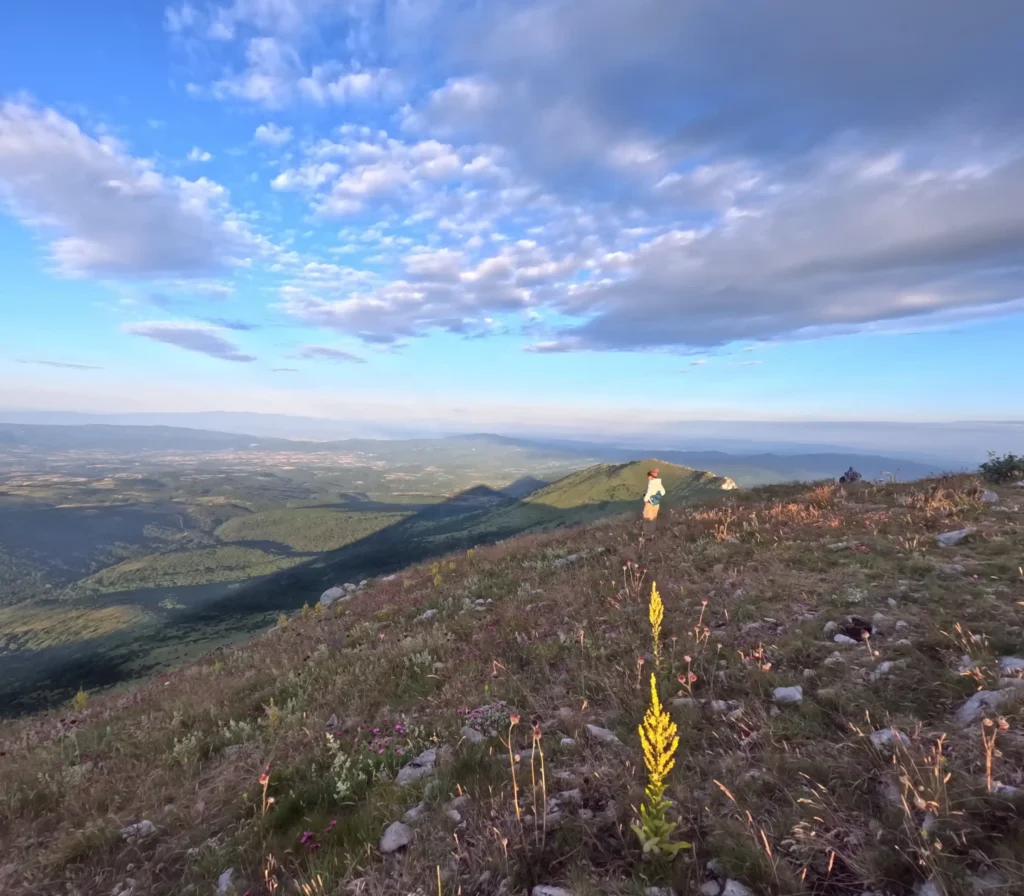
Above the tree line, the landscape changes. Forest ends at roughly 1,100 to 1,200 m and then it’s open mountain, rocky, exposed, the ridgeline visible above you and the valley below. The moon was bright enough at that point that we could see the path without lights. The wind started building.
Above the Trees
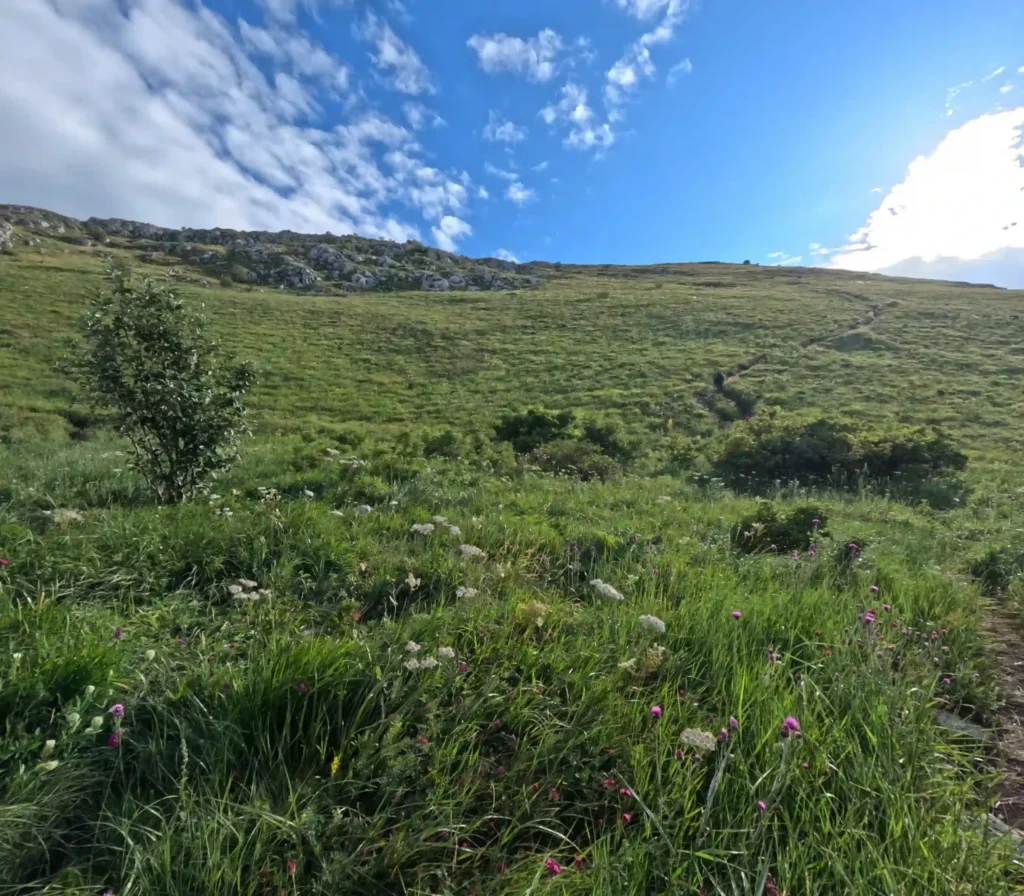
The herb fields started right where the forest ended.
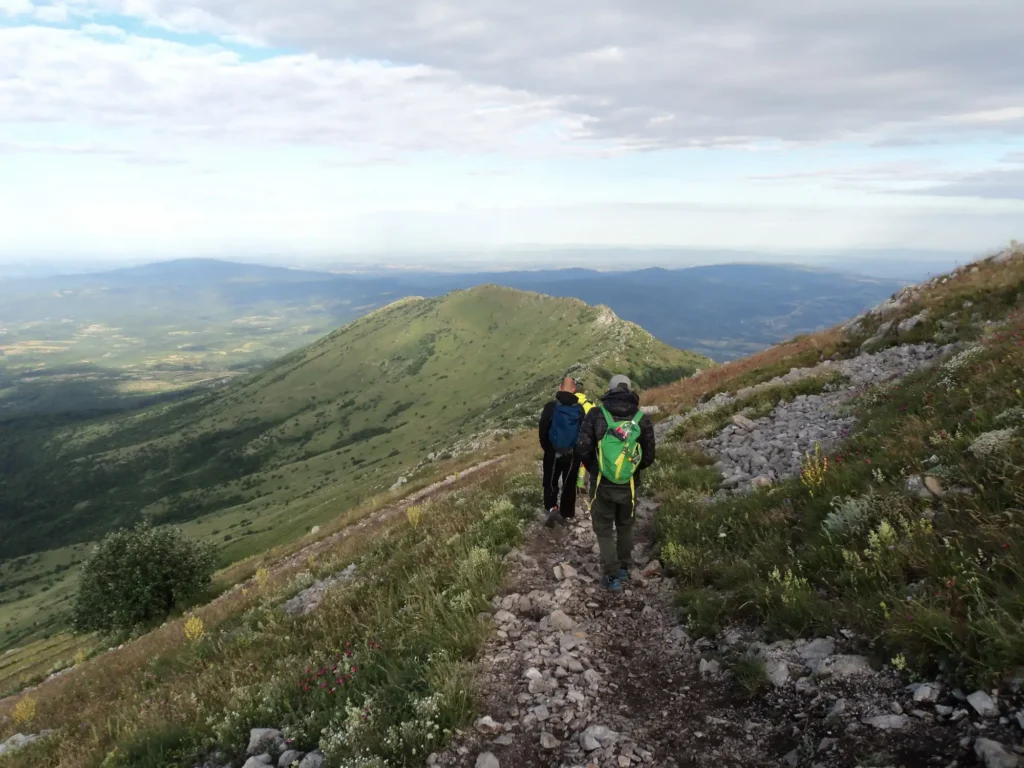
I don’t know what I was expecting above the tree line. What’s there is meadows full of plants at altitude, different shapes, different colors, all growing out of the mountain in the dark. I walked through them at 2 AM with my headlamp occasionally sweeping across them.
A lot of it was Satureja montana. Rtanj tea. It grows between 1,000 and 1,400 m on this mountain, which is exactly where we were. I noticed it and thought I should pick some to dry at home. I do this on mountains. I have dried herbs from previous trips. I don’t know why I didn’t pick any this time.
I found out afterward that Satureja montana on Rtanj has been a protected species since May 2019. (Ramonda Hotel) Wild collection is banned. I walked past it at 2 AM and my instinct was accidentally, unknowingly correct.
Also in the limestone rock faces around the summit, Ramonda serbica, the Serbian phoenix flower. First described as a species by botanist Josif Pancic after he found it on Rtanj in 1874. Its defining property, it can completely desiccate, dry out to the point of appearing dead, and fully revive within twelve hours of water. It grows in the crevices of the rocks you’re climbing past. (Wikipedia)
The summit wind was not subtle. July at 1,565 m with no shelter means cold that you’re not expecting if you came from a warm valley a few hours ago. Everyone found one large rock and got behind it. The wind found most of us anyway. We had Rakija, which helped. Instant coffee. Sandwiches. Snickers and Bounty bars, my standard mountain food, the ones that come three in a package. Everyone in their layers, backs to the rock, waiting.
There are ruins on the summit. A mausoleum and chapel dedicated to Saint George, built in 1932 on the Siljak peak. Communist authorities demolished the dome and cross in 1946. What remains is still there, eighty years later, on top of the mountain. I was leaning against those walls at 3 AM without knowing what they were.
There are rumors, nothing confirmed, nothing official, that there may be plans to rebuild it at some point. Just something going around. Whether that happens or not, the ruins are worth knowing about before you get there.
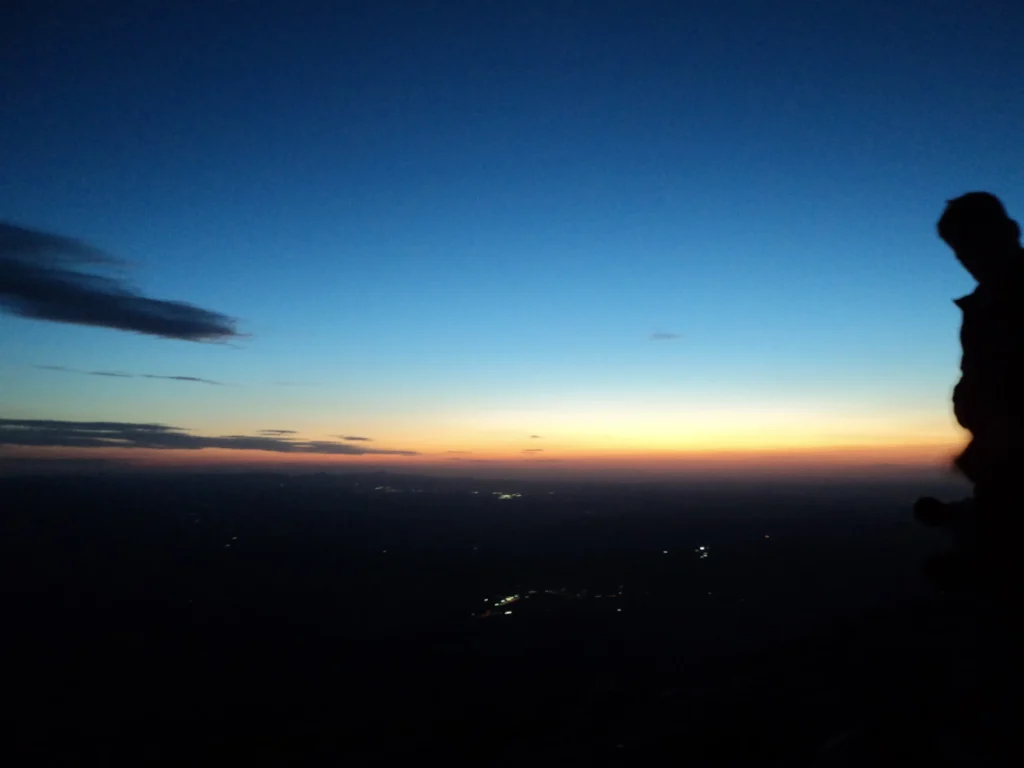
4:43 AM. The sky changed.
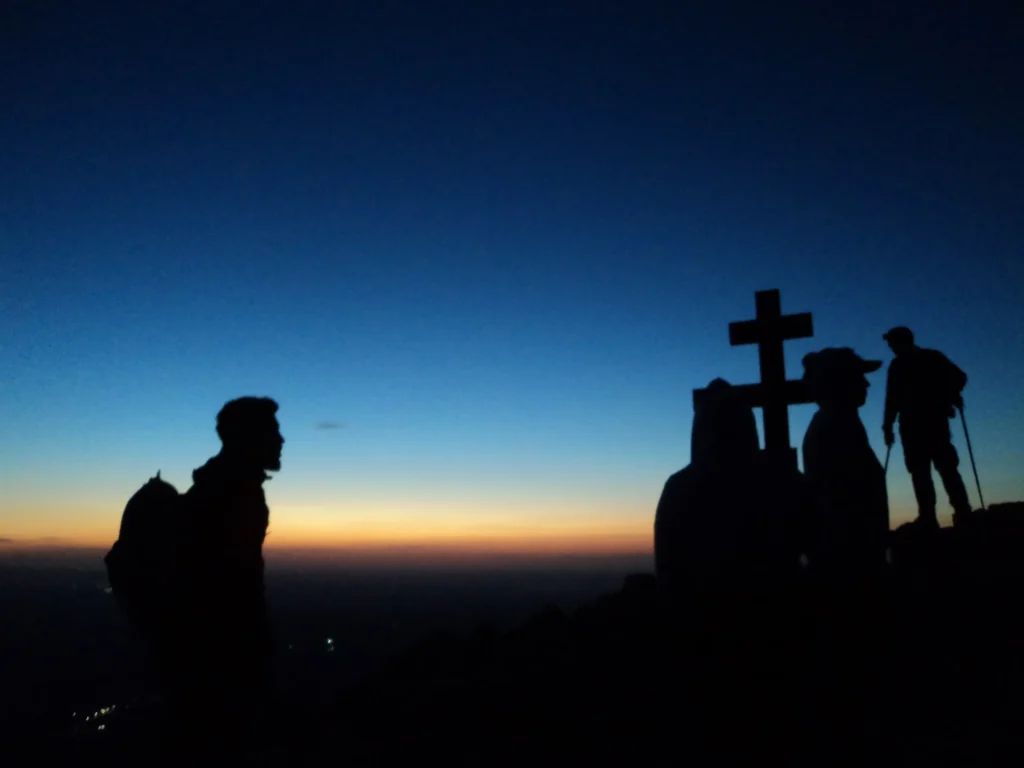
The Sun Rose Below Us
I’ll describe what happened. You’ll understand it a second after I do.
The sky went from black to dark blue to lighter at the edges. We were on the summit, wind behind us, looking east. The light was coming from below.
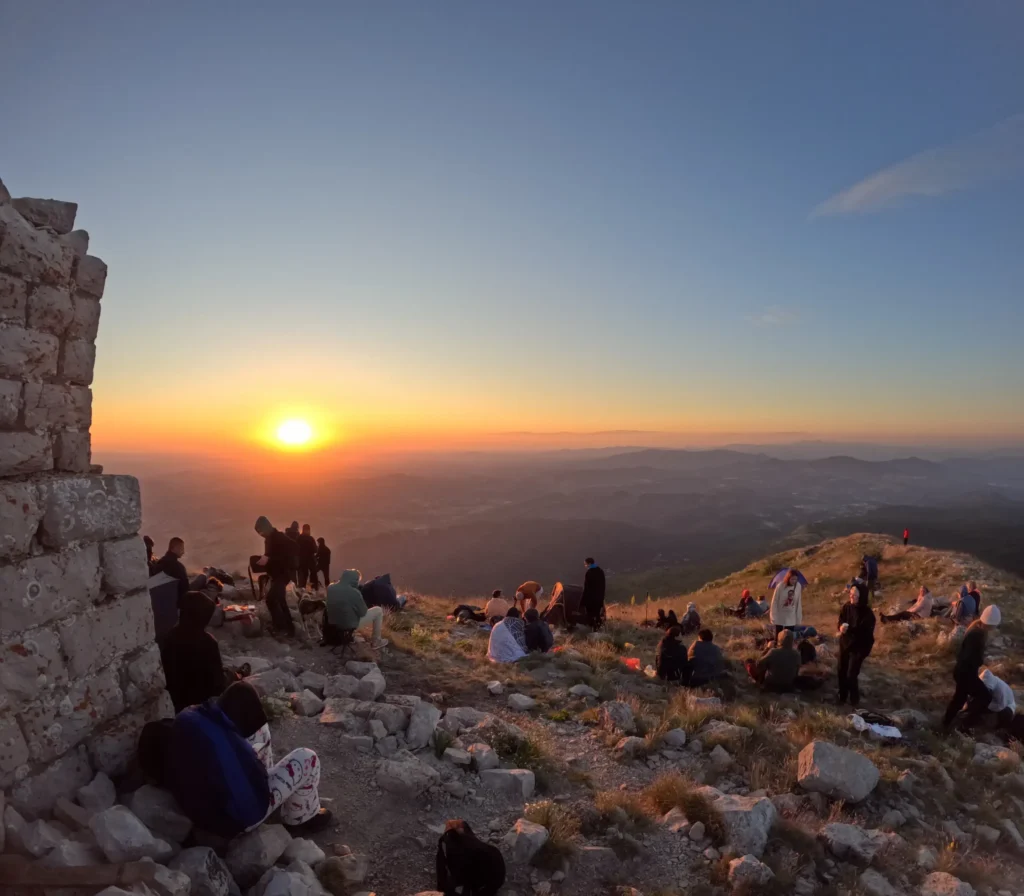
At sea level, at a beach, at the ocean, the sun rises at the level of the water. The horizon is your altitude. On most mountains I’ve been on, there’s always a bigger peak somewhere blocking the full view. The sun rises behind something higher.
Rtanj is 1,565 m / 5,135 ft. Its topographic prominence is 1,039 m, meaning it rises that far above the surrounding terrain on all sides. (Wikipedia) It’s the highest mountain in the region. There’s nothing bigger in any direction.
The sun rose below the summit altitude. I looked down to see it. Not across, not up. Down.
I’d never thought about this being possible. Nobody mentioned it before we left. It just happened. The light was below us and climbing toward us and we were on top of something that was genuinely above it.
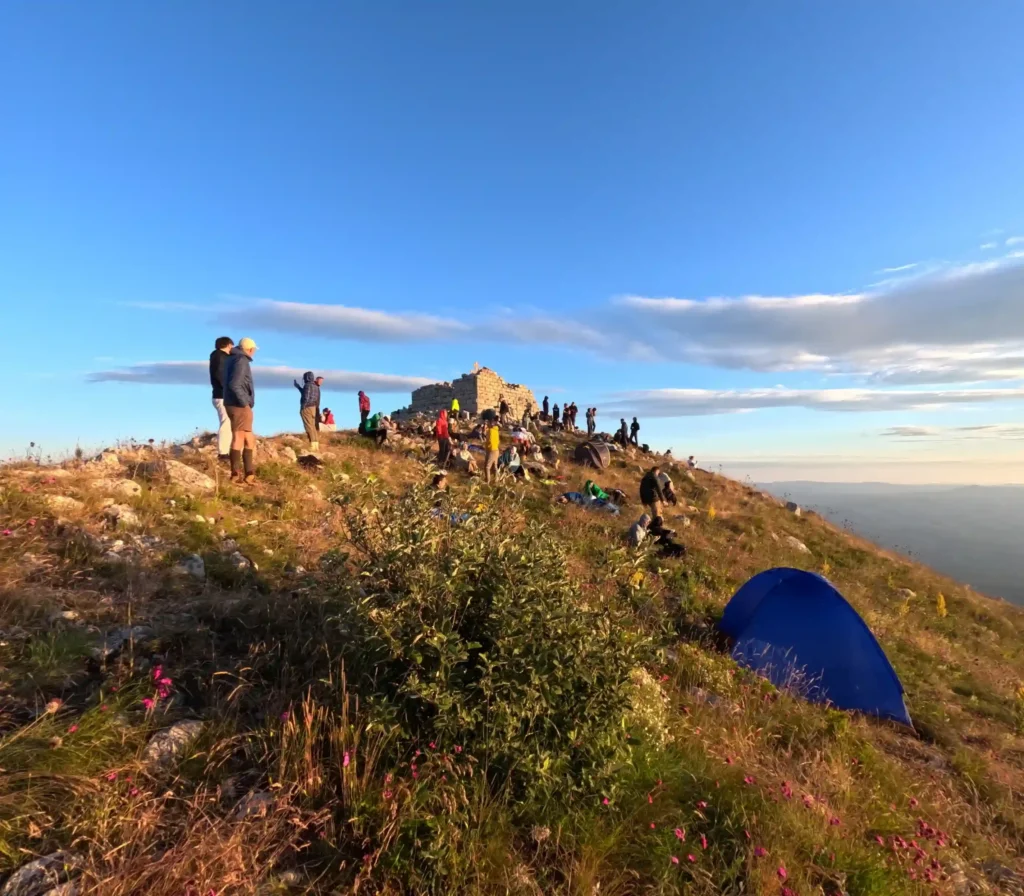
Then someone said to turn around.
I turned 180 degrees.
On the other side, the rising sun was casting Rtanj’s shadow onto the terrain below. Because the mountain’s shape is conical, the shadow was a pyramid. Straight clean lines from the peak down to the base. No curvature, no distortion. Just the shape of the mountain, exact, projected onto the hillside.
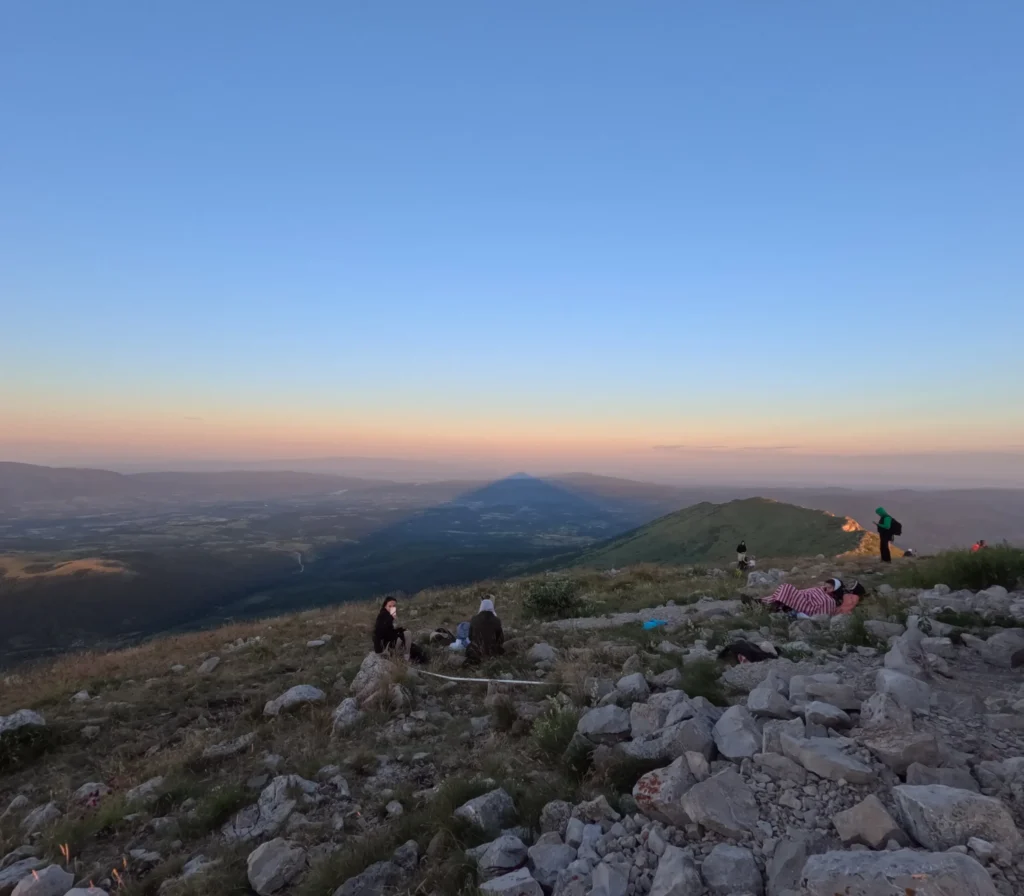
As the sun climbed higher, the shadow pulled back toward the mountain. We watched it move.
Sunrise on one side. Pyramid shadow on the other. You’re standing on the point.
What This Mountain Actually Is
Some of this we talked about on the way down. Some of it I looked up after.
Rtanj’s shape is classified by geologists as a natural flatiron formation, the result of differential erosion of harder rock over softer strata beneath, over millions of years. The conical silhouette is real. It is a pyramid. Whether it was built is a different conversation, and it’s one people have been having seriously for decades.
The slope angles have been compared to the Great Pyramid of Cheops and the Pyramid of the Moon in Teotihuacan. No mainstream archaeology supports the man-made claim. The shape comparison is specific enough that it keeps getting made. Make of that what you want.
The healing energy claims are detailed. A location near the mountain’s base called the Sanctuary is said to radiate beneficial electromagnetic energy. A local tradition holds that Roman legionnaires treated their wounded below Rtanj and the wounds healed significantly faster than elsewhere. No peer-reviewed study has confirmed any of the energy claims. What is documented: 644 vascular plant species on this one mountain, 25 of them found nowhere else on Earth, with pharmacologically active compounds confirmed in multiple studies. (Wikipedia) The mountain heals people the old-fashioned way regardless of what else is going on.
Novak Djokovic, April 30, 2021: “Rtanj mountain is one of the most mysterious and powerful mountains in our country and probably beyond. This is second time I have hiked to the top with Jelena.” (X / Twitter) His second ascent. He’s publicly associated with Balkan pyramid sites more broadly.
In December 2012, believers from Australia, Austria, and France came to Rtanj specifically for December 21, the Mayan calendar end date. A conference called “Rtanj-Galactic Contact” was organized. The theory, the mountain was built by an ancient civilization as an energy beacon and would activate a protective field at the end of the cycle. International press covered it. (ABC News)
The Christmas winter ascent has run for 37 consecutive years. The July 7 herb gathering, St. John Biljober, organized annually since 1994, happened two days after we came down. There’s also an ice cave on the mountain, the only permanently frozen pit in Eastern Serbia’s karst zone. Below zero year-round, regardless of season.
I had my daily adventure backpack with me, the same one I take on everything. At 1,565 m with overnight wind and temperatures dropping, what you carry matters. The layers I brought made the difference at the top.
Frequently Asked Questions About Climbing Rtanj
How hard is it to climb Rtanj to Siljak peak?
Continuous uphill with no flat recovery sections, harder than the distance alone suggests. Under three hours from the standard trailhead. The off-road approach in a capable SUV cuts 30–45 minutes before you even start walking. Good footwear matters on the loose rocky sections near the top. Non-climbers can manage it with proper pacing, but don’t underestimate the sustained gradient. Rtanj doesn’t give you a break between the car and the summit.
When is the best time to climb Rtanj?
A night ascent for sunrise avoids the brutal July heat and the zero-shade summit exposure. In July, the daytime summit is full sun, full wind, no shadow, you burn faster than you expect because the wind keeps you cool while the UV is doing its work. The summit at night in July is cold. Bring a real layer regardless of the valley temperature. April through October is the general climbing season.
What is Rtanj famous for?
The pyramid shape, the healing energy claims, the endemic herbs, Satureja montana (Rtanj tea) has been protected since 2019, Djokovic’s two confirmed ascents, and the 2012 pilgrimage that brought visitors from Australia, Austria, and France. It’s the highest peak in the Serbian Carpathians at 1,565 m / 5,135 ft, the most visited mountain in the region, and one of the most unusual mountains in the Balkans by almost any measure. The sunrise physics alone are worth the night climb.
The Drive Home
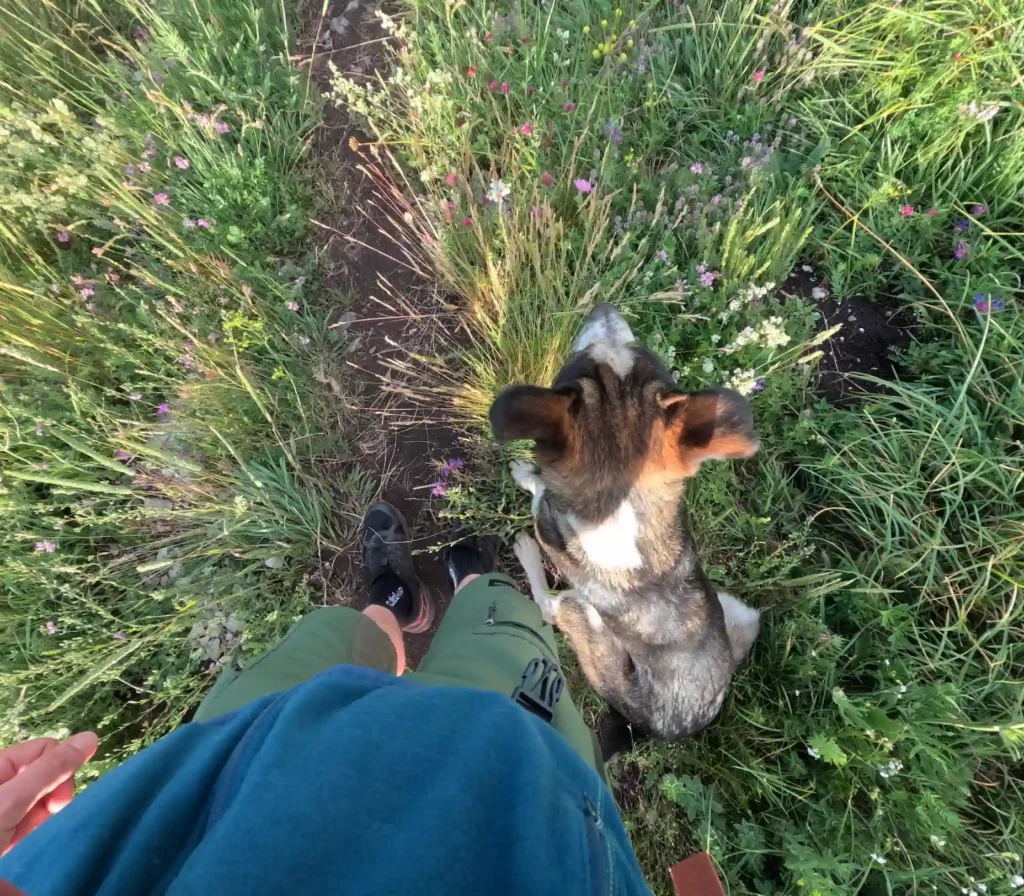
Around 5 AM, after the sun was up and the wind had eased slightly, I lay down on the mountain grass. Back to the sun. All my layers still on because of the ground cold. I closed my eyes.
Twenty, twenty-five minutes. My friends woke me because they were worried about me getting cold sleeping directly on the ground. Fair.
I woke up reset. That’s the only word for it. Not rested, reset. Something that a nap in a bed doesn’t do. Twenty minutes at 1,565 m after a night climb and a sunrise below you, and everything comes back sharp.
We ate what was left, packed up, and started back down.
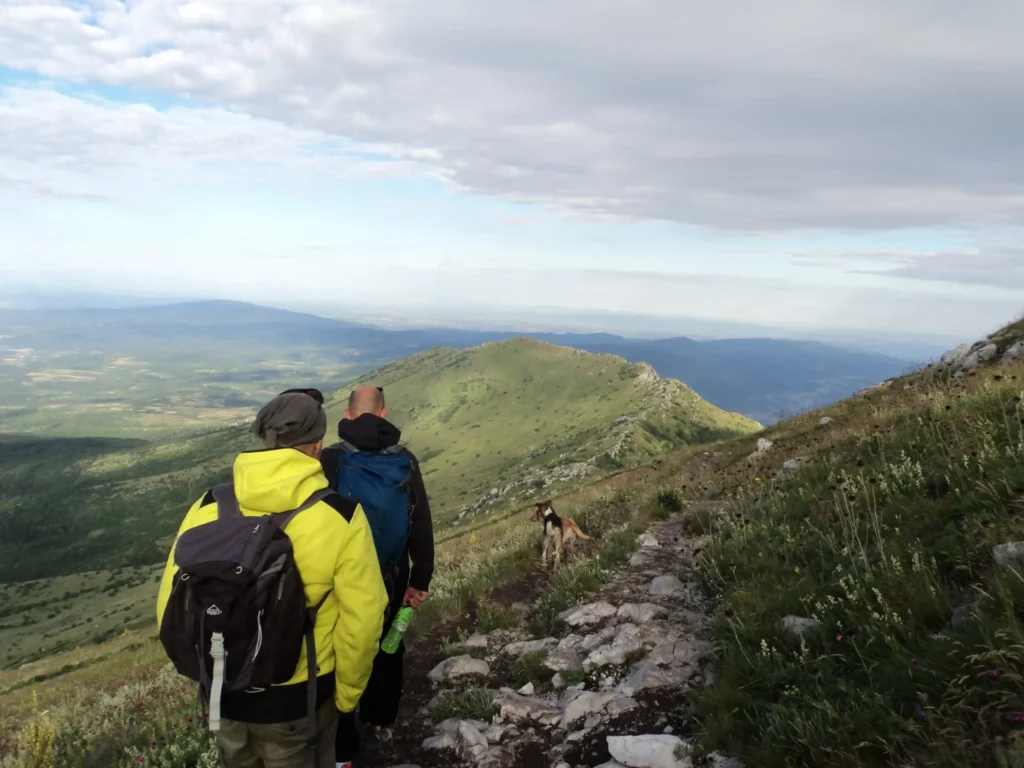
Same route. Full daylight now. And we could see everything we’d climbed in the dark.
The steep rocky sections near the bottom, the loose, technical parts, were all visible. We looked at them. We all said the same thing at roughly the same moment, I really don’t remember it being this bad. How was it not this bad going up?
We’d climbed it in complete darkness. We couldn’t see the drops and the loose sections and the gradient clearly enough to process them. We went through it without knowing what it looked like. In daylight it was a different mountain.
When we got back to the car, one of the guys opened the boot to put his pack in. The cable was sitting there. The charging cable they’d left behind. It had been there the whole time.
The Rakija was gone. Everything else worked out.
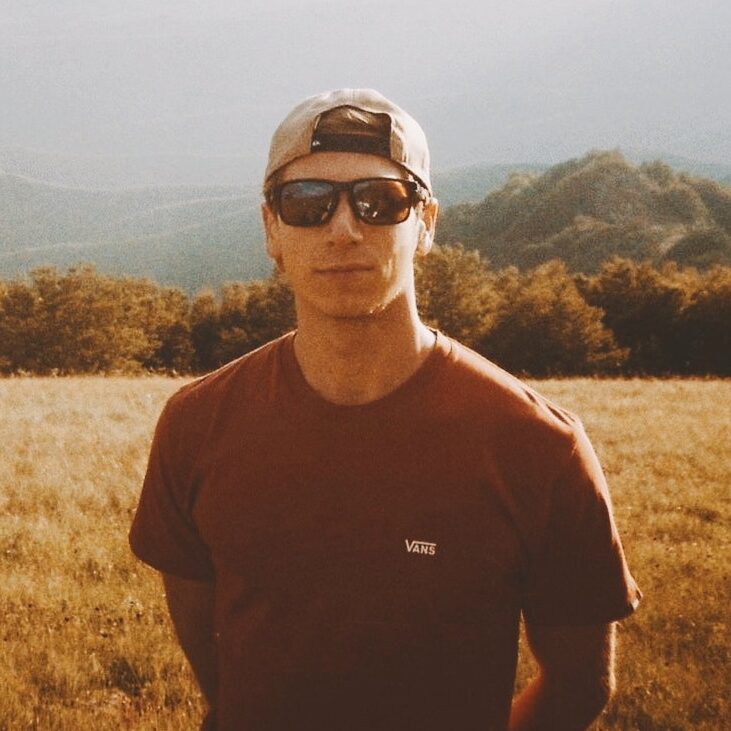
Filip Petreski is the founder of AFIELD and a multi-sport outdoor athlete. A two-time national cross-country MTB champion, snowboard instructor, and former dirt bike rider, he writes about the people, gear, and culture worth paying attention to in the outdoor world.