Most people I know have too many bags. None of them feel quite right. There’s a hiking pack that’s too big for a day out, a travel bag that’s too small for a real trip, and three other bags that each cover 60% of one specific use case. You end up choosing between the least-wrong option every time you leave the house.
The answer isn’t another bag. It’s the right three types of backpacks you need and after years of using them across camping weekends, MTB race trips, bouldering sessions, park days with a slackline, and travel that needs a laptop and a GoPro, I’ve landed on exactly three. One for everything that takes more than a day. One for the real outdoor day. One for when your work tools need to travel with you. The outdoor recreation space counts 175.8 million active participants in the US alone (OIA, 2025). Most of them have the same bag problem.
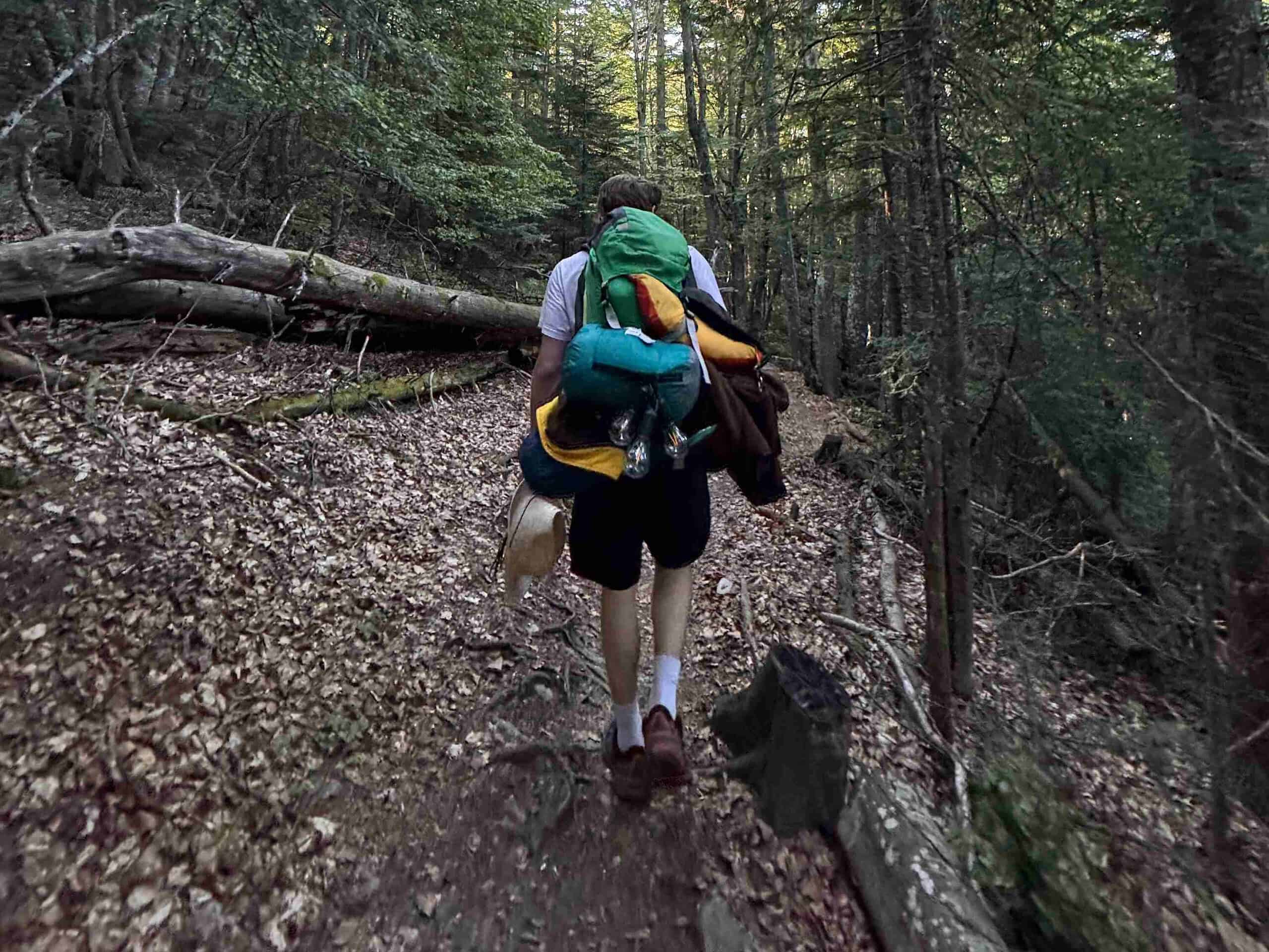
Table of Contents
The Large Expedition Pack
The backbone of the whole system is a 40–55L expedition pack. The average multi-day hiking pack sits at 51.9L (Backpack Brands, 2025) and that number exists because it works. It’s the range where you can fit shoes, a race kit, two days of food, a tent, a sleeping bag, and multiple slacklines without the bag becoming unwearable.
I got mine with a first-place voucher from an MTB race. Walked into the shop, pointed at the McKinley Maple on the shelf, left with that and a couple of shirts. It was my first real backpack, not a school bag with extra pockets, but an actual expedition pack with a hip strap system and proper load suspension. That was years ago. It’s been on every camping trip since, every race weekend, snowboard trips, and park days when I wanted to bring two or three slacklines instead of one.
What makes a large pack the backbone isn’t just the capacity. It’s what happens when you’re not using all of it. Good compression straps let you tie the bag down when it’s half-empty, it doesn’t look or feel like a moving truck when you’re carrying half the load. That’s rare, and it matters. You shouldn’t need a full load to justify the bag.
There’s also the standard kit. Inside mine right now: multitool, first aid kit, a couple of allergy pills, something for headaches. Always there. If I’m taking the bag, it’s already inside, I just update whatever got used on the last trip. I don’t pack from scratch. The bag is a system that’s always ready.
The large pack earns its place because it handles the extremes without complaint. The camping weekend where you’re carrying dense food and gear for three days. The MTB race weekend where you need shoes, jersey, tools, and everything else for two days away from home. Same bag. Different load. That dual range, full and heavy, half-empty and compressed, is the real test of a good expedition pack. If it works at both ends, it works.
The Mid-Size Day Pack
The second type covers everything that doesn’t require staying overnight. A 20–28L day pack is the bag you actually reach for most days, shorter hike, bouldering session, park afternoon with the slackline and a water bottle. The average hiking daypack lands at 22.4L and just 1.5 lbs (Backpack Brands, 2025). That weight-to-utility ratio is the whole argument for this size category.
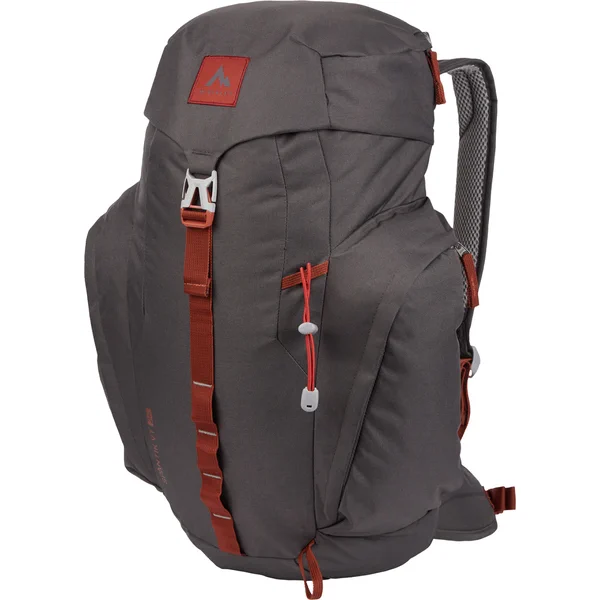
I bought the 24L for my wife. She uses it sometimes, turned out I use it more than she does. That inversion happened naturally, I kept reaching for it when the large pack was overkill and I didn’t want a gym bag. Shorter hike where I need water, snacks, and a layer? The 24L. Bouldering session with shoes and chalk bag? The 24L. Carrying the Gibbon Jibline – Slackline Article with a water bottle and a speaker? The 24L.
Simple design is a feature, not a compromise. One main pocket, two side pockets, a small top compartment for a hat or a rain layer. No compartment hunting. You know what’s where. When you reach in, the thing you need is there. When you need to move fast, you move fast.
The mistake most people make in this category is sizing up, buying a 35L “day pack” that’s too big to feel agile but too small to use for a real trip. It ends up covering nothing well. You’re not moving freely and you’re not carrying enough. The 20–28L range is the genuine sweet spot: light enough to forget you’re wearing it, deep enough to carry everything a real outdoor day requires.
This bag is underrated in most people’s rotation. It’s not the exciting one, not the one that goes to the mountains for three days. It’s the one you grab the most. That frequency is what makes it essential.
The Lifestyle Pack
The third type doesn’t go to the mountain. It goes to the airport, the coffee shop, the session where you need everything you use to create and think. Laptop, camera, GoPro, chargers, USBs, the full creative kit for a travel day. Travel packs average 38.8L (Backpack Brands, 2025), but for daily work and creative carry, something smaller and more deliberately organized is the better call.
My wife bought mine because she knew I liked Vans. I’ve never used to carry my skateboard. I use the Obstacle Skatepack for my laptop on every trip where I need to be productive. Camera, GoPro, two laptops, chargers, USBs, it all goes in. On a full travel day, it has everything I need to work while I’m moving. The brand built it for a skate lifestyle I don’t have. It turns out to work perfectly for the one I do.
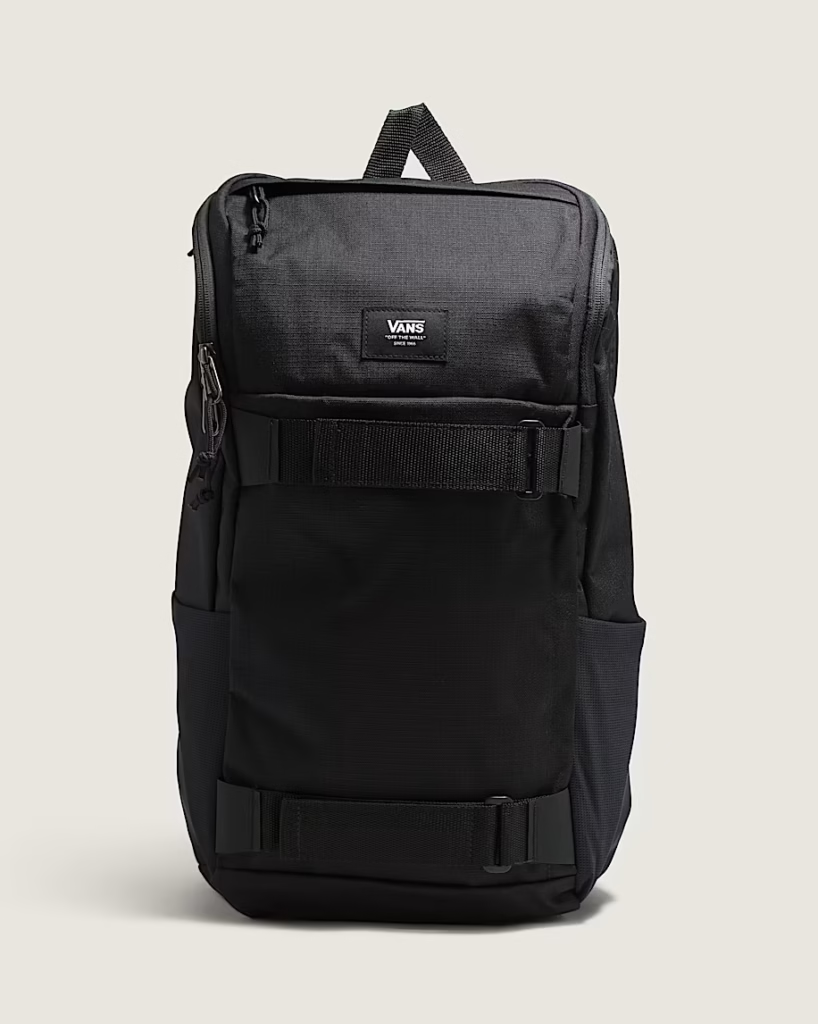
The design priorities are completely different from an outdoor pack. Load-bearing suspension doesn’t matter here. What matters is a proper padded laptop sleeve, pockets that make intuitive sense, and a profile that fits comfortably under an airplane seat or beside you at a desk. The skate heritage of this bag, structured, compartmented, not too wide, not too deep, translates into exactly the right shape for tech carry.
This bag earns its spot because it keeps the work life contained. When I come back from a trip, everything work-related is in that bag. Everything outdoor-related is in one of the other two. There’s no sorting. The system is already sorted.
Why These Three Types of Backpacks Cover Everything
Every gear site in this space will give you more options. Twelve types of backpacks. Twenty-three types. The complete guide to every bag you might ever own. That’s not clarity, it’s a longer decision. AFIELD’s position is the opposite, three types, here’s why they’re enough, go.
Three bags map to three distinct modes of life. The large pack operates on expedition logic, you need to carry everything, you might not be back tonight, capacity and support are the priority. The day pack operates on outdoor utility logic, you know what you need, you’re returning by sunset, agility beats capacity. The lifestyle pack operates on creative and professional logic, your tools travel with you, organization and protection matter more than load distribution.
These three modes don’t overlap. A camping weekend calls for the expedition pack, not the day pack. A bouldering session calls for the day pack, not the expedition pack. A workday with a laptop calls for the lifestyle bag, not either of the others. If you genuinely need a fourth bag, it’s because your life has a fourth distinct mode. That’s worth knowing before you buy anything.
The gear upgrade habit in outdoor culture runs one way, more options, more gear, more bags. The better move is knowing which three you actually use and trusting them. Once the right three are in your closet, you stop thinking about bags. You start thinking about where you’re going.
| Pack Type | Size Range | Primary Use |
|---|---|---|
| Large expedition pack | 40–55L | Camping, racing, multi-day travel |
| Mid-size day pack | 20–28L | Day hikes, bouldering, park days |
| Lifestyle pack | 15–25L | Laptop, camera, creative travel |
Source: Backpack Brands, 2025
Frequently Asked Questions
What size backpack do I need for outdoor sports?
For multi-day trips, camping weekends, or racing away from home: 40–55L. The average multi-day pack is 51.9L (Backpack Brands, 2025). For day hikes, bouldering, enduro rides and park outings: 20–28L. For work and creative travel, it depends on your tech kit, typically 15–25L is enough and easier to carry.
Can one backpack work for both hiking and travel?
Often yes, in the 35–45L range. Hiking packs are built for load distribution; travel packs for organization and access. Most outdoor experts recommend two packs for people who do both seriously, a daypack and a larger pack, because the design priorities genuinely don’t overlap (REI, 2025). The three-type system makes this split intentional, not a compromise.
How do I know if my pack is the right size?
It should fit full without all the weight falling on your shoulders. The hip strap should carry 70–80% of the load, leaving your shoulders to stabilize rather than bear the weight (REI, 2025). If it’s always overflowing or always feels too cavernous, it’s solving the wrong problem. The right pack disappears when you’re wearing it.

Filip Petreski is the founder of AFIELD and a multi-sport outdoor athlete. A two-time national cross-country MTB champion, snowboard instructor, and former dirt bike rider, he writes about the people, gear, and culture worth paying attention to in the outdoor world.