
The first thing I did when I stopped racing seriously was strip the Garmin off the bars. Not a protest. Not a statement. Just how I like the bike to look. Clean cockpit. Nothing strapped on. Same philosophy I have with my dirt bike, no bags, no stickers, no accessories. As it is, that’s how I love it.
I didn’t know there was a name for this until it came out on social media. Turns out, there’s a whole movement. People calling themselves anti-Strava. Podcasts. Reddit threads. The fact that it has a name is kind of funny to me. Because I wasn’t rejecting anything. I was just riding.
Strava has 180 million users and 51 million activities logged every week (Strava Year in Sport 2025, 2026). That’s an enormous amount of data generated by people choosing to track. And now a measurable counter-movement is growing alongside it. The research behind that shift is more interesting than the think pieces.
- A study of nearly 60,000 social posts found fitness apps like Strava generate guilt, shame, and lost motivation as dominant outcomes (British Journal of Health Psychology via Athletech News, 2025).
- The anti-Strava movement isn’t anti-technology, it’s a reaction to extrinsic tracking crowding out intrinsic motivation.
- Serious athletes often already live this distinction without naming it, training tools (Garmin, Polar) serve the coach, Strava is the social layer.
- The best ride you’ll have this year might be the one that doesn’t get uploaded.
What Does the Research Actually Say About Tracking and Motivation?
A study analyzing nearly 60,000 social media posts found that guilt, shame, and lost motivation were the dominant themes people associated with fitness apps like Strava (British Journal of Health Psychology via Athletech News, 2025). That’s not a marginal finding. At 60,000 posts, it’s a pattern.
There’s a concept in sports psychology called the overjustification effect. Put an external reward on something you already love and you reduce your intrinsic drive to do it. Strava is, by design, an overjustification machine. Every ride gets a score, a segment comparison, a social response. The ride that used to exist just for you now exists for the feed.
A 97-study narrative review found that intrinsic motivation produces “more sustained and profound impact” on performance and adherence than extrinsic motivation, which delivers only short-term gains (PMC, 2025). Short-term. That’s the word. Kudos feel good for about six minutes.
A separate study using 13 in-depth interviews identified 16 distinct stress factors created by self-tracking devices and apps (Frontiers in Sports and Active Living, 2024). The list includes “measurement data fixation,” “comparative pressure,” and “permanent monitoring.” If you’ve felt that low-level anxiety when you forgot your device, that’s what they’re describing.
The research isn’t saying tracking is bad. It’s saying that when tracking becomes the point rather than serving the point, something flips. The ride becomes a data event. Your body becomes an input.
A 2025 analysis of nearly 60,000 social media posts found that guilt, shame, and lost motivation were the dominant outcomes associated with fitness tracking apps like Strava (British Journal of Health Psychology via Athletech News, 2025). A parallel 97-study review confirmed that extrinsic motivation delivers only short-term performance gains, while intrinsic motivation sustains long-term adherence (PMC, 2025).
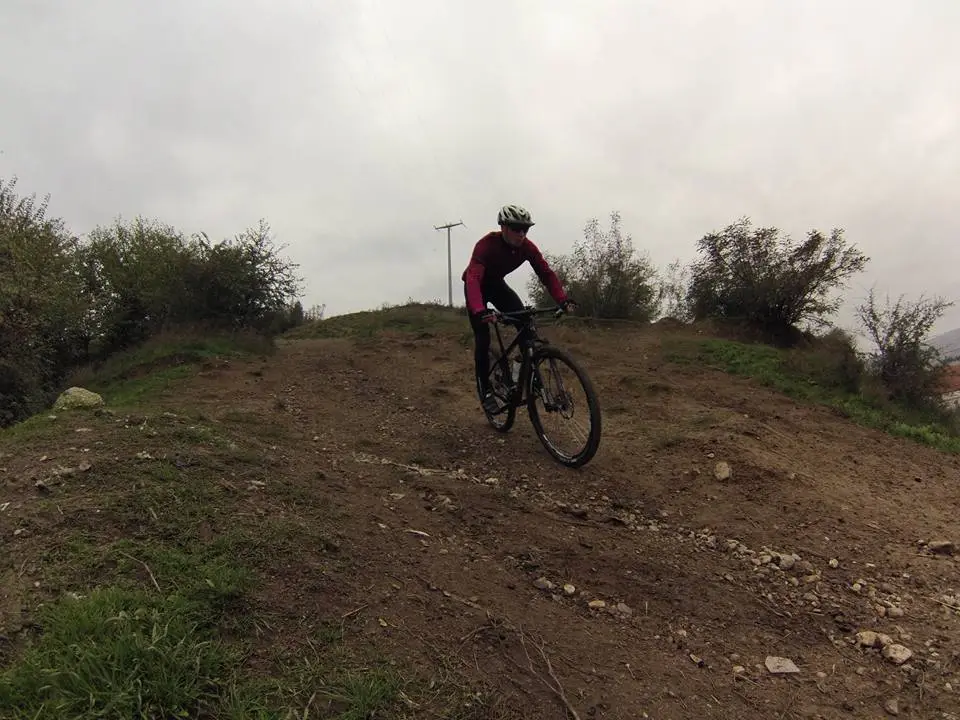
What Are Strava’s Own Numbers Actually Telling Us?
Strava’s fastest-growing communities in 2025 were hikers, up 580%, and runners, up 350%. Cycling clubs grew too, but at 280%, trailing both (Strava Year in Sport 2025, 2026). The platform is becoming something bigger than cycling. That shift matters.
There’s a generational split buried in the data. 80% of Boomers on Strava have a segment PR. Only 56% of Gen Z riders do (Strava Year in Sport 2025, 2026). Competitive tracking resonates least with the fastest-growing group of new riders. The users who are most loyal to segments are aging out. The ones coming in aren’t playing that game.
Strava filed for IPO in January 2026, targeting a valuation of $2–3 billion (Fortune, 2026). That filing means the product is now optimized for growth, investor metrics, and engagement numbers. None of those incentives align with your ride enjoyment. The platform will keep doing what grows it. That’s not a criticism, it’s just useful to know.
Strava’s 2025 Year in Sport data reveals a generational divide, 80% of Boomer users have recorded a segment PR, compared to only 56% of Gen Z riders (Strava Year in Sport 2025, 2026). The platform’s fastest-growing communities, hikers at +580% and runners at +350% suggest competitive cycling tracking is losing ground among younger users joining the platform.
What Actually Happens When You Stop Tracking – What Flow State Research Says
Flow state research shows that athletes in full flow report significantly lower perceived exertion at identical physiological load. The correlation between flow and perceived exertion during cycling sits at r = −0.56 (PMC, 2025). In plain terms, the ride feels easier when you’re in it rather than watching it.
Flow requires a feedback loop that matches challenge to skill. A GPS screen provides the wrong kind of feedback. It tells you your speed and heart rate, not how the trail is reading under your wheels. Watching metrics pulls you out of the sensory loop that makes flow possible.
My best session last year wasn’t tracked. A few hours into the mountains, no device. I’m not planning to track it. It exists as a memory rather than a data point, and that feels exactly right. What I noticed without the screen wasn’t some enlightenment, just the actual sounds, the actual feel of the bike on that specific ground, the actual pace of breathing. The ride was just the ride.
What comes back when the screen goes away is attention. Not zen awareness, just normal attention to what’s in front of you. The terrain. The sound of the tires. What the bike is doing. That’s not a philosophical position. It’s just what happens.
A 2025 study on flow states during cycling found a significant negative correlation (r = −0.56) between flow experience and perceived exertion (PMC, 2025). Athletes in full flow reported lower perceived effort at identical physical load, suggesting that removing data monitoring may directly reduce how hard a ride feels, independent of actual intensity.
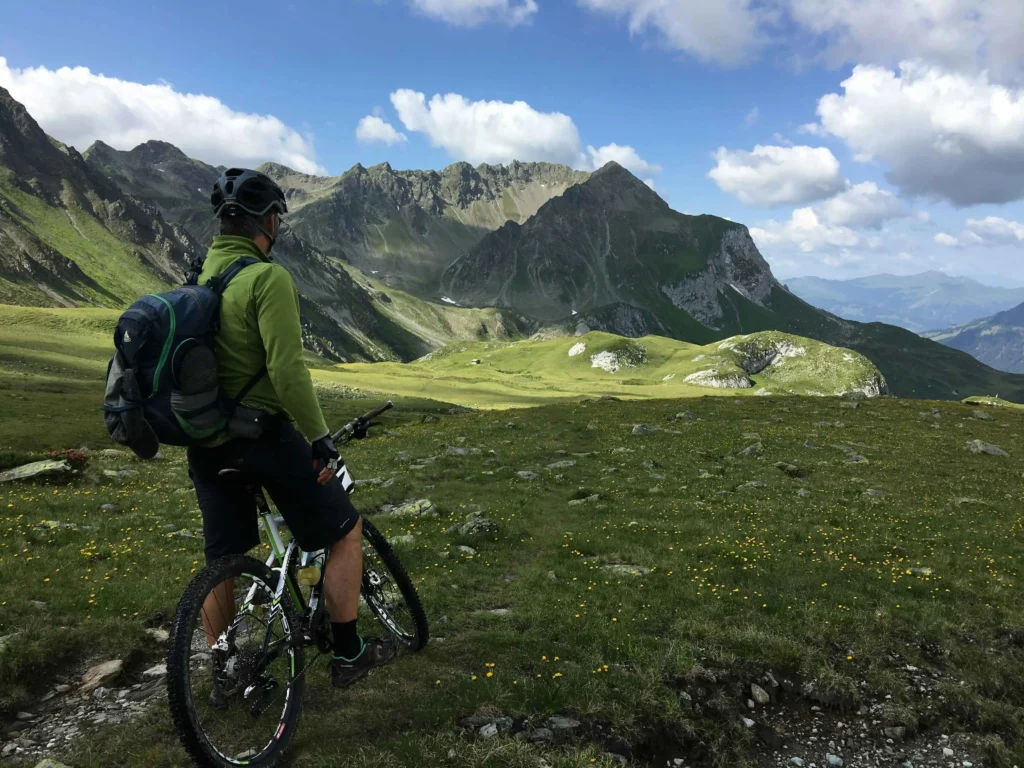
Strava Was Always the Social Layer, The Best Athletes Knew That
The anti-Strava movement isn’t driven by people who couldn’t keep up. Some competed, achieved, and eventually separated the tool from the purpose. Others never needed the numbers to feel what made a ride worth doing.
Here’s how it actually worked when I was racing at national level. First phone, then a Polar for heart rate, that was the priority metric. Then a Garmin. The data went to Garmin Connect first, where it was useful. Then to Strava, where it was social. My coach followed my training on Strava. I could have gone private or shared only with him. The point is, Strava was never the training platform. Garmin Connect was. Strava was where you published the summary.
Hunting KOMs before I raced seriously, that was the closest thing to competition available on a Tuesday. Good fun. When I had a coach and real race targets, segments meant nothing. We were playing a different game. Real results on real start lines.
The distinction matters. A dedicated training platform records data for analysis and athlete development. Strava records data for an audience. Both are legitimate purposes. Confusing them is where the friction starts.
The anti-Strava rider isn’t anti-performance. They’re not rejecting data because they can’t handle it. They’re rejecting the idea that every ride must perform for an audience, including the imagined audience of their own feed history.
Sports psychology research distinguishes intrinsic motivation, driven by enjoyment and personal meaning, from extrinsic motivation, driven by external rewards and comparison (PMC, 2025). Platforms like Strava, which attach social metrics to every activity, structurally shift athletes toward extrinsic orientation which research consistently links to reduced long-term engagement and increased dropout risk.
Is the Data Serving You, or Are You Serving the Data?
You don’t have to delete the app. The question is which rides it earns the right to be on. Some rides are for the log. Some are for you. The distinction is worth making deliberately rather than letting the habit decide.
A practical test, if you’re checking your pace mid-climb, ask whether that number is helping the climb or just narrating it. Data that serves the session improves a decision, effort adjustment, pacing, recovery signal. Data that narrates the session is entertainment. Both are fine, as long as you know which one you’re doing.
If you’re keeping Strava, use it for what it’s actually good at, route planning, club connection, looking back on the year. Turn off segment notifications mid-ride. Log post-session instead of live. Go phone-free on one ride per week and see what changes. These aren’t dramatic gestures, they’re just choosing how the tool fits the ride rather than the other way around.
The data serves you when it changes what you do. It’s decorating you when it doesn’t.
The Ride That Doesn’t Get Logged
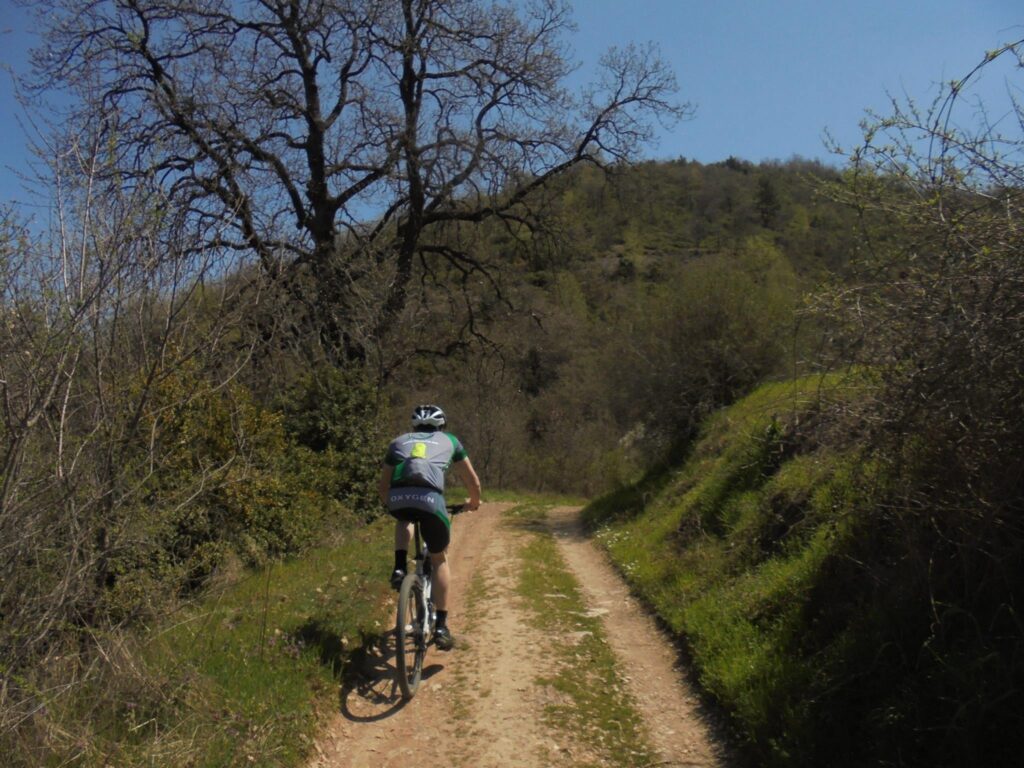
Some rides don’t need to exist anywhere except in your legs the next day.
The anti-Strava movement is really a reclamation of why sport exists, for the experience, not the evidence. The unlogged ride isn’t incomplete. It’s the original format. Every session before GPS was unlogged. Those riders weren’t missing something. They were just riding.
There’s a trail culture that lives mostly outside the feed, the park laps, the evening spins, the session teaching someone new how to get their weight back on a loose corner. Those don’t make good content. They’re also some of the best time you’ll spend on a bike.
What you post doesn’t define what you did. The ride that doesn’t get uploaded still happened. Your body knows.
There’s also something that happens in a shared session where nobody’s tracking. Two people, a trail, no coordinates saved. No post-ride upload. The ride disappears into memory instead of a feed. That’s probably where it belongs.
Frequently Asked Questions
Is Strava bad for cycling motivation?
Research suggests it can be. A study of nearly 60,000 social media posts found that fitness apps like Strava generate guilt, shame, and lost motivation as dominant themes (British Journal of Health Psychology via Athletech News, 2025). The effect isn’t universal, but the pattern is well-documented across a large sample.
What is the anti-Strava movement?
It’s a cultural shift among cyclists and mountain bikers away from compulsive performance tracking toward riding for enjoyment. Not anti-technology, more specifically anti-surveillance of your own fun. Strava’s own data suggests the shift is strongest among younger riders, with only 56% of Gen Z users holding a segment PR versus 80% of Boomers (Strava Year in Sport 2025, 2026).
What happens when you stop tracking your rides?
Flow state research shows that athletes report significantly lower perceived exertion at identical physical load when not preoccupied with monitoring data (r = −0.56 correlation, PMC, 2025). The ride feels different. What you pay attention to shifts from the screen to the terrain.
Do professional cyclists use Strava?
Most serious athletes use dedicated training platforms, Garmin Connect, TrainingPeaks, Polar Flow for structured analysis. Strava handles the social layer, publishing the summary, connecting with the community, looking back on the season. The distinction between data that serves training and data that performs for an audience is exactly what the anti-Strava argument is about.
What the Anti-Strava Movement Is Actually Telling You
The anti-Strava movement has a name now. That’s fine. Most things that were just normal behavior eventually get a name when enough people start doing them consciously.
Here’s what I’d take from all of it, Strava is a tool. It’s a good one for some things. It’s the wrong tool for others. The riders who figured that out early weren’t making a statement, they just had a clear enough sense of what the ride was for that the tracking either served it or didn’t.
The best session I had last year wasn’t uploaded. Not a manifesto. Just a fact.
Ride what you love. Log what helps. Leave the rest on the trail.
If you want to understand why being outside without a goal actually rewires your brain, read our piece on nature therapy and mental health.

Filip Petreski is the founder of AFIELD and a multi-sport outdoor athlete. A two-time national cross-country MTB champion, snowboard instructor, and former dirt bike rider, he writes about the people, gear, and culture worth paying attention to in the outdoor world.