The Gibbon Jibline has been used at Trickline World Championships. It’s also the line the most versatile slackline I hand to someone who’s never stepped on a slackline in their life. That’s a weird range for one piece of gear. It’s also exactly why it’s the one I keep reaching for.
I’ve tried most Gibbon lines. I own the Pro Line Andy Lewis and Slamina, Tube Line and Jib Line. When anyone asks me what to buy, whether they’re hunting for the best slackline for beginners or already thinking about tricks, my answer doesn’t change.
The Gibbon Jibline.
Key Takeaways
- The Gibbon Jibline (~$120) is 5 cm (2 in) wide with ~3% stretch and 3-ton breaking strength, beginner-friendly, TÜV/GS certified, and used at Trickline World Championships
- Slacklining burns ~100 calories per 15-minute session at 6.0 METs, classified as high-intensity physical activity by WHO standards (PMC RCT, 2022)
- It packs into a backpack, needs only two trees, and handles everything from your first steps to your first jump tricks
What Makes a Slackline Truly Versatile?
I’ve tried the Classicline. It’s a solid line, but it felt stiff underfoot, and a few people I know who owned one eventually made the switch to the Jibline. Not because they were chasing tricks. Just because it feels better. The Jib line has more life in it. And here’s something worth knowing, you’re not locked into one feel. Leave the tension lower and the line stays relaxed, good for walking, easy on the body. Crank it up and it firms out, responds better to jumps and dynamic moves. I do this all the time depending on what kind of session I’m after. Same line, completely different experience.
That’s the whole versatility argument. Right there.
What Do You Actually Get With the Gibbon Jibline?
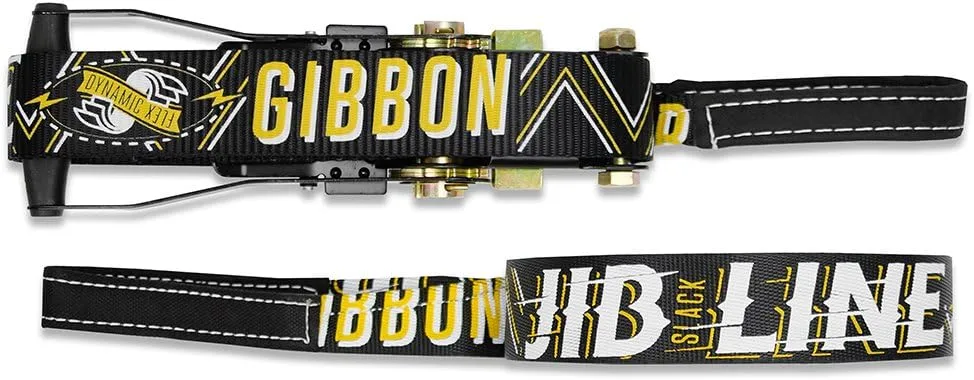
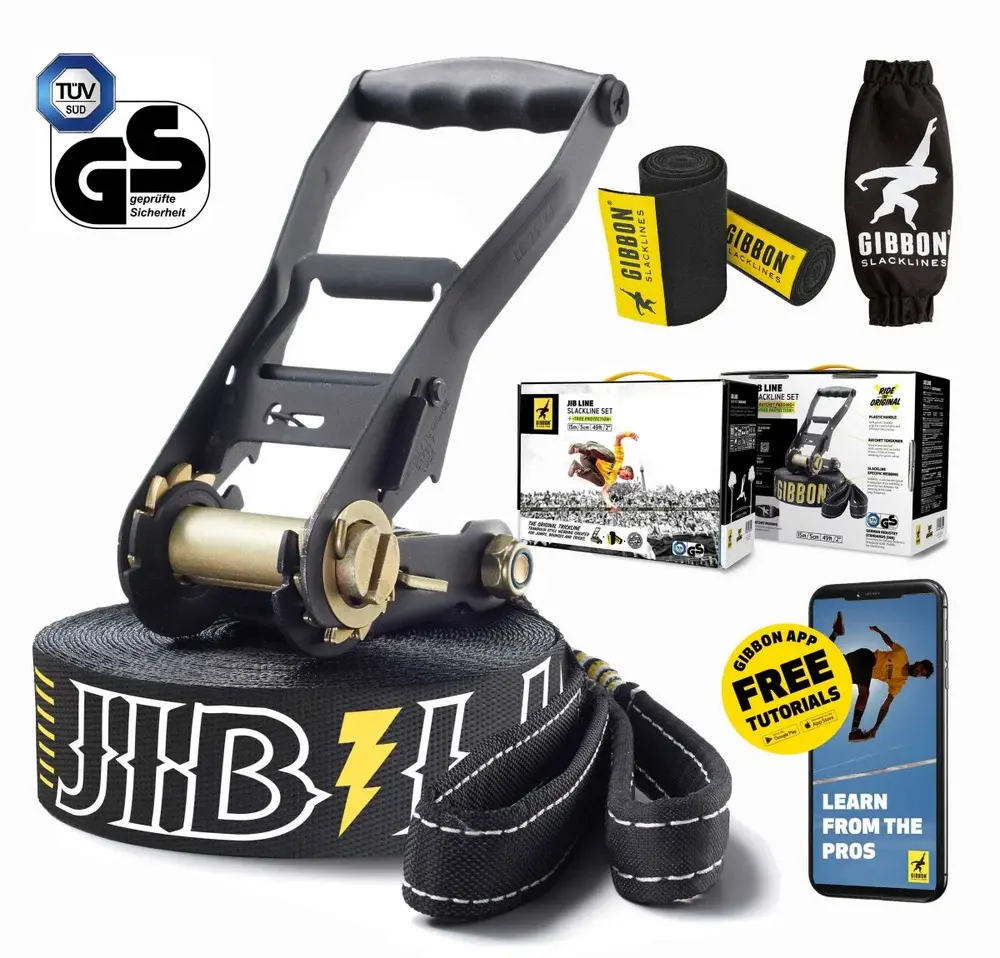
The Jibline starts at ~$120 and comes with 5 cm (2 in) webbing, a full rigging kit, and TÜV/GS safety certification, independent third-party verification that most lines at this price skip entirely.
You get a choice of 15 m (49 ft) or 25 m (82 ft). I’ve got the 15 m. The 25 m is worth a look, sometimes the trees are further apart than you expected, and the extra length means you can still set up, leave a bit of slack, and it still performs perfectly.
The feel of the line comes down to tension. Too much and it stiffens out, every step sends energy back up into you, starts feeling like a bouncy castle and that’s fun! Back it off and it moves with you. That range is controlled at setup, and it’s the same range whether you’re walking or jumping.
Three tons of breaking strength. I’ll make that real, me and four other people have climbed on the same Jibline at once. It was perfectly fine. I wouldn’t recommend it, but we did it, everyone laughed, and the line didn’t care.
Both versions include an integrated RatPad ratchet cover and two TreeWear bark protectors with Velcro fastening. They clip on in seconds and mean you never have to think twice about where you’re rigging.
Why This Is the Best Beginner Slackline
A 2022 randomized controlled trial involving 28 adults over four weeks found that slacklining burns approximately 100 calories per 15-minute session at 6.0 METs, a threshold that classifies it as high-intensity physical activity under WHO guidelines (PMC, 2022). Most beginners don’t know they’re working that hard. They’re just trying not to fall off.
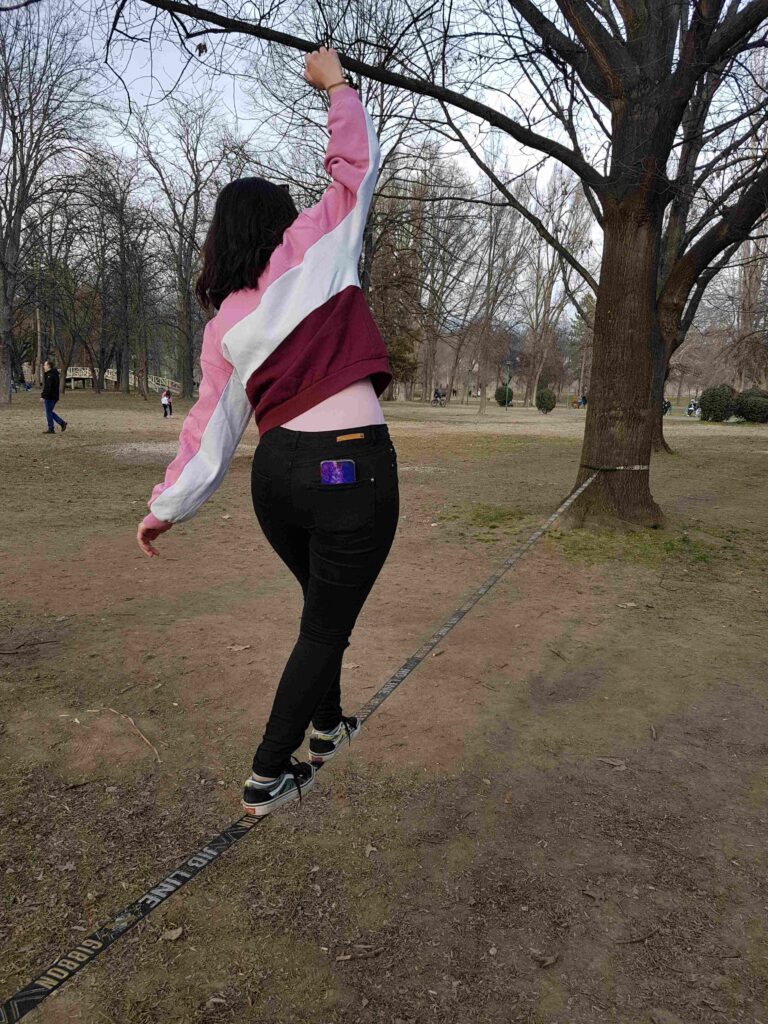
That’s part of why I keep pointing people to the Jibline. It makes you want to get back on it. Setup is simple enough that you actually do it, two trees, Gibbon’s thread-and-pull ratchet, no knots, no gear background required. You find your trees, clip on the TreeWear, pull the ratchet tight, and you’re standing on it. The whole process becomes automatic after two or three setups.
The 5 cm (2 in) width is forgiving in the right way. A beginner can step onto it and move, not just hover, not just survive. You set it low, so falls are part of the process, not a fear. You step off, you get back on. That’s the learning curve.
Research also shows that balance training reduces the probability of sport injuries by approximately 50% (Slacktivity, 2024). Beginners don’t know this going in. They’re just playing. But every session is building ankle stability, knee control, hip awareness, and core engagement. It transfers across every sport you do.
Is the Gibbon Jibline a Legitimate Trickline?
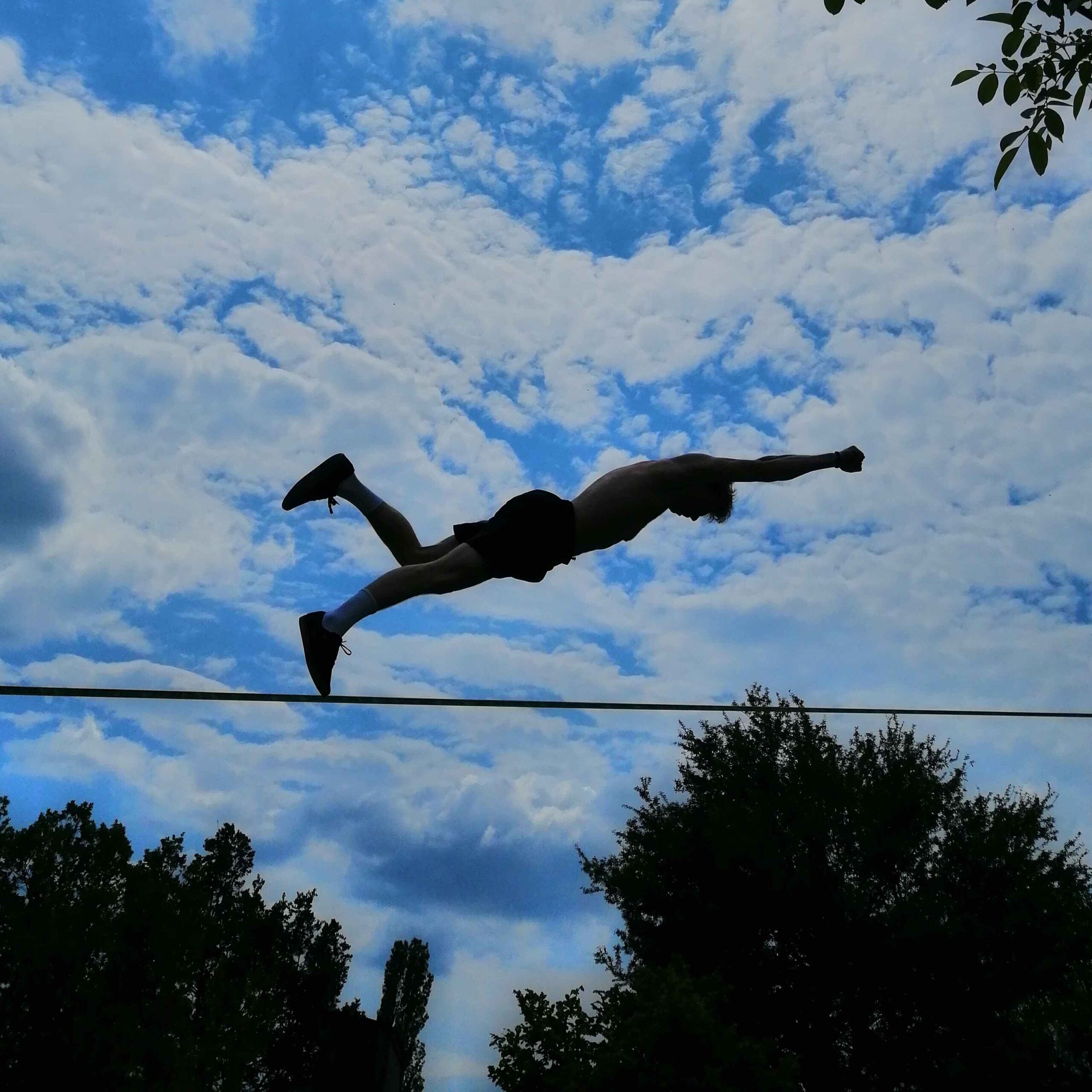
Gibbon has run Jibline-specific competitions where the best trickliners in the world competed on this exact webbing, athletes at the level of Andy Lewis. If you want to see what that looks like, search “Jibline contest.” It’s worth five minutes.
Not a beginner line with a good marketing team. A product trickliners actually choose. Jib-lining is its own competitive discipline. Athletes perform to music, judged on style, rhythm, and difficulty, athletic and creative at the same time.
The webbing those competitors chose is the same product you’re setting up between two park trees. Not a beginner line. Not a competition-only rig. Something that bridges both. That’s rare!
If the fitness angle caught your attention, it goes further than most people expect. We broke down what slacklining actually does to your body, why the balance training transfers to other sports, and what the research says. Read: The Real Health Benefits of Slacklining →
The Lifestyle Angle – The Slackline That Goes Everywhere
The Gibbon Jibline’s full kit line, ratchet, and TreeWear protectors, fits in a standard daypack without dominating it (Gibbon Slacklines, 2025). That sounds simple. It’s actually the most important thing about this line for most people. Gear you don’t bring doesn’t get used. The Jibline goes with you, which means you actually slackline instead of planning to.
Most dedicated rigs are an event. You decide the night before, pack deliberately, need a location scouted. The Jibline isn’t that. It’s opportunistic gear. You already have it. You find two trees. You’re on the line in the time it takes someone to set up a hammock.
Park with friends that turns into a session. Picnic with a clearing and a couple of decent trees. Campsite before the others are even awake. Festival with space and some old oak trees. You don’t plan those sessions. They just happen because you had the line with you.
The TreeWear protectors make the decision frictionless. Clip them on, protect the bark, move on. No debate about whether it’s okay to rig off these trees. You’ve got it handled.
And something happens when you set up a slackline in a public space. People stop. They watch. Someone asks if they can try. You’re teaching within ten minutes of arriving. That’s how this sport moves, one park session at a time.
Who Should Buy the Gibbon Jibline?
Balance training reduces the probability of sport injuries by approximately 50% across disciplines (Slacktivity, 2024), which means almost anyone who does other sports benefits from slacklining and the Jibline is the entry point that doesn’t force a second purchase the moment you want to go further.
Buy it if…
- You’ve never slacklined before
- You want to progress into tricks without buying a second line
- You move it around, parks, camping, friends’ places
- You want to teach people
- You want competition-grade webbing without the competition price
Look elsewhere if…
- You’re already competing at dedicated trickline level
- You need lines longer than 25 m (82 ft) for advanced setups
- You need a serious long-distance trick rig
For most people, at most points in their slacklining, this is the line.
Frequently Asked Questions
Is the Gibbon Jibline good for beginners?
Yes. The 5 cm (2 in) width gives a stable surface to learn on, Gibbon’s ratchet system needs no knots or gear knowledge, and you’re set up between two trees in under 5 minutes. Research shows slacklining burns ~100 calories per 15-minute session at 6.0 METs WHO high-intensity level (PMC RCT, 2022). Most beginners don’t realize they’re working that hard.
Can you do tricks on the Gibbon Jibline?
Yes, it’s legitimate trickline-grade equipment. The ~3% stretch and rubber-printed grip surface handle jumps, chest bounces, rotations, and flips. Gibbon co-hosts the Trickline World Cup, and the Jibline is the webbing athletes use at that level. Triple frontflips have been performed on this product category at world-level competition.
What’s the difference between the 15 m and 25 m Jibline?
The 15 m (49 ft) version covers most park setups, backyard sessions, and learning. The 25 m (82 ft) gives more room for longer walking distances and extended trick run-ups. When in doubt, start with 15 m. You can always want more distance. You can’t want less.
How much does the Gibbon Jibline cost?
Around $120. That includes the slackline, integrated RatPad ratchet cover, and two 1 m (3 ft) TreeWear bark protectors. TÜV/GS certified and meeting DIN safety standards, independently verified, not just labeled.
What is the most versatile slackline?
The Gibbon Jibline. It handles beginner walks, casual tricks, and world-level trickline competition on the same webbing. Balance training on slacklines cuts sport injury risk by ~50% (Slacktivity, 2024), benefits that compound at every skill level. It’s also the slackline most likely to actually be with you, because it fits in a backpack.
The Line That Grows With You
Most gear has a ceiling. You hit it, move on, buy something better. The Jibline doesn’t work that way.
You learn on it. You teach on it. You start doing things on it you couldn’t imagine when you bought it. And the day you want to go deeper, longer lines, dedicated sessions, serious trickline setups, you already know exactly what this line gave you, because it was your foundation.
Competition-grade webbing. Backpack-ready. Two trees and you’re on it.
That’s a rare combination.
Browse more AFIELD gear guides or follow us on Instagram for what we’re actually running right now.
Read: The Real Health Benefits of Slacklining →

Filip Petreski is the founder of AFIELD and a multi-sport outdoor athlete. A two-time national cross-country MTB champion, snowboard instructor, and former dirt bike rider, he writes about the people, gear, and culture worth paying attention to in the outdoor world.