
Every mountain bike kit list on the internet reads the same way. Forty-seven products. Every one of them “essential.” You finish reading and feel like you need to spend $3,000 before you can touch a trail.
That’s not what this is.
This is my actual mountain bike kit list. What’s in my bag before a ride, what’s on my body, and what I deliberately left out. I’ve raced cross-country at a national level, won it twice, so I’ve had time to figure out what actually matters and what’s just noise.
Spoiler, it’s less than you think.
What’s Wrong with Most Mountain Bike Kit Lists
MTB gear culture has built up this idea that more kit equals better riding, and I think it’s a similar case with other sports as well. More protection, more gadgets, more layers for every condition. The minimum viable kit keeps expanding, every season adds a new category you apparently can’t do without.
Some of what’s on this list I bought, some came with my team, one item I haven’t even bought yet. I’ll tell you which is which.
That’s the honest version of a mountain bike kit list. Let’s get into it.
The Helmet: The One I’m Getting Next
I need a new helmet. It’s the one piece of mountain bike kit you can’t compromise on.
The one I’m eyeing is the Fox Racing Speedframe Pro MIPS. It’s sitting around $200 and it’s earned it. Fox built this one with MIPS Air Node technology, that’s rotational impact protection that actually moves with your head on impact instead of just absorbing a direct hit. There’s a BOA fit dial for micro-adjustments, a magnetic Fidlock buckle that clips one-handed, and it carries a 5-star Virginia Tech safety rating. That last one matters to me more than any marketing spec.
I’ve covered the Fox Speedframe Pro in our Amazon gear roundup if you want the full breakdown. It’s the next buy.
Until then, I’m riding my current helmet, which has done the job but is due for retirement. Helmets aren’t forever. If yours is over five years old or has taken a hard impact, replace it. Non-negotiable.
The Gloves: One Pair for Two Sports
I ride with Giro full-finger gloves. Black, gel pads, full-length fingers. I’ve had them for years and they’re still going.
Here’s the thing I like about them beyond durability: I also ride my dirt bike with these same gloves. Same pair. That’s the kind of overlap I look for in gear. If something works well enough across two demanding sports, it’s probably doing its job right.
I honestly couldn’t tell you the exact model name. I know they’re Giro, I know they have gel padding at the palm, and I know they’ve held up through more rides than I can count. That’s enough.
Full-finger is the call for mountain biking. Your knuckles catch trail debris, branches, and the occasional rock. Half-fingers look fine at the trailhead and feel wrong the first time you go over the bars.
The Eyewear: Just Wear What You Have
I wear my everyday sunglasses when I ride. Not MTB-specific eyewear, not photochromic trail lenses, not anything designed for the sport.
I wouldn’t even put this in a mountain bike kit list if people didn’t ask. The answer is: if you have sunglasses that fit, don’t bounce, and block the sun, use them. Don’t buy a separate pair to start.
If you’re riding gnarly terrain at speed and debris is a real concern, look at something with more coverage. But for trail riding? Your regular shades are fine.
The Jersey: Team Kit Does the Job
My jersey is my team kit. Italian brand, and I genuinely can’t remember the name of it right now. I’m not going to make one up.
What I can tell you is that it breathes well, fits right, and handles the kind of effort cross-country racing demands. Technical fabric that wicks moisture. That’s the spec that matters.
You don’t need a dedicated “MTB jersey” to start riding. Any cycling jersey or athletic top with some stretch and breathability works. A lot of people start in a plain synthetic tee and that’s completely fine. The jersey isn’t where you invest first.
Shoes and Pedals: I’m a Clipless Rider
Gaerne MTB Shoes
My shoes are Gaerne. Clipless setup. Gaerne is an Italian brand that doesn’t get enough attention outside of road cycling circles, but they make solid MTB footwear. Stiff sole, good power transfer, holds up on and off the bike when you’re hiking a rocky section.
Shimano XT Pedals and the Clipless vs. Flats Debate
I ride Shimano XT clipless pedals. That’s been my setup for years and it’s not changing.
I know the debate. Flat pedals vs. clipless. Some riders swear flats build better technique because you can’t cheat your foot position. They’re right that flats build skill. But at the level I raced, being clipped in is a straight efficiency advantage. Power goes to the pedal in both directions, push down, pull up. On a long XC climb, that matters, but also, I like clipless for technical sections as well.
If you’re starting out, flats are a perfectly reasonable choice. No shame in it. But if you’re chasing performance and you’re willing to put in the practice of clipping in and out, clipless pays off.
The XT groupset is where Shimano’s quality-to-price ratio sits at its best. Not entry-level, not flagship overkill. Just solid, reliable, and long-lasting.
Hydration: Just a Bottle
I carry a 0.5L (17 oz) water bottle. That’s it.
No hydration pack. No fancy reservoir system with insulated tubing. A regular bottle in the cage on my frame.
For shorter rides, it’s enough. If you’re going out for two-plus hours in summer heat, you need more water and a pack makes sense but also you’ll find fountains on the way to refill, at least where I live. I’m not anti-hydration-pack, I just don’t use one for the kind of rides I’m describing here.
The honest take: a lot of people buy a hydration pack early because it feels like the “serious” move. You don’t need it until you need it. Start with a bottle. Add the pack when your rides get long enough to require it.
Tools: Don’t Overthink This
The Multi-Tool
Every mountain bike kit needs a multi-tool. Mine is basic, a handful of allen keys, no name brand, nothing special. I’ve never once been on a trail and thought, “I wish I’d bought a better multi-tool.”
The point of a multi-tool on the trail is to make the one adjustment that gets you home. Saddle dropped and is spinning? Fix it. Brake lever twisted in a crash? Straighten it. You’re not doing a full bike service out there.
A cheap tool with the right sizes does the same job as an expensive one. Get one, keep it in your pocket or bag, and stop thinking about it.
The Puncture Kit: Topeak Glueless
I run inner tubes, not tubeless. My puncture kit is the Topeak glueless repair kit.
Glueless patches work. They’re fast, you don’t need to wait for adhesive to set, and they’ll get you home. But here’s the honest version: don’t expect a glueless patch to hold for six months. It’s an emergency fix, not a permanent solution. When you get home, replace the tube.
I’ve had glueless patches hold through the rest of a ride no problem. I’ve also had them start peeling within an hour. Carry a spare tube if you can. Use the glueless kit as backup.
What’s in My Pockets
Phone. ID. Some cash. And a Snickers bar.
That’s it. No separate nutrition system, no energy gel lineup, no electrolyte tabs. A Snickers bar.
It’s not a performance choice. It’s just real. If I’m out for more than an hour, I want something to eat, and a Snickers is compact, calorie-dense, and doesn’t taste like cardboard. I’ve eaten plenty of purpose-built sports nutrition. It’s fine. The Snickers is more enjoyable.
The cash and ID are non-negotiable on any solo ride. If something goes wrong out there, you want to be able to identify yourself and get home without relying on your phone having signal or battery.
What I Don’t Carry
This is the part most mountain bike kit lists skip entirely.
- No knee pads. I know riders who swear by them, especially for enduro and DH terrain. For XC and trail riding, I find them restrictive. My style of riding and the terrain I’m usually on doesn’t put me in situations where I feel the absence. If you’re hitting technical rock gardens or steep descents regularly, pads make more sense. Know your terrain.
- No elbow pads. Same reasoning.
- No hydration pack for shorter rides, as mentioned. I’ve got the bottle. It works.
- No GPS computer on trail rides. I know where I’m going, or I don’t need to track it. For racing, the course is the course. A computer adds a useful data layer for training, but it’s not kit-essential for every rider.
The point of listing what I don’t carry is this: omissions are a choice, not an oversight. I’ve ridden enough to know what I reach for and what I leave on the shelf. Your list might look different and that’s fine. But building your mountain bike kit list around deliberate choices is different from just accumulating gear because a list somewhere told you to.
The Real Philosophy
Gear is a tool. It enables the ride. It doesn’t define it.
I’ve seen riders show up to trail heads with $10,000 bikes and full kit and struggle on climbs a kid on a hardtail clears without thinking. And I’ve seen riders on beat-up bikes with mismatched kit absolutely send it because they know how to ride.
The kit matters. A bad helmet is a safety issue. Worn-out shoes kill your efficiency. But there’s a version of every item on this list that costs a fraction of the premium option and does 90% of the job.
Start with what you have. Add what you actually need. Ride more than you shop.
That’s the mountain bike kit list that actually serves you.
Filip Petreski
2x National MTB Champion and founder of AFIELD, an outdoor and action sports digital magazine at afield.life. Follow on Instagram for more trail content and gear takes.
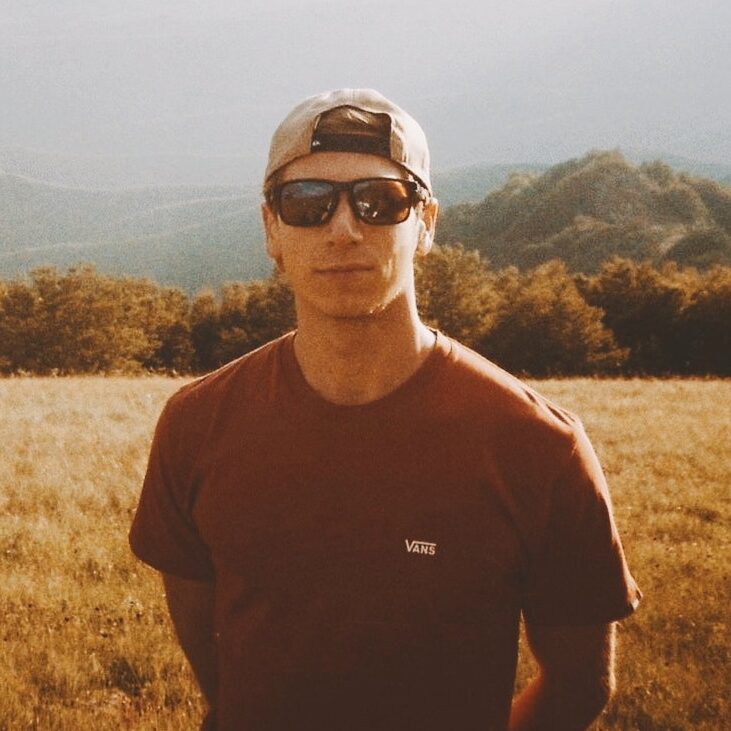
Filip Petreski is the founder of AFIELD and a multi-sport outdoor athlete. A two-time national cross-country MTB champion, snowboard instructor, and former dirt bike rider, he writes about the people, gear, and culture worth paying attention to in the outdoor world.