
According to PeopleForBikes, 112 million Americans rode a bike in 2024. That’s the highest participation number ever recorded. And most of those people, at some point, need to move a bike from point A to point B without riding there. That’s where a bike rack for car comes in.
I don’t own a bike rack. I don’t need one day-to-day, I ride from home. But I’ve used every type across vehicles ranging from a small hatchback to a VW Transporter van. Borrowed racks. Group day racks. Race weekend racks. That’s actually a useful perspective, no brand loyalty, no sunk cost bias.
This is a breakdown of what each type actually does, what it costs you, and which one fits how you actually ride.
At a glance
- 112 million Americans rode bikes in 2024, the highest number ever (PeopleForBikes, 2024)
- Three rack types exist: roof, trunk, and hitch. Each suits different riding habits.
- Roof racks are the most versatile for solo and group riding
- Cheap racks fail on highways and mountain roads, build quality shows at speed
- Never leave bikes in a random parking lot overnight, regardless of lock rating
Is a Roof Bike Rack Worth It?
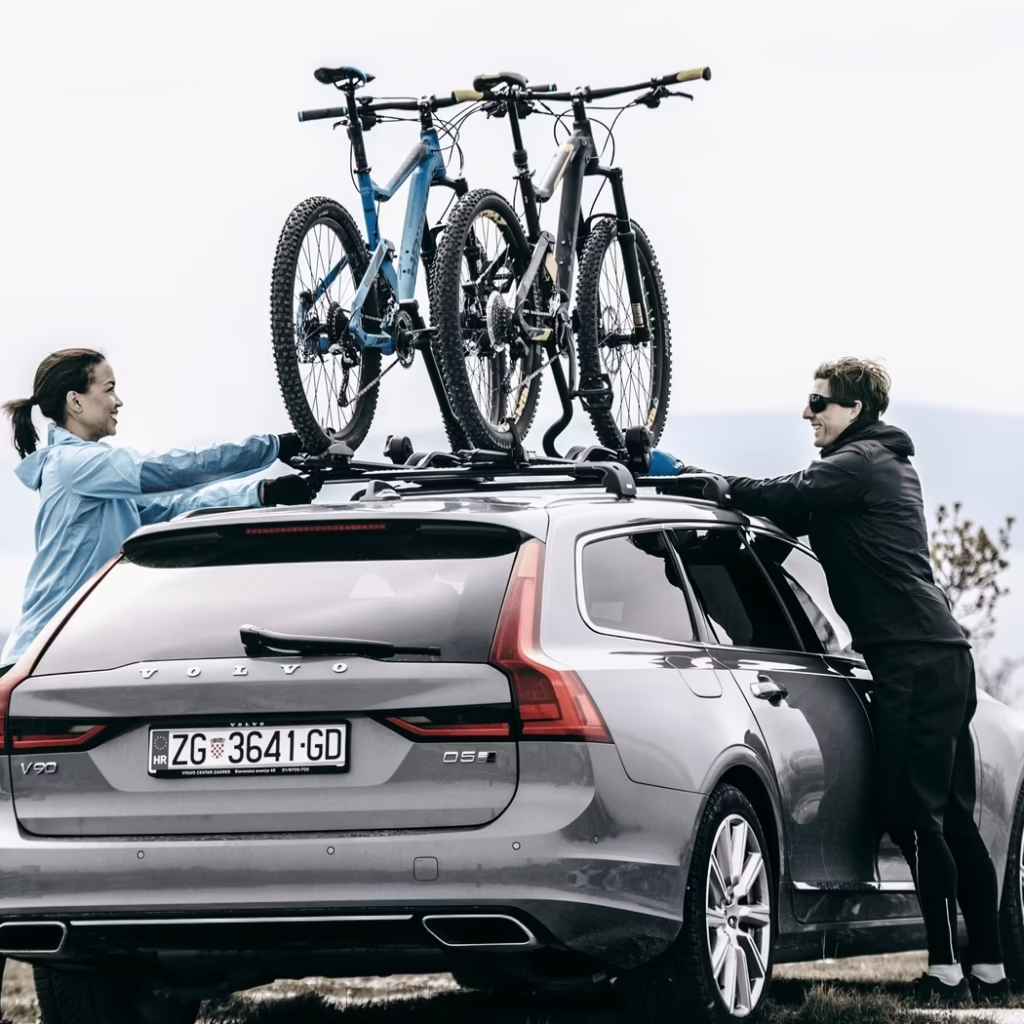
Roof bike racks are the most widely used type for a reason. A 2023 survey by the Outdoor Recreation Roundtable found that cyclists who transport bikes to trailheads do so an average of 28 times per year and roof racks are the dominant choice for solo and small-group trips. If you ride regularly and want independence, a roof rack is the right answer.
I’ve used the Thule ProRide XT personally. Frame-mount style, the bike goes on whole, no wheel removal, and it works with almost every roof rail system. It never disappointed. Clean mounting experience, locks down properly, and it’s stable at highway speed and on mountain roads. That’s the bar.
Thule ProRide XT – Frame-Mount Roof Carrier
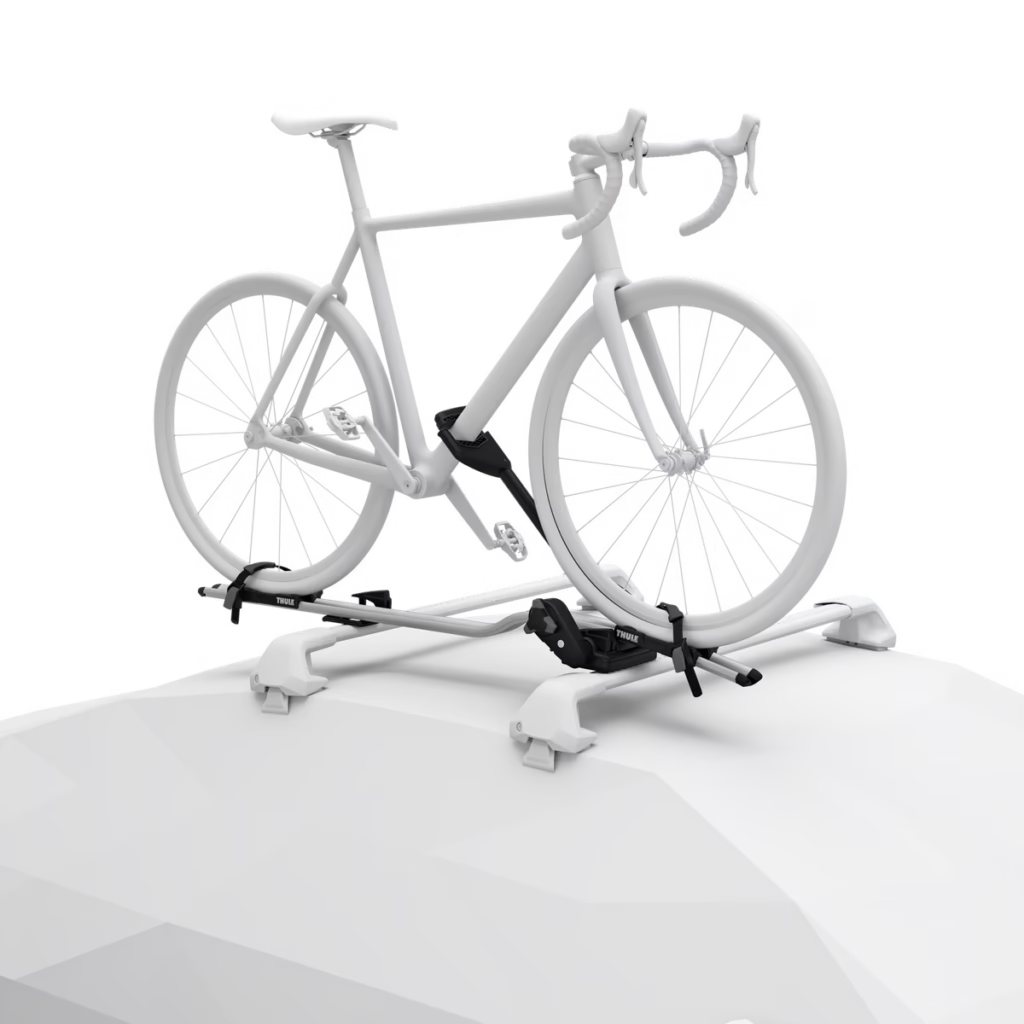
image from the official website for the car bike rack thule.com
What About Crossbars?
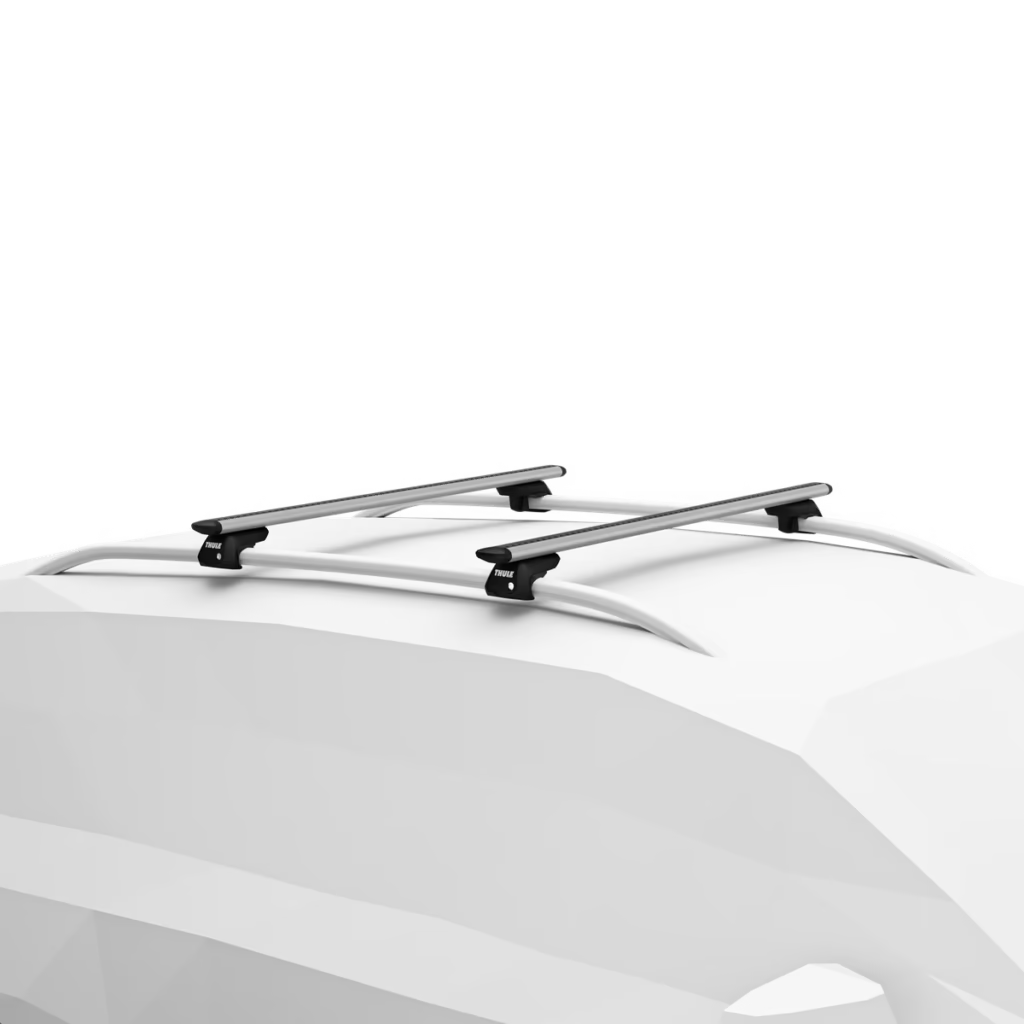
Here’s something a lot of people miss, the ProRide XT (and most bike carriers like it) mounts onto crossbars, not directly onto a bare roof. If your car doesn’t have factory rails, you need those first.
Compatibility note
Different cars and SUVs require different mounts and different bar lengths. Don’t just add the roof rails to your cart without checking compatibility for your specific vehicle first. Thule’s fit guide at thule.com will tell you exactly what you need.
The Group Riding Advantage
Unique insight:
On group riding days, everyone in our crew brings their own roof rack. That’s the move. A roof carrier like the ProRide XT is universal enough that each person installs it on their own car, shows up, loads up. Nobody has to own five racks. Nobody has to borrow. One person doesn’t carry the load of transporting everyone’s bikes.
It works because roof racks are individual units. You bring yours, I bring mine. We decide upfront who is driving for the day. Shuttle problem solved without logistics.
This only works with roof racks. You can’t replicate it cleanly with hitch or trunk options. Hitch racks require a receiver on the towing end. Trunk racks vary too much by car shape. Roof is universal.
Is a Trunk Bike Rack a Good Option?
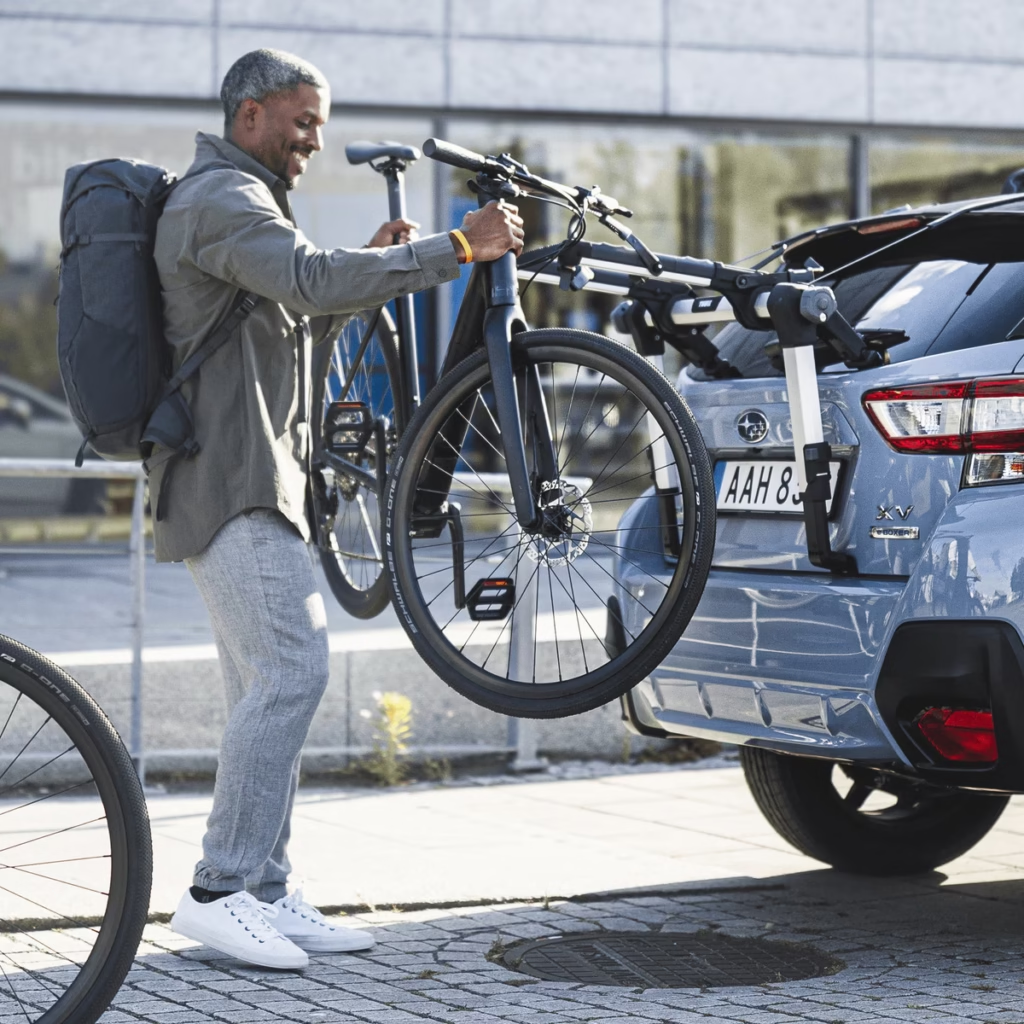
Trunk racks are the cheapest entry point to getting a bike on a car. Cycling UK data shows strap-style trunk carriers represent roughly 35% of entry-level bike transport purchases, primarily from newer cyclists. If you’re just starting out, doing occasional rides, or using a borrowed car, a trunk rack makes sense. You don’t need to commit to anything permanent.
The Thule Outway Hanging 3-Bike is a solid example of this type. I haven’t used that specific model, but I’ve used the same mounting principle on similar racks from other brands. The concept works. Straps go over the trunk lid or hatch, hooks grip the lip, and the rack holds the bikes against the rear of the car.
Thule Outway Hanging 3-Bike Trunk Rack
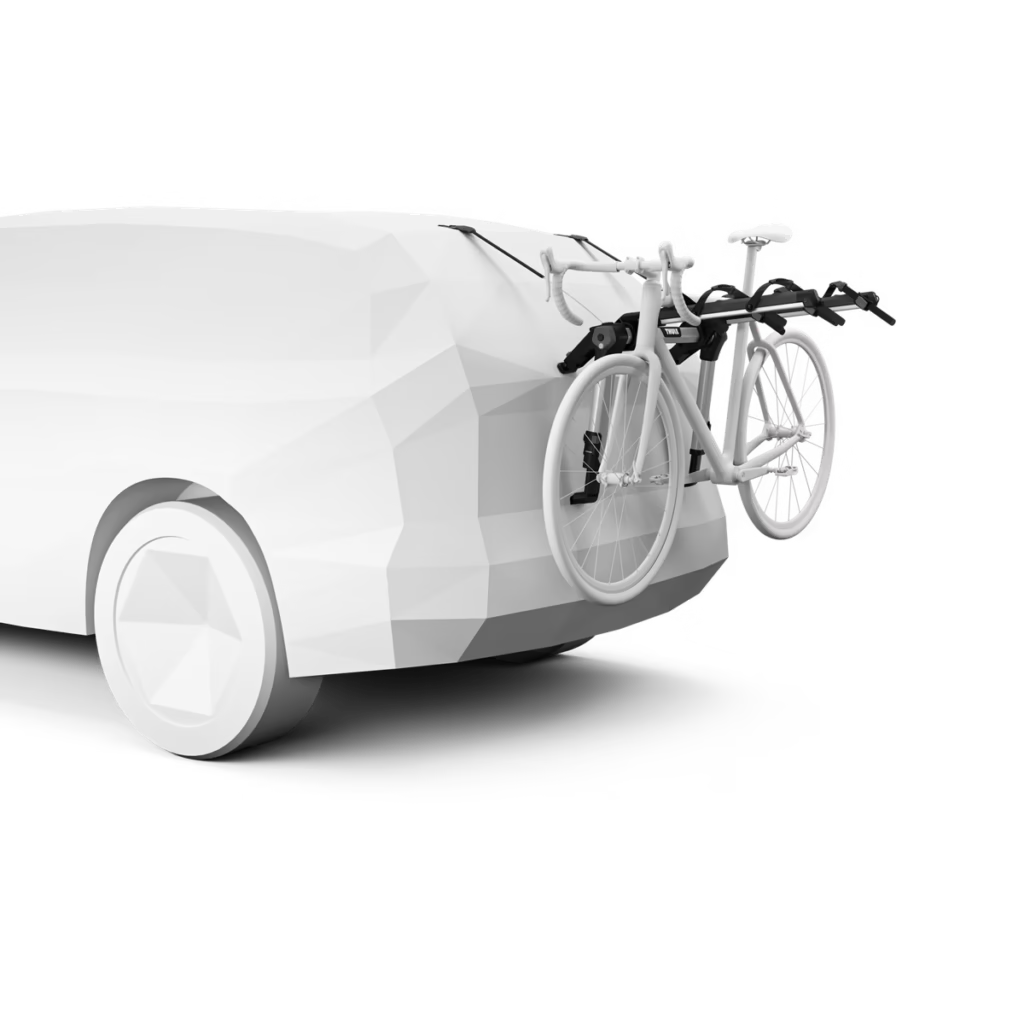
image from the official website for the car bike rack thule.com
Trunk Rack Tips That Actually Matter
Two things people get wrong with trunk racks.
First: tie down properly. The straps aren’t just to hold the rack. They’re what keeps the whole thing from shifting. Spend the extra minute.
Second: pad between the bikes when you’re carrying two or more. The frames will touch. Bare frame against bare frame on a highway will scratch both bikes. A piece of foam, an old towel, anything. Do it.
Trunk racks are not for long-haul trips at high speed. For a 2-hour highway run at 70 mph (113 km/h) to a trail, they’re fine. For regular use or mountain road shuttles, you’ll want something more solidly mounted.
Is a Hitch Bike Rack Worth the Investment?
Hitch racks are the highest-capacity option for transporting multiple bikes. REI Co-op’s 2024 gear survey found that hitch platform racks are the preferred choice for cyclists carrying three or more bikes at once. The catch, your car needs a tow hitch receiver. Many cars don’t have one from the factory, and retrofitting one adds cost.
Two styles exist within hitch racks, platform and hanging. I’ve used both.
Platform Style like the Thule VeloCompact
The Thule VeloCompact is fire. Bikes sit upright in wheel cradles, loading is easy, stability is excellent. For race weekends with multiple bikes, it’s the best option I’ve used.
One real downside
When you’re not using it, a platform style rack takes up serious space. That’s the main beef with hitch racks in general. They don’t fold down to nothing. They live in your garage, take up a corner, and you have to move them every time. If you have tight storage, that’s a real consideration.
Thule VeloCompact – Hitch Platform Rack
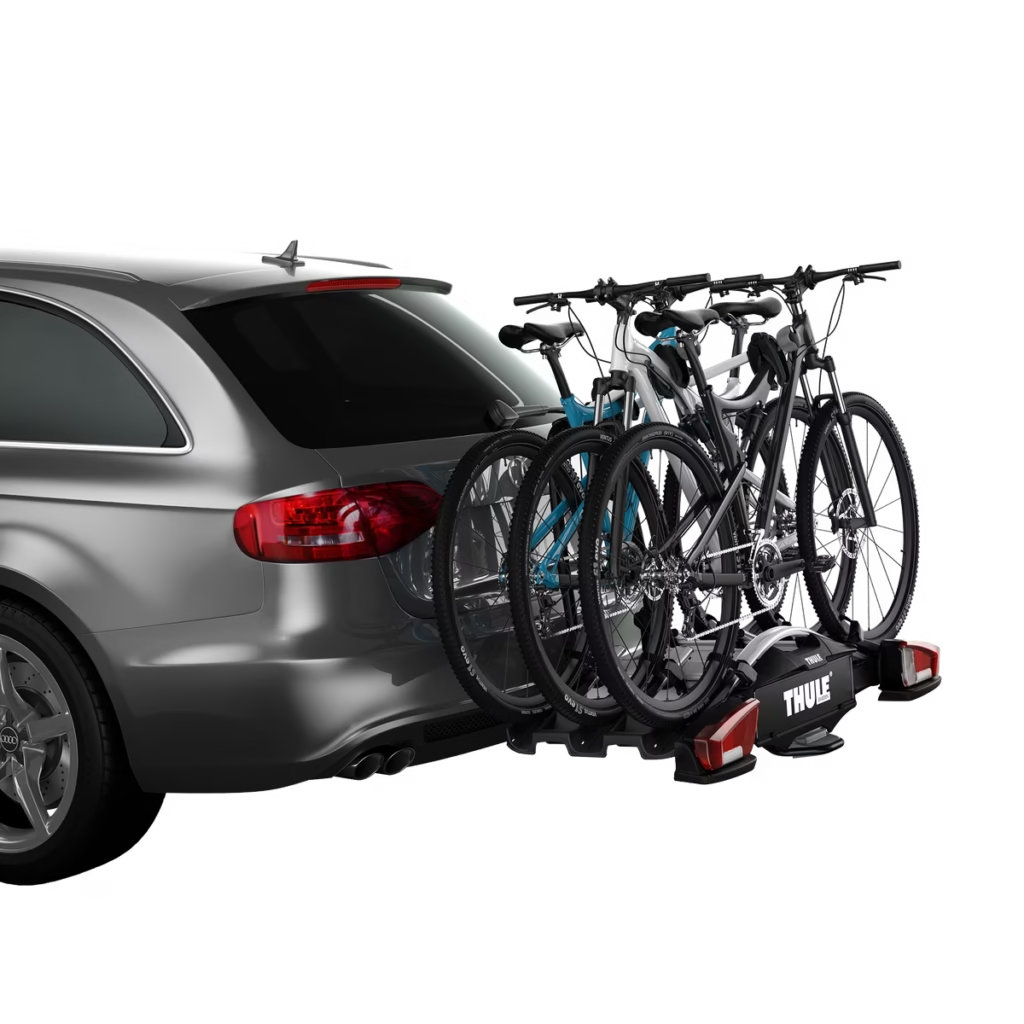
image from the official website for the car bike rack thule.com
Hanging Style – Thule HangOn 3-Bike
The Thule HangOn 3-Bike is the one I’ve used a million times. If you have a hitch, this takes no time to mount and no time to take off. That partly solves the storage problem. It’s lighter than the VeloCompact, faster on and off the car, and it holds three bikes without drama.
The trade-off, bikes hang by their frames rather than sitting in wheel cradles. It works fine for most bikes and most trips. If you’re carrying a carbon frame worth a few thousand dollars, you might prefer the platform style for that extra support. For everyday mountain bikes and road bikes, the HangOn handles it.
Thule HangOn 3-Bike – Hitch Hanging Rack
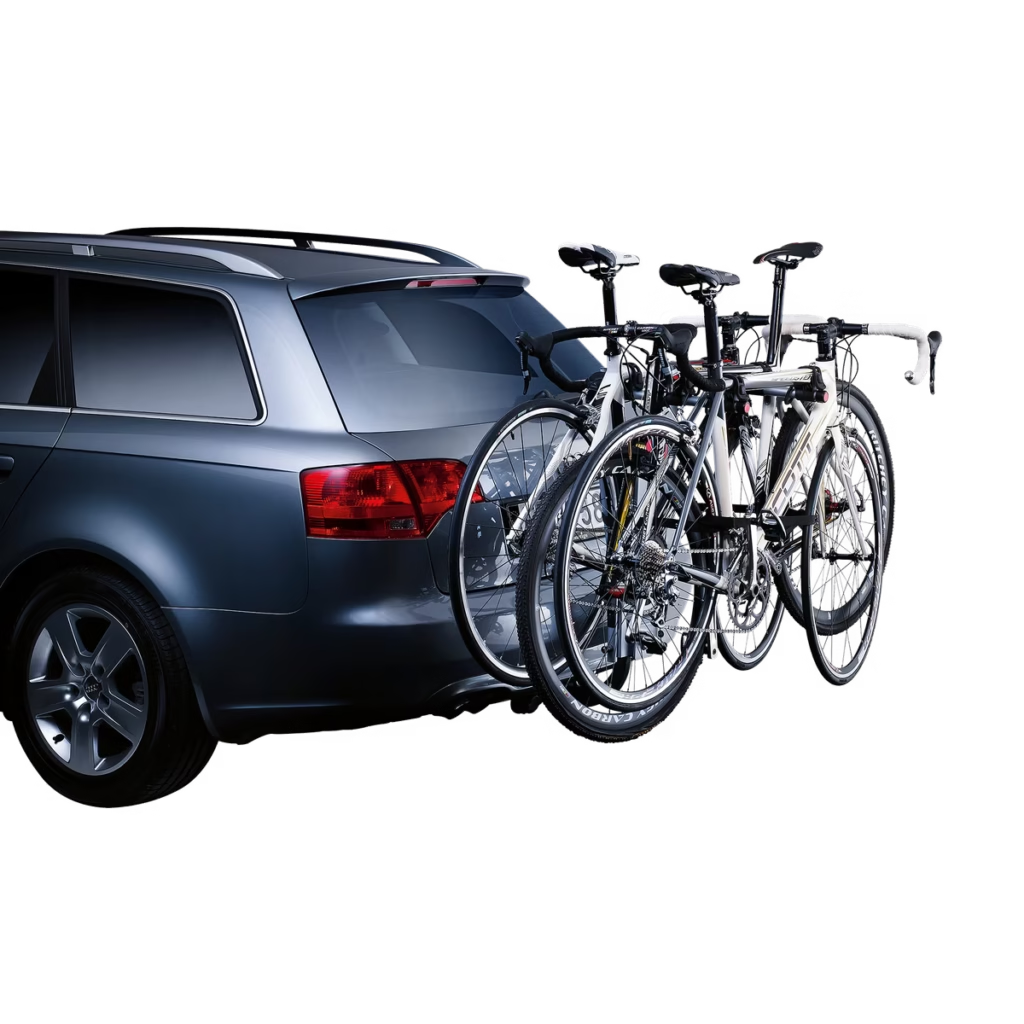
image from the official website for the car bike rack thule.com
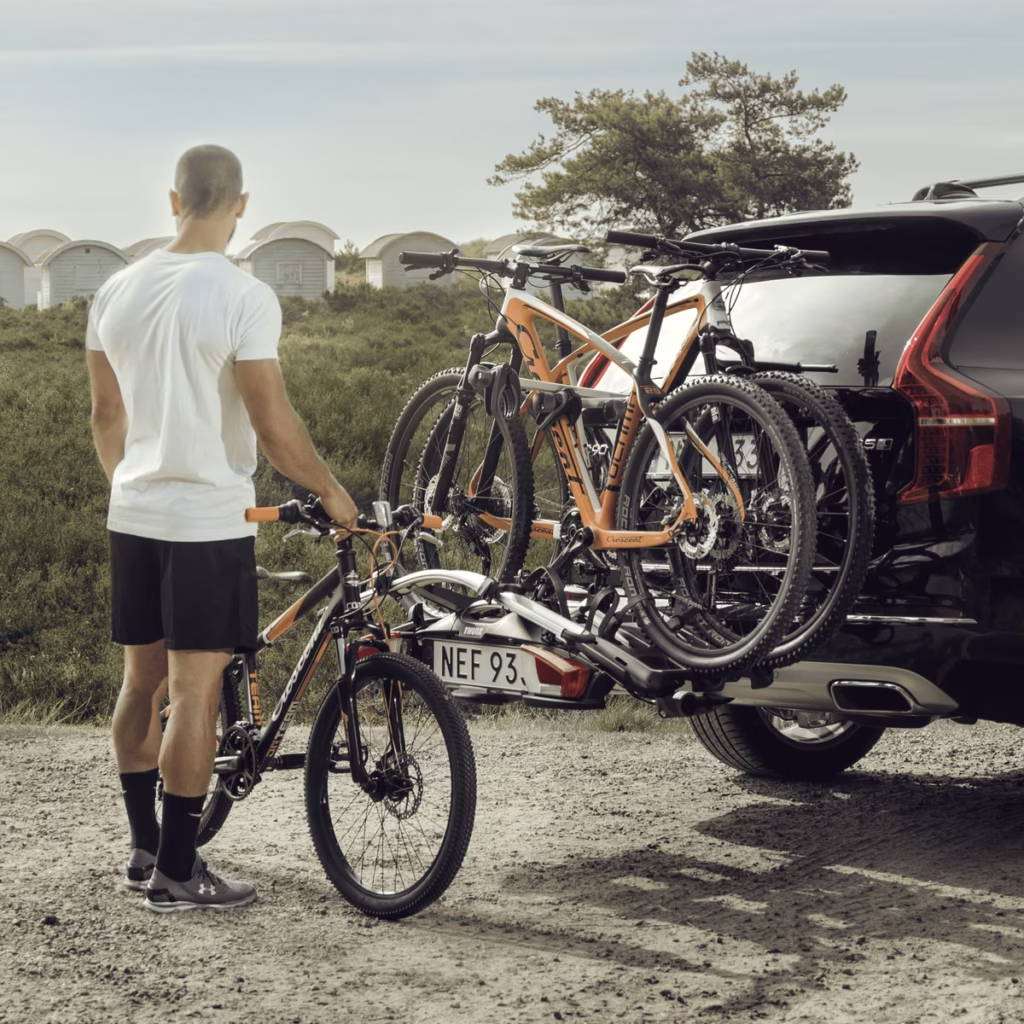
Which Bike Rack for Car Is Right for You?
The right bike rack for your car depends entirely on how you actually ride, not how you imagine you might ride someday. According to the 2024 PeopleForBikes participation report, most recreational cyclists ride within 15 miles (24 km) of home, which means most people are making infrequent transport decisions, not daily ones. Choose the rack that fits the reality, not the fantasy.
Get a roof rack if: You ride regularly, you want independence on solo or group days out, and you have (or can add) roof rails on your car. This is the most flexible, most universal option. The ProRide XT is the one I’d buy.
Get a trunk rack if: You’re just starting out, you ride occasionally, or you need something for a borrowed or rented car. It’s the lowest commitment, lowest cost entry point. Don’t overthink it. Get the Outway, go ride.
Get a hitch rack if: You already have a tow hitch receiver, you regularly carry two or more bikes, and you want the easiest loading experience. VeloCompact if you value stability and loading ease. HangOn if you want faster on/off and less storage bulk.
One note, most cars can take all three types if needed. Small hatchbacks can use roof racks, trunk racks, and even hitch racks if they have or get a receiver. The rack type is about lifestyle fit, not vehicle size.
Does Cheap vs. Quality Actually Matter?
Yes. And this isn’t brand snobbery. A 2022 product safety report from the European Commission flagged that 40% of low-cost car bike carriers tested failed load stability requirements at highway speeds. I’ve used Thule roof racks and I’ve used no-name brands. The difference shows up in three specific places.
First: build quality. Cheap racks use thin aluminum or thin steel. You feel it when you’re trying to mount the carrier in a parking lot at 6am before a race. Thule is solid. The no-name ones flex where they shouldn’t.
Second: mounting experience. Thule clicks, locks, and you know it’s on. Cheap ones require fiddling, adjusting, and often can’t lock at all. An unlockable rack is a problem when you stop for fuel or food.
Third: stability at speed. On a highway or on mountain switchbacks, you feel the difference between a well-built rack and a poorly built one. The bike vibrates differently. The carrier moves where it shouldn’t. You don’t notice this in a car park. You notice it at 65 mph (105 km/h) when you look in the rearview mirror.
Quick note:
Noise is not a meaningful differentiator for me personally. Bikes on racks create noise. All of them. Good rack, bad rack, roof, trunk, hitch. That’s just physics. Don’t buy or reject a rack based on noise reviews.
The Security Question – How Much Should You Trust Bike Rack Locks?
Most quality racks include a lock or lock capability. According to Kryptonite’s 2023 bike theft report, over 60% of bike thefts occur in urban areas during daytime hours at convenience stops. For brief stops, a restaurant, a shop, a fuel station, lock the bikes. Do it every time. It takes 30 seconds and removes the easy-grab opportunity.
Do not leave bikes overnight in a random parking lot. Doesn’t matter what the lock is rated for. Doesn’t matter if it’s cable, U-lock, or the built-in mechanism on the rack. Overnight in an unfamiliar area is a different risk category than a quick 20-minute stop.
This applies regardless of how much the bike costs. The lock buys you time. It doesn’t buy you security.
FAQ
Do I need crossbars for a roof bike rack?
Yes, in most cases. Roof bike carriers like the Thule ProRide XT mount onto crossbars, not directly onto a bare roof. If your car has factory roof rails, you may be able to add bars directly. If it has no rails at all, you’ll need a full crossbar kit. Check compatibility for your exact vehicle before buying. Thule’s fit guide at thule.com covers this by car model.
Can I use a bike rack without a hitch?
Yes. Roof racks and trunk racks both work without a hitch receiver. A trunk rack straps to the car’s rear hatch or trunk lid, no permanent hardware required. A roof rack installs onto roof crossbars. Hitch racks are the only type that specifically require a tow hitch receiver.
How many bikes can a trunk rack hold?
Most trunk racks hold 2-3 bikes. The Thule Outway is rated for 3 bikes at a maximum combined weight of 99 lbs (45 kg) across all bikes. When carrying multiple bikes on a trunk rack, always pad between frames, direct contact at highway speed will scratch both bikes.
Are bike racks compatible with all cars?
Not all rack types work with every car. Trunk racks are the most universal but can be awkward on cars with short trunk lids. Roof racks require a roof rail or bare roof fitting system. Hitch racks require a 1.25 in (32 mm) or 2 in (51 mm) receiver. Check the manufacturer’s fit guide before buying any rack.
Is it safe to drive with a roof bike rack into a parking garage?
No. This is the most common and most expensive mistake with roof racks. The total height of your vehicle plus the bike and carrier can exceed 6.5 ft (2 m) easily. Most parking garages have 6-7 ft (1.8-2.1 m) clearance. If you use a roof rack regularly, get in the habit of checking garage clearances before entering.
The Bottom Line
Gear is a tool. The bike rack for your car that makes the most sense is the one that matches how you actually ride, not how you plan to ride once everything is perfect.
If you ride regularly and want to show up anywhere independently, roof is the move. Thule ProRide XT is the one I’ve used and trusted. Get the WingBar Evo crossbars if your car doesn’t already have rails, and check compatibility first.
If you’re just starting out or riding occasionally, the Thule Outway trunk rack gets you going without a big commitment.
If you have a hitch and regularly move multiple bikes, VeloCompact for the best platform setup, HangOn for fastest on/off.
And on group days, everyone brings their own roof rack. That’s the move nobody talks about. It works.
For more gear that holds up in the field, the Amazon outdoor gear roundup covers what’s actually worth buying.
Filip Petreski
2x National MTB Champion and founder of AFIELD, an outdoor and action sports digital magazine at afield.life. Follow on Instagram for more trail content and gear takes.

Filip Petreski is the founder of AFIELD and a multi-sport outdoor athlete. A two-time national cross-country MTB champion, snowboard instructor, and former dirt bike rider, he writes about the people, gear, and culture worth paying attention to in the outdoor world.